

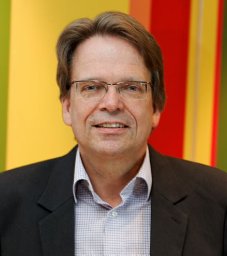
 Volker Tresp
· 4 previous affiliations
- Ludwig-Maximilians-Universität MünchenSince 2011
- Associate Professor · Since 2011
- Siemens Healthcare (United States)1990–2023
- Distinguished Research Scientist · 2018–2023
- Principal Researcher · 1990–2023
- Yale University1984–1989
- PhD student · 1984–1989
- University of Göttingen1978–1984
- Diplom, Physik · 1978–1984
Research Overview
Volker Tresp focuses on relational machine learning, temporal knowledge graphs, and the alignment of large language and vision-language models. His early work established foundational methods for Bayesian inference and tensor factorization in multi-relational data. More recently, his research addresses process reward modeling for multi-step reasoning and federated learning optimization.
Research Trajectory
Tresp’s early research began in the domain of medical imaging, with his 1989 doctoral work focusing on an Electro-Optical System for the High Speed Reconstruction of Computed Tomography Images. Transitioning into core machine learning, he addressed fundamental challenges in handling incomplete datasets. He introduced Efficient Methods for Dealing with Missing Data in Supervised Learning in 1994, developing algorithms based on Parzen windows to approximate input distributions during training and recall. This contributed to the broader area of Exact Marginalization for Robust Inference with Missing Data. Continuing his work on probabilistic models, he developed A Bayesian Committee Machine (2000), a novel approach for combining estimators trained on distributed datasets that proved particularly effective for scaling Gaussian process regression.
In the 2010s, Tresp’s focus expanded significantly into relational machine learning and knowledge representation. He introduced the RESCAL algorithm in A Three-Way Model for Collective Learning on Multi-Relational Data (2011), a highly scalable tensor factorization model that enabled collective learning across complex networks of relationships. He further consolidated this field by co-authoring A Review of Relational Machine Learning for Knowledge Graphs (2016), which categorized statistical relational learning techniques for predicting new facts and constructing knowledge bases.
Around 2018, his research incorporated deep reinforcement learning and neural network interpretability. He collaborated on Energy-Based Hindsight Experience Prioritization, improving how reinforcement learning agents learn from sparse rewards by prioritizing informative transitions. This advanced the research direction of Prioritizing Informative Transitions for Experience Replay and the broader area of Scalable Experience Replay for Deep Reinforcement Learning. Concurrently, his group investigated the theoretical foundations of Layer-wise Relevance Propagation in Understanding Individual Decisions of CNNs via Contrastive Backpropagation, contributing to the area of Contrastive Saliency for Class Specific Explanations.
Returning to knowledge representation with modern neural architectures, his lab developed the HypeTKG model in Temporal Fact Reasoning over Hyper-Relational Knowledge Graphs (2024). This architecture fused time-invariant knowledge with temporal dynamics and complex qualifiers, advancing the research direction of Extrapolation Reasoning for Temporal Knowledge Graphs and the area of Integrating Static and Temporal Knowledge via Dual Path Architectures.
In 2025, Tresp led several diverse initiatives across embodied AI and distributed training. He introduced OpenDriveVLA: Towards End-to-end Autonomous Driving with Large Vision Language Action Model, aligning 3D visual tokens into a unified semantic space for trajectory planning. His group also addressed federated learning challenges, developing FedPop: Federated Population-based Hyperparameter Tuning to optimize client and server parameters on-the-fly without costly retraining, and FedBiP: Heterogeneous One-Shot Federated Learning with Personalized Latent Diffusion Models, which synthesizes domain-specific data to bridge local and global training distributions while preserving privacy.
A major recent focus has been the alignment and reasoning capabilities of large language models. His team proposed FocalPO: Enhancing Preference Optimizing by Focusing on Correct Preference Rankings (2025), a loss function that prioritizes reinforcing correct rankings over struggling with hard misranked pairs. To improve multi-step reasoning, they developed GroundedPRM: Tree-Guided and Fidelity-Aware Process Reward Modeling for Step-Level Reasoning, addressing the noise and credit misattribution inherent in existing process reward models. This line of work continued into 2026 with ProcessThinker: Enhancing Multi-modal Large Language Models Reasoning via Rollout-based Process Reward, which provides dense, step-level feedback without relying on hand-annotated models, and WebArbiter: A Generative Reasoning Process Reward Model for Web Agents, a generative model that guides web-browsing agents by inducing task-specific principles and structured justifications.
Current Directions
The most recent work in Tresp's portfolio centers on the alignment and step-by-step reasoning capabilities of large multi-modal and language models. A primary focus is the development of robust process reward models that can provide dense, step-level supervision for complex tasks—such as web navigation and mathematical reasoning—without relying on expensive human annotations or noisy self-evaluation. Additionally, his recent research investigates efficient preference optimization techniques, one-shot federated learning via generative priors, and the integration of 3D spatial grounding into vision-language-action models for embodied AI and autonomous driving.
Profile updated
Loading new papers…
Other researchers whose papers cluster into the same research directions — a proxy for overlapping technical interests and shared intellectual neighborhoods.
See something wrong? Report a mistake