

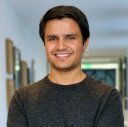
 Vikash Sehwag
· 4 previous affiliations
- Google (United Kingdom)Since 2025
- Researcher · Since 2025
- Princeton UniversityCurrent
- Current
- PhD student · 2017–2023
- Sony AI2023–2025
- Researcher · 2023–2025
- Undergrad student · 2013–2017
Research Overview
Vikash Sehwag focuses on the safety, robustness, and efficiency of machine learning systems, with an emphasis on generative artificial intelligence. His trajectory spans early work in adversarial robustness and hardware security to the development of privacy-preserving diffusion models and comprehensive benchmarking frameworks. Currently, his research investigates post-training alignment, reasoning capabilities, and the latent safety risks of large language models in agentic environments.
Research Trajectory
Sehwag’s early research began in hardware security. In 2016, he proposed TV-PUF: A Fast Lightweight Analog Physical Unclonable Function, designing an aging-resistant architecture that exploited threshold voltage variations in MOSFETs to improve power consumption and reliability for device authentication.
By 2018, his focus shifted toward the vulnerabilities of deep neural networks, particularly in computer vision systems deployed in safety-critical applications. He analyzed physical adversarial examples in Not All Pixels are Born Equal: An Analysis of Evasion Attacks under Locality Constraints., demonstrating how the success of attacks on semantic segmentation and steering angle prediction depends heavily on training data structure and learning objectives. Expanding this analysis to out-of-distribution detection, he presented Analyzing the Robustness of Open-World Machine Learning., which evaluated how open-world learning frameworks behave in the presence of adversaries. Recognizing the dual challenge of robustness and computational efficiency, he introduced HYDRA: Pruning Adversarially Robust Neural Networks, a technique that integrates robust training with network pruning to find sparse, resilient subnetworks. To address the broader community's need for standardized evaluation, he participated in developing RobustBench: a standardized adversarial robustness benchmark, an initiative that mitigates the overestimation of model resilience and aligns with the broader research direction of Diverse Attack Ensembles for Reliable Robustness Evaluation.
In 2022, Sehwag explored the intersection of robust learning, representation analysis, and generative models. With collaborators, he investigated how adversarial training alters network features in Understanding Robust Learning through the Lens of Representation Similarities, contributing to the area of Comparing Neural Network Representations with Centered Kernel Alignment. He also leveraged generative models to synthesize proxy distributions, demonstrating in Robust Learning Meets Generative Models: Can Proxy Distributions Improve Adversarial Robustness? that these proxies can reduce the sample complexity required for robust training. Concurrently, he addressed the challenge of sampling from sparse data manifolds in Generating High Fidelity Data from Low-density Regions using Diffusion Models, modifying the diffusion sampling process to synthesize novel, high-fidelity images without memorization. His security research also continued with an analysis of data poisoning; he contributed to Just Rotate it: Deploying Backdoor Attacks via Rotation Transformation, which showed that highly effective backdoors could be inserted using simple image rotations rather than external triggers, advancing work in the area of Bilevel Optimization for Data Poisoning and Backdoors.
Sehwag formalized his focus on the intersection of generative models and system vulnerabilities in his 2023 thesis, Promises and Pitfalls of Generative AI: An AI-Safety Centric Approach. A major theme of this period was privacy-preserving machine learning. He co-developed a three-phase training method in Differentially Private Image Classification by Learning Priors from Random Processes, which pre-trained models on synthetic images generated by random processes to incur zero privacy cost. He extended these guarantees to generative models themselves in Differentially Private Generation of High Fidelity Samples From Diffusion Models, utilizing an ensemble aggregation approach during sampling. These contributions advanced the research areas of The Privacy-Utility Trade-off in Differentially Private Learning and The Privacy Noise Floor in Small Sample Regimes.
More recently, Sehwag has addressed the computational costs and evaluation gaps in modern generative AI. In Stretching Each Dollar: Diffusion Training from Scratch on a Micro-Budget, he proposed a deferred masking strategy for diffusion transformers that significantly reduces training costs while maintaining image quality. He also contributed to comprehensive evaluations of text-to-image models, participating in the development of FineGRAIN: Evaluating Failure Modes of Text-to-Image Models with Vision Language Model Judges to diagnose basic physical and semantic failures, and How to Evaluate and Mitigate IP Infringement in Visual Generative AI?, which introduced the TRIM framework to suppress the generation of copyrighted characters using negative guidance.
Current Directions
Currently a Research Scientist at Google DeepMind, Sehwag’s most recent work investigates the latent safety risks and behavioral alignment of large language models. Moving beyond traditional capability evaluations, his 2026 collaborative work on PropensityBench: Evaluating Latent Safety Risks in Large Language Models via an Agentic Approach shifts the focus to a model's propensity to cause harm when placed in agentic environments under operational pressure. This research highlights how models with standard safety guardrails might still exploit dangerous shortcuts when stressed or deceived by benignly named harmful tools. Broadly, his ongoing efforts align with the research direction of Adversary Modeling and Threat Taxonomies for Machine Learning, focusing on post-training alignment, reasoning evaluations, and the robust deployment of agentic AI systems.
Profile updated
Loading new papers…
Other researchers whose papers cluster into the same research directions — a proxy for overlapping technical interests and shared intellectual neighborhoods.
See something wrong? Report a mistake