

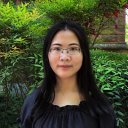
 Xinyu Tang
· 3 previous affiliations
- Apple (United States)Since 2024
- Researcher · Since 2024
- Princeton UniversityCurrent
- Current
- PhD student · 2019–2024
- Undergrad student · 2015–2019
1 other author named Xinyu Tang: Xinyu Tang (Renmin University of China · 18 papers)
Research Overview
Xinyu Tang focuses on the intersection of machine learning and differential privacy, with a particular emphasis on enhancing the utility and efficiency of private training and fine-tuning. Her work addresses the fundamental "utility tax" associated with differential privacy by developing novel optimization strategies, leveraging public data priors, and designing robust auditing mechanisms for large-scale models. Currently a researcher at Apple, Tang’s trajectory reflects a transition from defending against empirical privacy attacks to establishing provable privacy guarantees for generative models and large language models (LLMs).
Research Trajectory
Tang’s early research focused on the empirical measurement and mitigation of privacy leakage in machine learning models, specifically through the lens of membership inference attacks. In this phase, she investigated how models behave differently on training data versus unseen data, developing architectures to harmonize these behaviors. This work established a foundation in understanding the practical vulnerabilities of deep learning systems before shifting toward the more rigorous framework of differential privacy (DP).
As her work evolved, Tang began addressing the limitations of Differentially Private Stochastic Gradient Descent (DP-SGD), the standard algorithm for private training. A recurring challenge in this domain is the "curse of dimensionality," where the noise required to protect individual data points overwhelms the learning signal in high-dimensional models. Tang’s contributions during this period focused on Leveraging Public Data to Anchor Private Machine Learning. By utilizing non-sensitive public datasets or synthetic data generated from random processes, she demonstrated that models could acquire useful features and priors before ever touching sensitive data, thereby significantly reducing the privacy budget ($\epsilon$) required for downstream tasks.
This period also saw an analytical focus on Gradient Clipping Dynamics in Differentially Private Training. Tang explored how hyperparameter optimization and adaptive clipping could be tuned to maintain model accuracy. Her work introduced scaling rules that allow researchers to adjust learning rates and batch sizes effectively under DP constraints, a task that is traditionally computationally expensive due to the need for multiple trials that each consume a portion of the privacy budget.
In her most recent work, Tang has pivoted toward the privacy challenges inherent in generative AI and LLMs. This includes exploring how to perform in-context learning without leaking the sensitive demonstrations provided in the prompt, as well as developing memory-efficient fine-tuning methods. A significant portion of her current output involves private auditing, where she develops sophisticated "canaries" to empirically test the strength of privacy guarantees in black-box LLM settings.
Current Directions
Tang’s current research is concentrated on three primary areas within the landscape of large-scale private AI:
- Private Fine-tuning of LLMs: Standard DP-SGD is often prohibitively expensive for LLMs due to the memory overhead of storing per-sample gradients. Tang is investigating alternative optimization techniques, such as zeroth-order optimization, which estimate gradients using only forward passes. This approach aims to make private fine-tuning feasible on standard hardware while maintaining competitive performance.
- Empirical Privacy Auditing: While DP provides theoretical upper bounds on leakage, there is often a gap between these bounds and empirical vulnerability. Tang works on tightening this gap by designing membership inference attacks that use specialized tokens and canary sequences to detect if a model has memorized specific training inputs.
- Privacy-Preserving Generative Modeling: Beyond LLMs, Tang has participated in research regarding Privacy Preserving Synthetic Data for Sensitive Domains, particularly through the use of diffusion models. This involves training ensembles of models to ensure that the generated samples do not expose individual training records.
Representative Work
A Novel Self-Distillation Architecture to Defeat Membership Inference Attacks In this early work, Tang introduced SELENA, a framework designed to mitigate membership inference attacks by ensuring that a model's output distribution is similar for both member and non-member data. The core of this defense is an ensemble architecture called Split-AI, which uses self-distillation to prevent the model from over-adapting to specific training samples. This work highlighted the necessity of architectural interventions to protect data privacy in the absence of formal DP guarantees.
Differentially Private Image Classification by Learning Priors from Random Processes Addressing the high privacy cost of training from scratch, this paper proposes DP-RandP, a method that pretrains models on synthetic images generated by simple random processes (such as multi-fractal noise). Because these images contain no real-world information, this phase incurs zero privacy cost. Tang demonstrated that the features learned from these random priors provide a superior starting point for DP fine-tuning on sensitive datasets like CIFAR-10 and ImageNet, achieving state-of-the-art accuracy without the need for large-scale, real-world public datasets.
A New Linear Scaling Rule for Private Adaptive Hyperparameter Optimization Hyperparameter optimization (HPO) is notoriously difficult in DP because every trial consumes part of the privacy budget. Tang contributed to the development of a linear scaling rule that allows for the private selection of hyperparameters. The research provides a method to jointly increase the step size and the number of training steps as the privacy budget $\epsilon$ increases, streamlining the process of finding optimal configurations for private adaptive optimizers.
Privacy-Preserving In-Context Learning with Differentially Private Few-Shot Generation As LLMs are increasingly used for in-context learning (ICL), the risk of leaking sensitive information contained in the few-shot prompts has grown. Tang developed a method to generate "private" versions of these prompts. By using a DP generative process to create synthetic demonstrations that capture the task's distribution without revealing individual data points, this work enables the use of sensitive data for ICL while maintaining formal privacy guarantees.
Privacy Auditing of Large Language Models This work addresses the underestimation of privacy leakage in current LLM audits. Tang and her collaborators introduced more effective canary designs, including "new token" canaries that exploit the model's embedding table to detect memorization. This research represents the first non-trivial black-box privacy audit of an LLM, providing a more accurate empirical measure of how well theoretical DP guarantees hold up in practice.
Private Fine-tuning of Large Language Models with Zeroth-order Optimization To overcome the memory constraints of DP-SGD in the context of massive models, Tang proposed using zeroth-order (ZO) optimization. By bypassing the need for backpropagation and per-sample gradients, the ZO approach significantly reduces the memory footprint of private training. The paper demonstrates that this method can effectively fine-tune LLMs with billions of parameters under DP, closing the gap between computational feasibility and privacy preservation.
Profile updated
Loading new papers…
Other researchers whose papers cluster into the same research directions — a proxy for overlapping technical interests and shared intellectual neighborhoods.
See something wrong? Report a mistake