

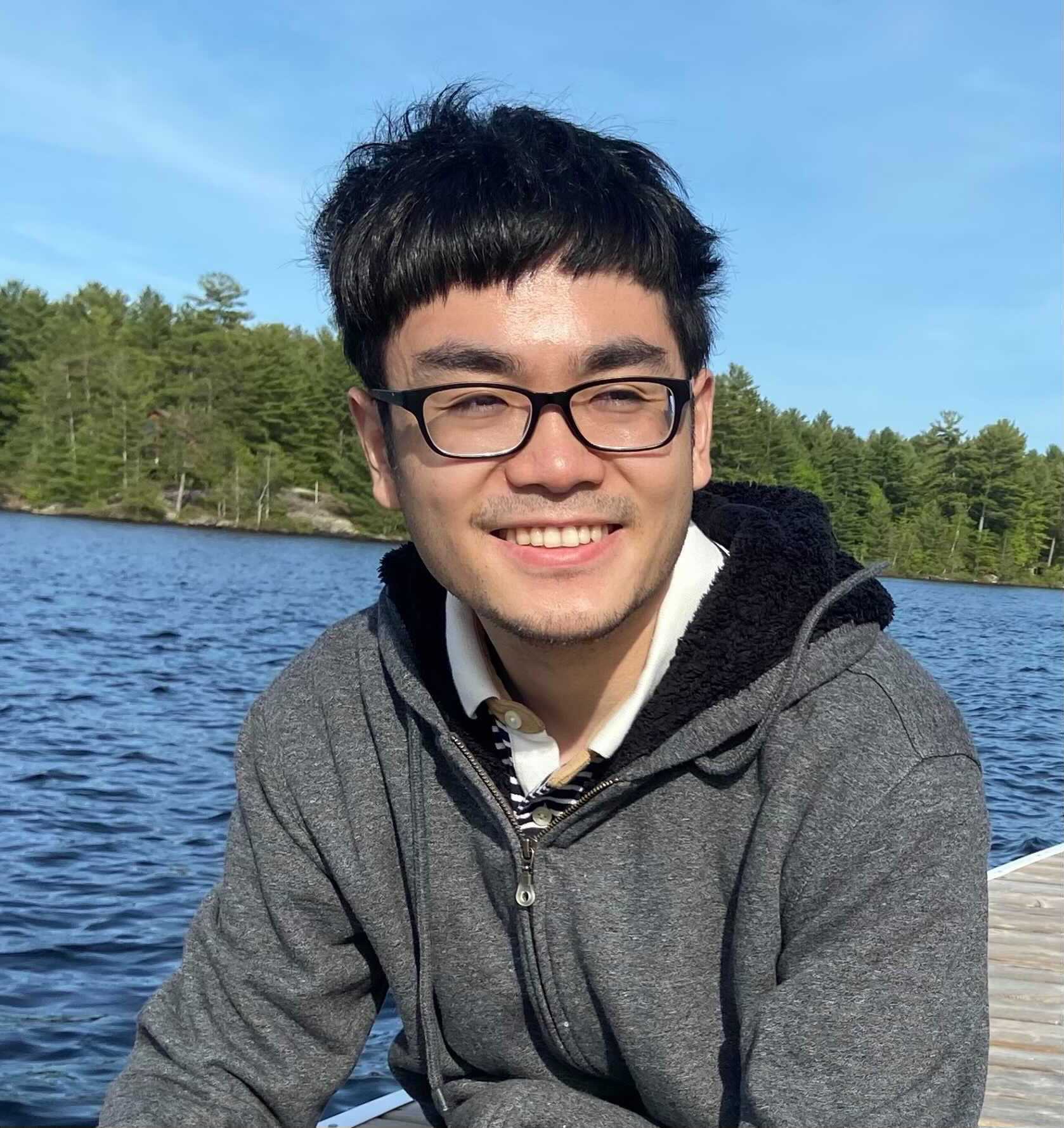
 Victor Yang
5 previous affiliations
- Databricks (United States)2025–2026
- Machine Learning Engineer · 2025–2026
- ByteDance (China)2023–2025
- Machine Learning Engineer · 2023–2025
- Borealis AI2019–2021
- Researcher · 2019–2021
- University of Waterloo2017–2019
- MS student · 2017–2019
- Zhejiang University2013–2017
- Undergrad student · 2013–2017
Research Overview
Victor Yang focuses on natural language processing, information retrieval, and domain adaptation for neural models. His trajectory spans early work on cross-domain word embeddings and rigorous evaluations of neural ranking systems to advanced question answering architectures. Most recently, his research addresses zero-shot video understanding and prompt optimization for large language models.
Research Trajectory
Yang’s early research investigated how to effectively train representations across different text genres, addressing the challenge of domain dependency in unsupervised learning. He introduced A Simple Regularization-based Algorithm for Learning Cross-Domain Word Embeddings, which provided a straightforward yet effective method for learning word embeddings from diverse domains. This work contributed to several broader research areas, including Domain Specific Token Weighting for Neural Models and Domain Adaptation for Vector Representations. By addressing the complexities of cross-domain training, the approach advanced techniques in the area of Preserving Domain Specificity in Multi-Source Adaptation and the related direction of Weight Proximity Regularization for Stable Model Adaptation.
Moving into information retrieval and question answering in 2019, Yang engaged deeply with both the evaluation and the architecture of neural ranking models. He conducted a rigorous meta-analysis in Critically Examining the "Neural Hype": Weak Baselines and the Additivity of Effectiveness Gains from Neural Ranking Models. By evaluating claims of effectiveness in neural information retrieval on the TREC Robust04 collection, he highlighted the importance of strong baselines and demonstrated that many reported gains were not consistently outperforming older, well-established methods. Concurrently, he developed practical, end-to-end systems, such as the architecture detailed in End-to-End Open-Domain Question Answering with BERTserini. His work during this period also explored specialized retrieval contexts; he contributed to Multi-Perspective Relevance Matching with Hierarchical ConvNets for Social Media Search., which designed neural architectures tailored for the short, informal text and rich relevance signals of platforms like Twitter. Additionally, he helped develop methods for Incorporating Contextual and Syntactic Structures Improves Semantic Similarity Modeling.
Building on his question answering research, Yang investigated multi-stage retrieval pipelines. He explored data augmentation techniques in Distant Supervision for Multi-Stage Fine-Tuning in Retrieval-Based Question Answering, using distant supervision to automatically annotate training examples for BERT-based readers. This work emphasized the critical sequencing of datasets and the balance between difficult and easy examples during fine-tuning. He also analyzed the efficiency-effectiveness tradeoffs of candidate generation in Approximate Nearest Neighbor Search and Lightweight Dense Vector Reranking in Multi-Stage Retrieval Architectures, demonstrating the advantages of combining approximate nearest neighbor techniques with dense vector reranking for sentence-length text segments.
In 2021, Yang’s focus expanded to the optimization of transformer models and data synthesis for semantic parsing. He participated in research on initialization strategies, contributing to Optimizing Deeper Transformers on Small Datasets. This work introduced the DT-Fixup strategy, which challenged the assumption that deep transformers require massive datasets by enabling training from scratch on limited data for complex Text-to-SQL and reading comprehension tasks. Addressing the bottleneck of grammar engineering in parsing, he introduced H-NEURSYN in Hierarchical Neural Data Synthesis for Semantic Parsing. This purely neural data augmentation method samples database entities and generates natural language questions to bypass manual grammar creation, achieving high accuracy via zero-shot domain augmentation. This work advanced the research direction of Synthetic Data Generation from Structured Knowledge and intersected with methods for The Spurious Program Problem in Weakly Supervised Reasoning.
Most recently, Yang has applied large language models to multimodal tasks. He explored the industrial application of foundation models in Optimizing GPT for Video Understanding: Zero-Shot Performance and Prompt Engineering, demonstrating how task decomposition and prompt engineering can enable scalable, zero-shot video content classification without the need for fine-tuning.
Current Directions
The most recent papers in the evidence indicate a shift toward the application of large language models in multimodal and industrial contexts. Current research directions focus on automated prompt optimization and zero-shot reasoning, particularly for complex tasks like video understanding and content classification. By investigating how to decompose complex policies and engineer prompts effectively, this work seeks to maximize the utility of foundation models in scenarios where fine-tuning is impractical or domain-specific training data is scarce.
Profile updated
Loading new papers…
Other researchers whose papers cluster into the same research directions — a proxy for overlapping technical interests and shared intellectual neighborhoods.
See something wrong? Report a mistake