

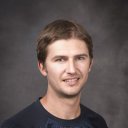
 Victor V. Albert
· 7 previous affiliations
- University of Maryland, College ParkSince 2020
- Assistant Professor · Since 2024
- Adjunct Assistant Professor · Since 2020
- Principal Researcher · Since 2020
- California Institute of Technology2017–2020
- Lee A. DuBridge Postdoctoral Scholar in Physics · 2017–2020
- Yale University2011–2017
- PhD student · 2011–2017
- University of Toronto2010–2011
- Undergraduate Researcher · 2010–2011
- University of Florida2006–2010
- Undergrad student · 2006–2010
- Undergraduate Researcher · 2008
Research Overview
Victor V. Albert focuses on quantum error correction, continuous-variable quantum information theory, and the simulation of bosonic systems. His early work established foundational methods for protecting quantum information in microwave cavities and analyzing open quantum dynamics. More recently, his research investigates continuous-variable state designs, quantum shadow tomography, and quantum-inspired benchmarks for machine learning.
Research Trajectory
Victor V. Albert's early research established foundational methods for analyzing open quantum dynamics and controlling microwave cavities. In 2014, he introduced a rigorous framework for extending symmetries and conserved quantities to dissipative systems described by Lindblad master equations. This approach allowed for the exact prediction of a system's final steady state based on initial conditions, bypassing the need to calculate intermediate dynamics, as detailed in Symmetries and conserved quantities in Lindblad master equations. He subsequently participated in experimental and theoretical efforts in the area of Universal Control of Bosonic Modes via Selective Phase Gates. This included contributing to the development of the Selective Number-dependent Arbitrary Phase (SNAP) gate, a tool for correcting hardware imperfections and creating complex quantum states in microwave cavities in Cavity State Manipulation Using Photon-Number Selective Phase Gates.
A major theme of his trajectory is the research direction of Hardware Efficient Quantum Error Correction with Bosonic Codes. He contributed to the introduction of binomial quantum codes, which encode logical qubits into specific superpositions of photon states weighted by binomial coefficients to correct for photon loss, gain, and dephasing with high resource efficiency New Class of Quantum Error-Correcting Codes for a Bosonic Mode. He later led a comprehensive structural comparison of leading single-mode bosonic codes under realistic photon loss, demonstrating that Gottesman-Kitaev-Preskill (GKP) codes exhibit a unique exponential suppression of errors Performance and structure of single-mode bosonic codes. This sustained focus culminated in a comprehensive review of bosonic coding, detailing how encoding data into qumodes can achieve higher hardware efficiency and advance the area of Bypassing Fundamental Limits of Quantum Error Correction in Bosonic coding: introduction and use cases. He also authored a broader educational primer on the subject, Introduction to quantum error correction.
Expanding beyond error correction, his work addresses the mathematical challenges of quantum simulation and cryptography. He developed a framework to aggressively truncate the technically infinite state spaces of bosons and gauge fields, providing exponential accuracy guarantees for simulating high-energy physics and condensed matter, contributing to the broader area of Active Leakage Management for Scalable Surface Codes in Provably accurate simulation of gauge theories and bosonic systems. In quantum cryptography, his group developed an extension of subspace coset state monogamy-of-entanglement games to general group coset states. By applying measure-theoretic formalisms to continuous-variable measurements, this work advanced device-independent quantum key distribution Group coset monogamy games and an application to device-independent continuous-variable QKD.
His recent research focuses heavily on continuous-variable (CV) systems and state designs. His group proved that standard definitions of CV state and unitary designs do not exist for orders greater than two, and introduced "rigged designs" using non-normalizable states to enable new protocols for CV shadow tomography Continuous-Variable Quantum State Designs: Theory and Applications. They further expanded this by investigating state designs using latticelike quantum states, deriving sample complexity bounds for global and local GKP shadows Continuous-Variable Designs and Design-Based Shadow Tomography from Random Lattices. He also directed research into novel encoding schemes, such as Quantum spherical codes. Additionally, he participated in applying quantum information tools to machine learning, helping introduce QuIIEst, a quantum-inspired benchmark suite that uses coherent states to measure the intrinsic dimension of high-dimensional data Quantum-inspired Benchmark for Estimating Intrinsic Dimension.
Current Directions
Recent work investigates the theoretical foundations and practical applications of continuous-variable (CV) quantum state designs. The most recent papers in the evidence address the mathematical challenges of defining CV state and unitary designs, introducing "rigged designs" based on non-normalizable states and Gottesman-Kitaev-Preskill (GKP) code states. This theoretical framework is being applied to develop new protocols for continuous-variable shadow tomography, complete with sample complexity bounds and physical implementation strategies. Additionally, current research explores novel encoding structures like quantum spherical codes and leverages quantum information tools—such as coherent states—to create quantum-inspired benchmarks for estimating the intrinsic dimension of complex data manifolds in machine learning.
Profile updated
Loading new papers…
Other researchers whose papers cluster into the same research directions — a proxy for overlapping technical interests and shared intellectual neighborhoods.
See something wrong? Report a mistake