

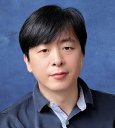
 Tsung-Yi Ho
· 2 previous affiliations
- Chinese University of Hong KongSince 2021
- Full Professor · Since 2021
- Current
- National Tsing Hua University2015–2021
- Full Professor · 2015–2021
1 other author named Tsung-Yi Ho: Tsung-Yi Ho (National Tsinghua University · 2 papers)
Research Overview
Tsung-Yi Ho focuses on electronic design automation, the safety and alignment of large language models, and adversarial robustness in machine learning. His early trajectory established foundational computer-aided design methodologies for microfluidic biochips and integrated circuits. More recently, his research addresses the security of generative AI and the application of large language models to automate hardware design.
Research Trajectory
Tsung-Yi Ho’s early research established core methodologies in electronic design automation (EDA) and hardware routing. His work on PIXAR: A performance-driven X-architecture router based on a novel multilevel framework introduced advanced routing frameworks for integrated circuits. He subsequently applied these systematic computer-aided design principles to emerging biological technologies, detailing this transition in Design Automation for Digital Microfluidic Biochips. This work argued for replacing manual, error-prone lab-on-a-chip designs with robust, automated CAD flows analogous to those used in microelectronics.
As machine learning systems grew in complexity, his focus expanded to include the robustness and security of deep neural networks. He began investigating the research direction of Robustness to Composite Adversarial Perturbations with Generalizing Adversarial Training to Composite Semantic Perturbations. This foundation was expanded in Towards Compositional Adversarial Robustness: Generalizing Adversarial Training to Composite Semantic Perturbations, which introduced Generalized Adversarial Training (GAT) to protect models against sequences of semantic changes, such as simultaneous rotation and color shifting. This methodology intersects with the broader areas of Robustness to Adversarial Permutations and Sequence Ordering and Efficient Methods for Robust Neural Network Optimization.
Continuing his work on model vulnerabilities, he explored the area of Backdoor Vulnerabilities in Large Scale Generative Architectures through VillanDiffusion: A Unified Backdoor Attack Framework for Diffusion Models, which demonstrated how unconditional diffusion models could be compromised by maliciously embedded input patterns. Alongside security, he examined inherent model biases, participating in a large-scale study, Uncovering and Quantifying Social Biases in Code Generation, which revealed that larger code generation models paradoxically exhibit increased demographic biases.
In the domains of model reliability and computer vision, his research addresses both calibration and prompt optimization. He contributed to the field of Calibrating Uncertainty in Deep Neural Networks with Neural Clamping: Joint Input Perturbation and Temperature Scaling for Neural Network Calibration, proposing a post-processing method to better align model confidence with actual predictive accuracy. For visual tasks, he developed AutoVP: An Automated Visual Prompting Framework and Benchmark, an end-to-end system for optimizing input scaling and prompt design. He also advanced medical image analysis with Unsupervised Out-of-Distribution Detection in Medical Imaging Using Multi-Exit Class Activation Maps and Feature Masking, introducing a framework that detects out-of-distribution data by measuring a network's feature sensitivity to masked regions.
A major recent theme in his trajectory is the safety, alignment, and red-teaming of Large Language Models (LLMs). To defend against adversarial prompts, he developed Gradient Cuff: Detecting Jailbreak Attacks on Large Language Models by Exploring Refusal Loss Landscapes, which identifies malicious queries by analyzing the geometric sharpness of a model's refusal behavior—advancing the area of Mitigating False Refusals in Safety-Aligned Language Models. He further strengthened model guardrails with Defensive Prompt Patch: A Robust and Generalizable Defense of Large Language Models against Jailbreak Attacks. On the offensive side, he explored automated vulnerability testing via CoP: Agentic Red-teaming for Large Language Models using Composition of Principles, utilizing an AI agent to orchestrate multiple attack strategies simultaneously. To maintain safety without degrading the quality of benign responses, he proposed decoding-time interventions in CARE: Decoding-Time Safety Alignment via Rollback and Introspection Intervention. He also identified critical risks in standard inference practices, demonstrating in Steering Externalities: Benign Activation Steering Unintentionally Increases Jailbreak Risk for Large Language Models that even well-intentioned activation steering can act as a force multiplier for jailbreak attacks. To prevent models from losing safety during self-evolution, Ho introduced Safe Evolution with Circuit Anchors, anchoring a mechanistically identified safety circuit to preserve guardrails while allowing capabilities to adapt freely.
Bringing his expertise full circle, his most recent work integrates LLMs back into electronic design automation. He co-authored the perspective The Dawn of AI-Native EDA: Promises and Challenges of Large Circuit Models, advocating for a paradigm shift in semiconductor design. He operationalized this vision with Expert-level Leaf Cell Layout Generation via Preference-Optimized LLM, utilizing preference optimization to automate the design of fundamental integrated circuit building blocks. Finally, he addressed hardware verification with AnalogVerifier: A Neuro-Symbolic Framework for Analog Circuit Verification, combining the semantic understanding of LLMs with rigorous symbolic reasoning to automate testbench creation for analog circuits. Expanding generative modeling into chip thermal management, Ho also developed DiffCool: Label-Free Synthesis of Chip-Tailored Heat Sinks via Thermal-Aware Diffusion, a physics-guided diffusion framework that generates custom, manufacturing-ready heat sink topologies directly from bare-chip heat maps without labeled data.
Current Directions
Based on his most recent publications, Tsung-Yi Ho’s current research operates at the intersection of generative AI safety and AI-native hardware design. A primary focus is the adversarial robustness of Large Language Models, specifically understanding the mechanics of jailbreak attacks and developing both automated red-teaming agents and decoding-time defenses that preserve model utility. Concurrently, he is pioneering the application of LLMs to electronic design automation (EDA). This includes developing neuro-symbolic frameworks for analog circuit verification and utilizing preference-optimized language models to automate complex, low-level hardware layout tasks, effectively bridging modern generative AI capabilities with rigorous engineering constraints.
Profile updated
Loading new papers…
Other researchers whose papers cluster into the same research directions — a proxy for overlapping technical interests and shared intellectual neighborhoods.
See something wrong? Report a mistake