

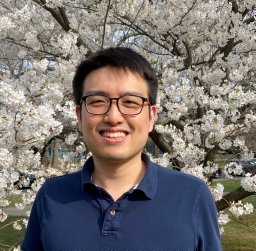
 Pin-Yu Chen
· 7 previous affiliations
- Rensselaer Polytechnic InstituteSince 2019
- Chief Scientist · Since 2019
- Principal Researcher · Since 2022
- Research Staff Member · 2016–2022
- IBMSince 2016
- Principal Research Staff Member · Since 2022
- Research Staff Member · 2017–2022
- Research Scientist · 2016–2017
- University of Michigan2012–2016
- Master of Arts - MA, Statistics · 2014–2016
- PhD student · 2012–2016
- Data Science PhD Summer Intern · 2015
- National Taiwan University2009–2011
- MS student · 2009–2011
- Undergrad student · 2005–2009
Research Overview
Pin-Yu Chen focuses on the safety, robustness, and trustworthiness of artificial intelligence systems, with an emphasis on adversarial machine learning and generative AI. His trajectory spans early work in network dynamics to foundational methods for evaluating and certifying deep neural networks. Most recently, he investigates computational safety frameworks and parameter-efficient adaptation for large language and multimodal models.
Research Trajectory
The earliest work in the provided evidence centers on network dynamics and information dissemination. In 2010, he investigated how information spreads in wireless and social networks, modeling these processes in Information Epidemics in Complex Networks with Opportunistic Links and Dynamic Topology to address the challenges of dynamic channel access and time-varying topologies.
By 2017, his focus shifted significantly toward the security and reliability of deep learning systems, establishing a long-term commitment to adversarial robustness. He introduced foundational techniques for evaluating model vulnerabilities, notably ZOO: Zeroth Order Optimization Based Black-box Attacks to Deep Neural Networks without Training Substitute Models. This work demonstrated how to generate adversarial examples without access to a model's internal gradients. The following year, he expanded on adversarial evaluation by formulating attacks as an elastic-net regularized optimization problem in EAD: Elastic-Net Attacks to Deep Neural Networks via Adversarial Examples, which encouraged sparsity in adversarial perturbations.
In 2019, his research expanded to include both structural graph analysis and the formal verification of neural networks. He developed methods for measuring information divergence in dynamic graphs in Fast Incremental von Neumann Graph Entropy Computation: Theory, Algorithm, and Applications, contributing to the research direction of Scalable Graph Entropy Estimation via Quadratic Approximations. Concurrently, he addressed the need for provable security guarantees in deep learning by co-developing CNN-Cert: An Efficient Framework for Certifying Robustness of Convolutional Neural Networks. By exploiting the mathematical structure of convolutions, this framework significantly accelerated robustness certification, advancing the broader area of Certifying Neural Networks via Linear Bound Propagation.
Moving into the 2020s, his work began to explore how large, pre-trained models could be adapted for novel domains and complex threat models. Participating in cross-disciplinary research, he contributed to Reprogramming Large Pretrained Language Models for Antibody Sequence Infilling in 2023. This work applied deep language models to the computational design of antibodies, intersecting with areas such as The Shared Structural Logic of Language and Biology and the research direction of Reprogramming Frozen Neural Networks for New Tasks. He continued to explore model reprogramming in 2024, collaborating on Time-LLM: Time Series Forecasting by Reprogramming Large Language Models. In 2026, he co-developed a theoretical analysis of the paradigm in On the Learnability of Model Reprogramming: A Reachability and Relabeling Perspective, characterizing the finite-sample learnability, sample complexity, and approximation errors of wrapper hypothesis classes. Alongside model adaptation, he addressed increasingly sophisticated adversarial threats. In Towards Compositional Adversarial Robustness: Generalizing Adversarial Training to Composite Semantic Perturbations, he co-developed a framework to protect models against sequences of semantic changes, contributing to the area of Robustness to Composite Adversarial Perturbations and the related direction of Robustness to Adversarial Permutations and Sequence Ordering.
By 2025, his research heavily emphasized the safety and alignment of generative AI and foundation models. He co-authored a comprehensive roadmap for the field, Introduction to Foundation Models, which bridges architectural mechanics with the critical need for AI safety across text, vision, and speech. To address vulnerabilities in multimodal systems, he introduced Retention Score: Quantifying Jailbreak Risks for Vision Language Models, a fast, attack-agnostic metric utilizing diffusion models to evaluate certified robustness. For text-based models, his group developed Attention Tracker: Detecting Prompt Injection Attacks in LLMs, a training-free method that analyzes internal attention shifts to identify malicious instructions. He also explored the dynamic nature of AI safety through Adversarial Attack-Defense Co-Evolution for LLM Safety Alignment via Tree-Group Dual-Aware Search and Optimization, framing safety as a co-evolutionary arms race between attack and defense models.
A major theme in his recent work is the tension between model adaptation and safety preservation. In Fundamental Safety-Capability Trade-offs in Fine-tuning Large Language Models, he provided a theoretical framework demonstrating how fine-tuning aligned models on benign tasks can inadvertently degrade their safety guardrails. To improve the efficiency of model adaptation without compromising quality, his group introduced DiffuseKronA: A Parameter Efficient Fine-tuning Method for Personalized Diffusion Models. Detailed across concurrent publications, this approach leverages Kronecker products to achieve high subject fidelity with significantly fewer trainable parameters than traditional low-rank adaptations.
His most recent work formalizes AI safety through rigorous statistical and signal processing lenses. In 2025, he published Computational Safety for Generative AI: A Signal Processing Perspective, which was followed in 2026 by Computational Safety for Generative AI: A Hypothesis Testing Perspective. These papers reframe the detection of malicious inputs and AI-generated content as statistical inference tasks. In 2026, he also investigated the practical limits of model scaling in Scaling Behavior in Model Fine-tuning for Audio DeepFake Detection, revealing that simply increasing model size offers diminishing returns for real-world robustness against structured distortions. Finally, he extended robustness principles to quantum computing, collaborating on TensorHyper-VQC: a tensor-train-guided hypernetwork for robust and scalable variational quantum computing to mitigate noise and barren plateaus in quantum circuits. Additionally in 2026, his group addressed decoding efficiency in long reasoning tasks with FAD-KV: Adaptive Dictionary KV Caching for Efficient Reasoning Decoding, which bounds memory via screening-based sparse coding and fixed-size adaptive dictionaries, and he contributed to Mitigating Backdoors in Masked Diffusion Language Models to detect, localize, and excise backdoor triggers in non-autoregressive language models.
Current Directions
The most recent papers in the evidence address the formalization of computational safety for generative AI and the robustness of emerging architectures. Recent work investigates how safety guardrails degrade during fine-tuning and proposes statistical frameworks—drawing on signal processing and hypothesis testing—to quantify and defend against multimodal jailbreaks and prompt injections. Additionally, current research explores the scaling behaviors of audio deepfake detection models, demonstrating that simply increasing model size yields diminishing returns for real-world robustness. Finally, recent contributions extend parameter-efficient adaptation and robustness principles to quantum computing, while also advancing efficient dictionary-based KV cache compression for long-context reasoning and backdoor mitigation in masked diffusion language models.
Profile updated
Loading new papers…
Other researchers whose papers cluster into the same research directions — a proxy for overlapping technical interests and shared intellectual neighborhoods.
See something wrong? Report a mistake