

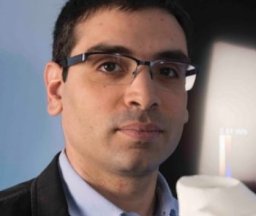
 Tommaso Mansi
· 10 previous affiliations
- Johnson & JohnsonSince 2021
- Vice President AI · Since 2021
- Johnson & Johnson Innovative MedicineSince 2021
- VP of AI/ML and Digital Health · Since 2021
- Siemens Healthcare (United States)2016–2021
- Senior Director R&D · 2018–2021
- Director R&D · 2016–2018
- Siemens (Germany)2010–2016
- Senior Key Expert Scientist · 2015–2016
- Research Scientist · 2010–2015
- PhD student · 2007–2010
- PhD Candidate · 2007–2010
- Doctor of Philosophy - PhD, Biomedical/Medical Engineering · 2007–2010
- Université Paris Sciences et Lettres2007–2010
- Doctor of Philosophy - PhD, Biomedical/Medical Engineering · 2007–2010
- Health-e-Child2007–2010
- Ph.D. Student · 2007–2010
- Télécom Paris2001–2005
- Engineer, Telecommunications · 2001–2005
Research Overview
Tommaso Mansi focuses on artificial intelligence, computational physiology, and medical imaging to develop next-generation healthcare solutions. His early trajectory established patient-specific biophysical models and digital twins for cardiac and hepatic interventions. More recently, his work has shifted toward large-scale equivariant learning, multimodal molecular representations, and biology-informed optimization for drug discovery and genomic modeling.
Research Trajectory
Mansi's early research concentrated on non-linear image registration and the computational modeling of cardiac biomechanics. He introduced consistent regularization techniques for soft tissue tracking in LogDemons Revisited: Consistent Regularisation and Incompressibility Constraint for Soft Tissue Tracking in Medical Images. This work advanced the research direction of Diffeomorphic Flows for Topology Preserving Deformation by enforcing incompressibility constraints critical for biological tissues. Applying these computational principles to clinical cardiology, he developed predictive models for right ventricle remodeling in patients with congenital heart defects in A Statistical Model for Quantification and Prediction of Cardiac Remodelling: Application to Tetralogy of Fallot. He subsequently extended this biophysical modeling to structural heart interventions, detailing an integrated finite-element framework for MitralClip procedure planning in An integrated framework for finite-element modeling of mitral valve biomechanics from medical images: Application to MitralClip intervention planning.
Transitioning into oncology and advanced registration techniques, Mansi and collaborators explored heat diffusion models for liver cancer treatments. This included the development of a patient-specific planning tool in Efficient Lattice Boltzmann Solver for Patient-Specific Radiofrequency Ablation of Hepatic Tumors. Concurrently, his focus on image alignment evolved to incorporate deep learning. He contributed to the broader area of Amortized Optimization for Real-Time Deformable Image Registration through the investigation of agent-based action learning for organ-specific alignment in Robust Non-rigid Registration Through Agent-Based Action Learning. Building on this probabilistic approach, his team later designed a conditional variational autoencoder to map and generate symmetric transformations in Learning a Probabilistic Model for Diffeomorphic Registration.
In the early 2020s, Mansi's research heavily emphasized the automation of surgical and interventional planning. His group significantly accelerated radiofrequency ablation planning by replacing simplified geometric estimates with learned physics models in Fast Automatic Liver Tumor Radiofrequency Ablation Planning via Learned Physics Model. They further refined this domain using deep reinforcement learning to optimize electrode trajectories in Automatic planning of liver tumor thermal ablation using deep reinforcement learning, addressing challenges in dynamic 4D reconstruction and the spatial interpretation gap from 2D to 3D. To handle complex cases requiring overlapping ablations, they evaluated multi-electrode computational models in A comparative study on computational models of multi-electrode radiofrequency ablation of large liver tumors. Beyond oncology, Mansi directed research in robotic interventional imaging, developing automated view recovery methods for intra-cardiac echocardiography catheters in Automated catheter tip repositioning for intra-cardiac echocardiography. To tackle the complex independent sliding motions of abdominal organs during imaging, his team introduced the Multi-Organ Bayesian Coherent Point Drift algorithm in A multi-organ point cloud registration algorithm for abdominal CT registration.
More recently, Mansi's trajectory has expanded into foundational machine learning architectures and computational biology. Addressing the quadratic complexity of equivariant self-attention, his group introduced an equivariant long-convolutional model in SE(3)-Hyena Operator for Scalable Equivariant Learning. They scaled this architecture to process massive biological sequences like proteins and RNA in Geometric Hyena Networks for Large-scale Equivariant Learning, advancing techniques for deep learning on unstructured 3D point clouds and accelerating neural networks via frequency domain convolutions.
His recent collaborative work delves deeply into genomic modeling and drug discovery. He participated in developing a novel framework for mRNA language modeling in HyperHELM: Hyperbolic Hierarchy Encoding for mRNA Language Modeling, contributing to the research area of Hyperbolic Embeddings for Hierarchical Representation Learning by aligning internal representations with biological hierarchies. In the field of Hierarchical Molecular Representations, he co-authored TRIDENT: Tri-Modal Molecular Representation Learning with Taxonomic Annotations and Local Correspondence, which integrates chemical structures, natural language, and taxonomic data. This multimodal alignment strategy was further extended to predict drug-target interactions in GRAM-DTI: Adaptive Multimodal Representation Learning for Drug–Target Interaction Prediction. Continuing to bridge spatial and molecular data, he contributed to a hierarchical pretraining framework for spatial transcriptomics in PaSTel: Anchoring Histology in Spatial Transcriptomics via Multi-Scale Hierarchical Bio-Prior Contrastive Pretraining. Finally, addressing experimental design, he collaborated on BioBO: Biology-informed Bayesian Optimization for Perturbation Design, which integrates multimodal gene embeddings to accelerate the discovery of high-impact genetic perturbations.
Current Directions
The most recent papers in the evidence indicate a strong focus on scalable geometric deep learning and multimodal foundation models for computational biology. Recent work investigates the use of equivariant long-convolutional operators—such as the SE(3)-Hyena architecture—to efficiently process massive 3D biological structures like proteins and RNA without the quadratic computational bottleneck of traditional attention mechanisms.
Concurrently, Mansi is exploring advanced representation learning for drug discovery and genomics. This includes aligning heterogeneous modalities—such as chemical structures, textual descriptions, taxonomic annotations, and protein sequences—into shared latent spaces to predict drug-target interactions. Additional recent efforts address spatial transcriptomics and the use of biology-informed Bayesian optimization to guide genetic perturbation design, blending rigorous optimization with biological priors to accelerate the identification of high-impact genes.
Profile updated
| Paper | Venue | Year |
|---|---|---|
| Geometric Hyena Networks for Large-scale Equivariant LearningGitHubamoskalev/ | ICML | 2025 |
Loading new papers…
Other researchers whose papers cluster into the same research directions — a proxy for overlapping technical interests and shared intellectual neighborhoods.
See something wrong? Report a mistake