

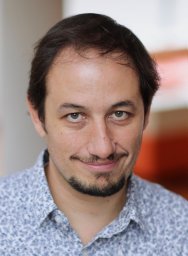
 Maxime Sermesant
· 7 previous affiliations
- Researcher · Since 2006
- Senior Research Scientist · Since 2005
- TherapixelSince 2013
- Co-founder · Since 2013
- 3IA Côte d'AzurSince 2019
- Chair of AI & Biophysics · Since 2019
- Current
- Université Côte d'AzurCurrent
- Current
- Habilitation à Diriger des Recherches · 2016
- PhD, Control, Signal and Image Processing · 1999–2003
- inHEARTSince 2017
- Co-founder and Scientific Advisor · Since 2017
- King's College London2003–2010
- Post Doc · 2003–2010
Research Overview
Maxime Sermesant focuses on the development of patient-specific computational models of the heart, integrating biophysical simulation with statistical machine learning to improve clinical diagnosis and therapy planning. His work spans biomedical image analysis, organ modeling, and the creation of "digital twins" for cardiovascular applications. By combining the mechanistic rigor of physiological models with the predictive power of data-driven approaches, he aims to translate complex cardiac imaging into actionable clinical insights, particularly for the management of arrhythmias and heart failure.
Research Trajectory
The evolution of Sermesant’s research reflects a broader shift in computational medicine from idealized geometric models to highly personalized, data-integrated simulations. In the early 2000s, his work was primarily concerned with the foundational challenges of cardiac image analysis using physically-constrained frameworks. During this period, he developed methods to integrate the physics of electrical wave propagation and anisotropic muscle contraction into geometric meshes. This approach allowed for more robust segmentation and motion tracking in noisy 3D ultrasound data by ensuring that the resulting models adhered to known physiological laws.
By the mid-2000s, the focus expanded toward the creation of statistical atlases of cardiac architecture. This involved characterizing the complex fiber orientations of the myocardium, which are critical for accurate electro-mechanical simulation. This period established the necessity of combining population-level statistical knowledge with individual patient data, a theme that would define much of his subsequent work.
In the late 2000s and early 2010s, Sermesant’s research transitioned toward the personalization of these models. The primary challenge shifted from simply building a model to estimating patient-specific parameters—such as local conductivity and tissue stiffness—from clinical data like MRI, CT, and electro-anatomical maps. This era saw a significant focus on ventricular tachycardia (VT) and the identification of the arrhythmogenic substrate. His work demonstrated that personalized biophysical models could predict the inducibility of VT and the morphology of reentry circuits, providing a potential tool for "virtual" surgical planning.
In recent years, Sermesant has increasingly integrated deep learning with biophysical modeling, addressing the limitations of traditional neural networks in medical contexts. This includes exploring Anatomical Constraints for Biologically Plausible Medical Image Analysis, ensuring that machine learning predictions remain consistent with human physiology. His current work also investigates the use of Exact Geometry for High Precision Numerical Analysis and Local Curvature Estimation for Discrete Data Analysis to improve the fidelity of cardiac simulations. Furthermore, his research has moved into the domain of in silico trials, using digital twins to predict the cardiotoxic effects of chemotherapeutic agents and to optimize device therapy.
Current Directions
Sermesant’s current research is characterized by three main pillars: the refinement of digital twins, the application of advanced machine learning architectures to medical imaging, and large-scale computational fluid dynamics (CFD).
A significant portion of his recent activity involves the use of Transformers and Multi-Layer Perceptrons (MLPs) for image registration and segmentation. This work questions whether the success of modern vision architectures in medicine is due to complex attention mechanisms or the underlying data representation. Simultaneously, he is involved in large-scale studies that apply CFD to analyze left atrial hemodynamics, identifying how anatomical variations in the pulmonary veins influence thrombus formation risk.
His role as the Chair of AI & Biophysics at 3IA Côte d’Azur further emphasizes the synthesis of these two fields. This involves developing methods that respect the non-Euclidean nature of medical data, often utilizing Parallel Transport for Learning on Riemannian Manifolds to handle the curved geometries of anatomical structures. The ultimate goal of these efforts is the clinical translation of cardiac models through platforms like medInria and industrial collaborations, moving computational cardiology from a research tool to a standard component of cardiovascular care.
Representative Work
The following papers illustrate the progression of Sermesant’s research from early biophysical frameworks to modern machine learning integrations.
In An Electro-mechanical Model of the Heart for Cardiac Image Analysis, Sermesant (as lead author) introduced a simplified electro-mechanical model designed to constrain the analysis of cardiac images. By embedding electrical wave propagation and anisotropic contraction into a geometric framework, the study demonstrated how physical priors could improve the tracking of heart motion in 3D ultrasound, laying the groundwork for future patient-specific modeling.
The challenge of model personalization was addressed in Volumetric Prediction of Cardiac Electrophysiology using a Heart Model Personalised to Surface Data. This work evaluated the ability of a simplified ionic model (Mitchell-Schaeffer) to predict 3D electrophysiology after being tuned to epicardial surface maps. The study highlighted the sensitivity of model predictions to parameter estimation, a critical step toward using simulations for clinical arrhythmia management.
Sermesant served as the senior author on Local late gadolinium enhancement features to identify the electrophysiological substrate of post-infarction ventricular tachycardia: a machine learning approach. This paper represents a significant shift toward data-driven methods, using a Random Forest model to identify ablation targets from high-resolution MRI texture features. By accounting for the physical uncertainty of catheter motion during clinical mapping, the research moved closer to non-invasive, "virtual" planning for VT ablation.
In the domain of modern computer vision, Unsupervised Echocardiography Registration Through Patch-Based MLPs and Transformers (where Sermesant is the second author) explores the efficacy of patch-based architectures for medical image registration. The study demonstrates that simpler MLP-based structures can perform competitively with more complex convolutional and attention-based models, providing insights into the optimal design of neural networks for challenging medical imaging tasks.
Sermesant participated in the large-scale study The role of the pulmonary veins on left atrial hemodynamics and thrombus formation, which utilized computational fluid dynamics (CFD) across a cohort of 130 patients. The research identified that the specific configuration and orientation of pulmonary veins are primary drivers of blood flow patterns in the left atrium, directly impacting the risk of clot formation in the left atrial appendage.
Finally, the recent work In silico predictions of action potential propagation in doxorubicin cardiotoxicity: A parametric study using preclinical 3D magnetic resonance imaging‐based fibrotic left ventricle models illustrates the application of cardiac models to pharmacology. By simulating action potential propagation in fibrotic heart models derived from MRI, the study provides a framework for predicting the pro-arrhythmic risks of chemotherapy, demonstrating the utility of digital twins in assessing cardiotoxicity.
Profile updated
Loading new papers…
Other researchers whose papers cluster into the same research directions — a proxy for overlapping technical interests and shared intellectual neighborhoods.
See something wrong? Report a mistake