

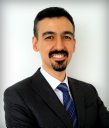
 Tolga Cukur
· 6 previous affiliations
- Bilkent UniversitySince 2013
- Director · Since 2023
- Associate Professor · 2018–2023
- Full Professor · 2013–2018
- Undergrad student · 1999–2003
- UmramSince 2023
- Director · Since 2023
- Deputy Editor-in-Chief · Since 2026
- University of California, Berkeley2010–2013
- Postdoctoral Researcher · 2010–2013
- Postdoc · 2010–2013
- Stanford University2003–2009
- Research Assistant · 2003–2009
- Ph. D., Electrical Engineering · 2005–2009
- PhD student · 2003–2005
Research Overview
Tolga Cukur focuses on the development of computational imaging methods and deep learning frameworks to examine the anatomy and function of biological systems. His research program spans the design of ultra-fast magnetic resonance imaging (MRI) techniques, the analysis of human sensory and cognitive systems through functional MRI (fMRI), and the creation of robust, collaborative artificial intelligence models for medical image synthesis and reconstruction. By integrating principles from electrical engineering, machine learning, and neuroscience, Cukur addresses fundamental trade-offs in medical imaging between acquisition speed, spatial resolution, and signal integrity.
Research Trajectory
The evolution of Cukur’s work reflects a transition from investigating the neurobiological basis of visual perception to developing the advanced computational tools required to image such processes with higher precision. During his early career and postdoctoral training at the University of California, Berkeley, his research was primarily grounded in computational neuroscience. This period focused on how the human brain represents complex natural scenes and how cognitive states, such as attention, modulate these representations. This foundational work utilized fMRI to map categorical representations across the neocortex, establishing a baseline for understanding how the brain dynamically reconfigures its tuning during natural behavior.
Upon establishing his laboratory at Bilkent University, Cukur’s focus expanded significantly into the engineering challenges of MRI. He began addressing the physical limitations of rapid imaging, particularly Susceptibility Artifact Correction in Fast Magnetic Resonance Imaging. This line of inquiry sought to mitigate the distortions inherent in Echo Planar Imaging (EPI), the standard modality for functional and diffusion MRI, where speed often compromises spatial integrity. His group developed unsupervised models to correct these distortions, facilitating more reliable neuroimaging.
As deep learning emerged as a dominant paradigm in image processing, Cukur’s research pivoted toward Robust Deep Learning for Motion Prone MRI Reconstruction. Recognizing that the traditional "k-space" sampling in MRI is inherently slow and sensitive to patient movement, he investigated methods for undersampling frequency data without introducing aliasing artifacts. This work extended to Robust Reconstruction for Non-Cartesian Magnetic Resonance Imaging, where his group developed algorithms to handle spiral or radial sampling paths that are naturally more robust to motion but computationally difficult to reconstruct.
In the late 2010s, Cukur’s work increasingly utilized generative adversarial networks (GANs) to bridge the gap between different imaging modalities. He explored Cross-Modal Structural Guidance for Image Reconstruction, leveraging the structural detail of one modality (such as MRI) to improve the resolution or metabolic data of another (such as PET). This period also saw the development of "cross-contrast synthesis," where missing or corrupted image contrasts are computationally generated from available scans, reducing the need for lengthy multi-sequence clinical protocols.
More recently, Cukur has addressed the structural limitations of standard convolutional neural networks (CNNs) in medical imaging. To overcome the "tunnel vision" of local convolutional filters, his research moved toward Global Context Modeling for Medical Image Segmentation and synthesis using Vision Transformers. He also tackled the "cubic curse" of 3D data processing through Sequential Slice Processing for High Resolution Volumetric Data, allowing high-resolution 3D volumes to be processed within the memory constraints of modern hardware. His current directions involve "Collaborative AI," specifically personalized federated learning, which allows multiple institutions to train shared models without exchanging sensitive patient data, and the application of State Space Models (SSMs) for highly efficient image reconstruction.
Current Directions
Cukur’s current research is characterized by the integration of physics-driven priors with state-of-the-art generative architectures. A major focus is the use of diffusion models and autoregressive transformers to improve the reliability of MRI reconstruction against domain shifts—differences in scanner hardware or patient populations that typically degrade the performance of AI models. He is also active in the development of automated parameter selection methods, moving away from manual "hand-tuning" of reconstruction algorithms toward self-optimizing systems that leverage low-rank modeling of k-space neighborhoods.
Beyond imaging, Cukur has participated in interdisciplinary collaborations applying transformer architectures to genomic data. This includes work on single-cell RNA sequencing (scRNA-seq) analysis, where he contributed to the development of hybrid models merging Transformers and Graph Neural Networks for cell type annotation. While this represents a departure from his core focus on MRI, it demonstrates the broader applicability of his work in high-dimensional biological data analysis.
Representative Work
Category-based attention shifts tuning toward the target object category during natural visual search (2012). This work investigated how the human brain identifies objects in natural scenes. By having subjects view natural movies during fMRI scanning, the study demonstrated that category-based attention causes widespread shifts in object category tuning across the neocortex toward the attended category. This research provided critical insights into the plasticity of the visual system during complex, goal-directed behavior.
Synergistic Reconstruction and Synthesis via Generative Adversarial Networks for Accelerated Multi-Contrast MRI (2018). In this paper, Cukur introduced rsGAN, a framework that simultaneously performs MRI reconstruction and cross-contrast synthesis. By using high-frequency details from a source contrast (e.g., T1-weighted) to inform the reconstruction of a target contrast (e.g., T2-weighted), the method achieved high-fidelity imaging at acceleration factors up to 50x, significantly outperforming methods that treat reconstruction and synthesis as independent tasks.
ResViT: Residual Vision Transformers for Multimodal Medical Image Synthesis (2022). Addressing the limitations of CNNs in capturing long-range contextual dependencies, this work proposed ResViT. The model employs a generator with aggregated residual transformer (ART) blocks, combining the local precision of convolutions with the global contextual sensitivity of transformers. This hybrid approach established new performance benchmarks in synthesizing missing medical image modalities, such as generating CT images from MRI scans.
Adaptive diffusion priors for accelerated MRI reconstruction (2023). This research introduced a novel method for MRI reconstruction based on the adaptation of diffusion models. By using an adversarial mapper to permit efficient image generation and employing inference-time adaptation, the method improved the reliability of reconstructions when faced with domain shifts. This work represents a significant step toward making deep learning-based MRI reconstruction more robust for diverse clinical environments.
Physics-Driven Autoregressive State Space Models for Medical Image Reconstruction (2024). Cukur developed MambaRoll, a framework that integrates State Space Models (SSMs) with a multi-scale autoregressive architecture. By enforcing data consistency and linking features across spatial resolutions, the model achieved superior efficiency and performance in both MRI and CT reconstruction compared to traditional CNN and Transformer backbones, addressing the computational bottlenecks of high-resolution medical imaging.
One model to unite them all: Personalized federated learning of multi-contrast MRI synthesis (2024). This paper presented a personalized federated learning (FL) approach for multi-contrast MRI synthesis. The method utilizes a generator equipped with personalization blocks and partial network aggregation to improve model specialization at individual clinical sites while maintaining communication efficiency. This framework allows for the collaborative training of high-performance synthesis models while strictly preserving data privacy across institutions.
Profile updated
Loading new papers…
Other researchers whose papers cluster into the same research directions — a proxy for overlapping technical interests and shared intellectual neighborhoods.
See something wrong? Report a mistake