

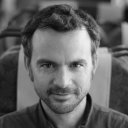
 Timothée Masquelier
· 1 previous affiliation
- Principal Researcher · Since 2013
Research Overview
Timothée Masquelier focuses on spiking neural networks, computational neuroscience, and neuromorphic engineering. His research explores how biological principles like spike-timing-dependent plasticity and temporal coding can be translated into efficient, scalable architectures for artificial intelligence. Recently, his work emphasizes learnable neuronal dynamics, parallelizable spiking models, and biologically inspired auditory processing.
Research Trajectory
Masquelier’s early research established foundational mechanisms for unsupervised learning in spiking neural networks (SNNs). In Unsupervised Learning of Visual Features through Spike Timing Dependent Plasticity, he demonstrated how a temporal coding scheme—where the most strongly activated neurons fire first—can be combined with spike-timing-dependent plasticity (STDP) to generate intermediate-level visual representations. This biologically plausible approach proved effective for natural image categorization. Building on this framework, he extended the model in Competitive STDP-Based Spike Pattern Learning, showing how multiple STDP neurons could robustly detect repeating spatiotemporal spike patterns hidden in dense distracter noise by utilizing lateral inhibition in a winner-take-all competition.
As deep learning gained prominence, Masquelier investigated how biological learning rules could scale to deeper architectures. His work on STDP-based spiking deep convolutional neural networks for object recognition introduced a deep SNN comprising several convolutional and pooling layers trainable with STDP, leveraging temporal coding to improve recognition robustness. This period also saw him synthesizing the field's progress in Deep learning in spiking neural networks, a comprehensive review detailing how SNNs were closing the performance gap with traditional artificial neural networks while offering significant advantages for neuromorphic hardware. This research aligns with his broader contributions to the research direction of Energy Efficient Inference via Time-to-First-Spike Coding and the area of Activity Regularization for Energy Efficient Spiking Neural Networks.
Moving beyond static neuron models, Masquelier began exploring adaptive mechanisms within SNNs, contributing significantly to the research direction of Learnable Neuronal Dynamics for Deep Spiking Neural Networks. In Incorporating Learnable Membrane Time Constant to Enhance Learning of Spiking Neural Networks, he and his collaborators demonstrated that optimizing membrane-related parameters alongside synaptic weights increases neuronal diversity and network expressiveness. He also contributed to foundational community infrastructure, participating in the development of SpikingJelly: An open-source machine learning infrastructure platform for spike-based intelligence, a full-stack toolkit for building and deploying deep SNNs.
During this time, his research expanded into novel applications and hybrid architectures. In Optical flow estimation from event-based cameras and spiking neural networks, he led the development of a hardware-friendly U-Net-like SNN that leverages 3D convolutions to estimate dense optical flow from event-based cameras, achieving competitive accuracy with a remarkably lightweight model. He also explored brain-inspired feature enhancement in Brain-guided manifold transferring to improve the performance of spiking neural networks in image classification, using an EEG-based encoder to improve the separability of visual feature spaces extracted by SNNs.
A major theme in Masquelier's recent trajectory involves rethinking convolutional operations to efficiently capture large receptive fields, intersecting with the broader area of Differentiable Sampling for Adaptive Neural Networks. He introduced a novel method in Dilated convolution with learnable spacings, allowing models to enlarge their receptive fields without increasing parameter counts or imposing regular grids. He further analyzed this approach in Dilated Convolution with Learnable Spacings makes visual models more aligned with humans: a Grad-CAM study, demonstrating that these learnable spacings not only improve performance but also increase model interpretability by aligning more closely with human visual attention. This structural innovation was subsequently adapted to temporal processing in Learning Delays in Spiking Neural Networks using Dilated Convolutions with Learnable Spacings. Alongside these developments, he explored efficient audio processing by integrating depthwise separable convolutions into standard architectures in Adapting a ConvNeXt model to audio classification on AudioSet.
Simultaneously, Masquelier addressed the computational bottlenecks of simulating SNNs, contributing to the research direction of Parallel Spiking Dynamics for Efficient Sequence Learning. In Parallel Spiking Neurons with High Efficiency and Ability to Learn Long-term Dependencies, he collaborated on reformulating neuronal dynamics to remove the reset mechanism, enabling non-iterative, parallelizable computation that drastically increases simulation speed while maintaining the ability to learn long-term dependencies.
In his most recent work, Masquelier has focused heavily on auditory modeling and the optimization of temporal delays in recurrent networks. He introduced a bio-inspired computational framework in A general model unifying the adaptive, transient and sustained properties of ON and OFF auditory neural responses, which bridges simple signal processing and mammalian sound encoding through learnable filters. Expanding on auditory processing, Temporal recurrence as a general mechanism to explain neural responses in the auditory system presented a deep recurrent neural network that captures continuous internal memory, revealing that auditory neurons integrate information over much longer timescales than previously understood.
His focus on temporal dynamics also led to breakthroughs in training methodologies. In DelRec: learning delays in recurrent spiking neural networks, he presented a method to train axonal and synaptic delays using surrogate gradient learning, improving performance on audio and vision benchmarks. Furthermore, he continued to advance hardware-efficient architectures, contributing to Channel-wise Parallelizable Spiking Neuron with Multiplication-free Dynamics and Large Temporal Receptive Fields, which bridges the gap between the high-speed training of artificial neural networks and the extreme energy efficiency of neuromorphic hardware. This ongoing work also touches upon the broader research area of Temporal Early Exit in Spiking Neural Networks.
Current Directions
Recent work investigates the intersection of biological plausibility and computational efficiency, with a strong emphasis on spatio-temporal dynamics in spiking and recurrent neural networks. The most recent papers in the evidence address the challenge of learning precise temporal delays—both synaptic and axonal—using surrogate gradients to improve performance on complex audio and visual tasks. Another major focus is the development of parallelizable, multiplication-free spiking neurons that allow for rapid training while maintaining the energy efficiency required for neuromorphic hardware deployment. Additionally, ongoing research explores deep recurrent models of the mammalian auditory system, utilizing explainable AI techniques to understand how biological neurons integrate continuous streams of information over extended timescales.
Profile updated
Loading new papers…
Other researchers whose papers cluster into the same research directions — a proxy for overlapping technical interests and shared intellectual neighborhoods.
See something wrong? Report a mistake