

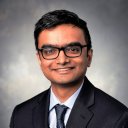
 Abhronil Sengupta
· 6 previous affiliations
- Pennsylvania State UniversitySince 2018
- Associate Professor of EECS · Since 2024
- Associate Professor · Since 2018
- Joseph R. and Janice M. Monkowski Career Development Professorship · 2022–2025
- Assistant Professor of EECS · 2018–2024
- Purdue University West Lafayette2013–2018
- Graduate Research Assistant · 2013–2018
- Graduate Research Intern · 2017
- Graduate Research Intern · 2016
- Jadavpur University2009–2013
- Bachelor of Engineering (B.E.), Electronics and Telecommunication Engineering · 2009–2013
- Undergraduate Research Intern · 2012
Research Overview
Abhronil Sengupta focuses on bridging nanoelectronics, computational neuroscience, and machine learning to develop brain-inspired computing systems. His work spans the entire computing stack, from emerging spintronic and ferroelectric devices to scalable training methodologies for deep spiking neural networks. Recently, he investigates astromorphic architectures and biologically plausible learning rules for energy-efficient artificial intelligence.
Research Trajectory
Sengupta’s early research focused heavily on the device physics of neuromorphic hardware, particularly utilizing spintronics to achieve ultra-low-power computation. In 2014, he introduced Spin-Orbit Torque Induced Spike-Timing Dependent Plasticity, proposing a synaptic device based on a ferromagnet-heavy metal heterostructure. By separating the electrical paths for signal transmission and synaptic learning, this work contributed to the research direction of Decoupling Read and Write Paths in Neuromorphic Devices and demonstrated biological-level energy efficiency. Around the same time, he explored the area of Harnessing Physical Noise for Probabilistic Neuromorphic Computing. With collaborators, he demonstrated in Magnetic Tunnel Junction Mimics Stochastic Cortical Spiking Neurons (2016) that single Magnetic Tunnel Junctions could naturally emulate the probabilistic spiking of biological neurons by leveraging inherent thermal noise, offering a path toward hardware significantly more efficient than traditional CMOS implementations. He expanded this device-level focus into complete system proposals with Proposal for an All-Spin Artificial Neural Network: Emulating Neural and Synaptic Functionalities Through Domain Wall Motion in Ferromagnets (2016), which mapped both neuron and synapse functions to a single spintronic building block.
Moving toward system-level architectures, his research began addressing the acceleration of deep Spiking Neural Networks (SNNs). He participated in the development of RESPARC: A Reconfigurable and Energy-Efficient Architecture with Memristive Crossbars for Deep Spiking Neural Networks (2017), which utilized memristive crossbar arrays for inner-product computation to address memory and power bottlenecks. To bridge the gap between complex artificial neural networks and neuromorphic hardware, he contributed to Going Deeper in Spiking Neural Networks: VGG and Residual Architectures (2019). This work introduced the Spike-Norm algorithm to convert deep ANNs into SNNs with minimal accuracy loss, advancing the broader area of Low-Latency Inference for High-Precision Spiking Neural Networks by successfully scaling to complex datasets like ImageNet.
In recent years, his lab has continued to innovate at the device level, particularly with ferroelectric materials. In Hybrid stochastic synapses enabled by scaled ferroelectric field-effect transistors (2023), his group leveraged the stochastic switching of 28nm FeFETs to implement a three-state synapse, contributing to the field of Neuromorphic Robustness to Physical Hardware Non-idealities. Similarly, Dendritic Computing with Multi-Gate Ferroelectric Field-Effect Transistors (2025) proposed a multi-gate FeFET design that mimics the non-linear processing of biological dendrites. This hardware-software co-design significantly reduced trainable parameters while maintaining deep learning performance, expanding work in Analog In-Memory Computing with Resistive Crossbars.
A major theme of his recent trajectory involves biologically plausible learning rules that avoid the computational overhead and biological implausibility of standard backpropagation through time. His group evaluated these approaches in Benchmarking Spiking Neural Network Learning Methods With Varying Locality (2025). Building on this, he explored Equilibrium Propagation (EP) as a local learning rule. In StochEP: Stochastic Equilibrium Propagation for Spiking Convergent Recurrent Neural Networks (2025), he and his collaborators integrated stochastic spiking neurons into EP to smoothen the optimization landscape and stabilize the training of deep convolutional SNNs. This was further scaled in Scalable Equilibrium Propagation via Intermediate Error Signals for Deep Convolutional CRNNs (2025), which addressed the vanishing gradient problem in deeper architectures to enable potential on-chip training.
He has also investigated the security implications and practical deployments of these neuromorphic systems. In On the Adversarial Robustness of Spiking Neural Networks Trained by Local Learning (2025), he demonstrated that while SNNs trained with local learning appear robust to standard gradient attacks due to scrambled gradients, they remain vulnerable to hybrid attacks using globally trained surrogate models. Applying neuromorphic principles to practical domains, his lab developed a Hierarchical Dynamic SNN for network intrusion detection in Neuromorphic Cybersecurity with Semi-supervised Lifelong Learning (2025), utilizing an adaptive STDP rule to continuously learn new cyber threats without catastrophic forgetting.
Most recently, his research has expanded to address the computational bottlenecks of Large Language Models (LLMs) and Transformers. He explored spatial and temporal pruning for SNNs in Spatio-Temporal Pruning for Compressed Spiking Large Language Models (2025). Concurrently, he has pioneered "astromorphic" computing, which incorporates the functional role of astrocytes—glial cells critical for biological memory—into neural architectures. Delving Deeper Into Astromorphic Transformers (2025) mapped neuron-astrocyte computations to self-attention mechanisms. This culminated in RMAAT: Astrocyte-Inspired Memory Compression and Replay for Efficient Long-Context Transformers (2026), which introduced an architecture using abstracted astrocyte functionalities for adaptive memory compression, mitigating the quadratic complexity of self-attention in long sequences.
Current Directions
Sengupta’s most recent work investigates the intersection of neuromorphic computing and foundation models, specifically focusing on energy-efficient architectures for Large Language Models and long-context Transformers. A primary current direction is the development of "astromorphic" computing—integrating the computational principles of biological astrocytes into artificial neural networks to manage memory compression and self-attention mechanisms more efficiently than standard Transformer architectures.
Additionally, his lab continues to advance biologically plausible local learning rules, such as Equilibrium Propagation, to enable scalable, on-chip training for deep spiking neural networks. This algorithmic work is tightly coupled with ongoing research into emerging nanoelectronic devices, including multi-gate ferroelectric transistors, to support highly sparse, event-driven computation at the edge.
Profile updated
Loading new papers…
Other researchers whose papers cluster into the same research directions — a proxy for overlapping technical interests and shared intellectual neighborhoods.
See something wrong? Report a mistake