

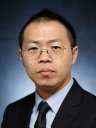
 Tieke He
· 1 previous affiliation
- Nanjing UniversitySince 2017
- Associate Professor · Since 2024
- Assistant Professor · 2017–2024
Research Overview
Tieke He focuses on software engineering, knowledge graphs, and graph representation learning. Their work spans automated software testing and bug report prioritization, as well as the development of robust graph neural network architectures for anomaly detection and clustering. Recent efforts address the scalability and structural limitations of graph learning models, particularly in heterogeneous and low-homophily environments.
Research Trajectory
The early trajectory of He's research centered on natural language processing and topic modeling applied to user-generated content and legal texts. In 2016, they developed a pipeline for mining feature-opinions from e-commerce reviews using dependency parsing, improving the extraction of granular product attributes Mining Feature-Opinion from Reviews Based on Dependency Parsing. That same year, they introduced a spatial-temporal topic model to automatically infer semantic tags for points of interest in location-based social networks A Spatial-Temporal Topic Model for the Semantic Annotation of POIs in LBSNs. This line of probabilistic modeling was later extended to the legal domain, where He proposed the Penalty Topic Model to infer penalties from case judgments by analyzing temporal and spatial patterns PTM: A Topic Model for the Inferring of the Penalty.
Concurrently, He began applying machine learning to software engineering challenges. In 2017, they investigated feature selection techniques to improve the automated prioritization of bug reports Exploring the Influence of Feature Selection Techniques on Bug Report Prioritization. This focus on software quality continued with work on fuzzy clustering for crowdsourced test reports Fuzzy Clustering of Crowdsourced Test Reports for Apps and the development of KARA, a tool that leverages knowledge graphs to generate crowdsourced testing requirements for Android applications Crowdsourced requirements generation for automatic testing via knowledge graph.
Subsequent work explored the integration of deep linguistic representations into neural question generation Improving Neural Question Generation using Deep Linguistic Representation and the application of pre-trained models to predict automated patch correctness APPT: Boosting Automated Patch Correctness Prediction via Fine-Tuning Pre-Trained Models. He also contributed to federated learning, developing a framework for efficient on-device recommendation unlearning Federated Unlearning for On-Device Recommendation. In the area of code refinement, they introduced an ensemble method using confidence-based thresholding to improve the stability of large language models Exploration and Improvement of Capabilities of LLMs in Code Refinement Task. Another novel application of generative models involved repurposing diffusion models for robust text inference and classification ROIC-DM: Robust Text Inference and Classification via Diffusion Model.
More recently, He's research has heavily emphasized graph representation learning, particularly addressing scalability, structural blindness, and the homophily assumption. They introduced a self-supervised Gaussian embedding framework that eliminates the need for negative sampling, reducing computational overhead Negative-Free Self-Supervised Gaussian Embedding of Graphs. To support research in heterogeneous networks, they released a suite of large-scale benchmark datasets for text-attributed graphs Multi-Scale Heterogeneous Text-Attributed Graph Datasets From Diverse Domains. He also explored methods for distilling graph neural networks into graph-free models, teaching MLPs to handle heterogeneous graph-structured knowledge for efficient inference Teaching MLPs to Master Heterogeneous Graph-Structured Knowledge for Efficient and Accurate Inference, contributing to the direction of Distilling Graph Neural Networks into Graph Free Models.
In the domain of graph anomaly detection, He developed an anomaly-aware pre-training and fine-tuning framework to mitigate label scarcity and homophily disparity Towards Anomaly-Aware Pre-Training and Fine-Tuning for Graph Anomaly Detection. To bridge the gap between academic research and industrial deployment, they presented PyAGC, a comprehensive benchmark for attributed graph clustering that scales to massive, low-homophily industrial graphs Bridging Academia and Industry: A Comprehensive Benchmark for Attributed Graph Clustering, advancing work in the area of Overcoming the Homophily Assumption in Graph Neural Networks.
Current Directions
Recent work investigates the scalability and robustness of graph learning models in complex, real-world environments. The most recent papers in the evidence address the challenges of graph anomaly detection under label scarcity and homophily disparity, proposing targeted pre-training and fine-tuning frameworks. Additionally, He is focused on bridging the gap between academic graph clustering methods and industrial applications by developing comprehensive, memory-efficient benchmarks that evaluate models on large-scale, low-homophily datasets with complex tabular features.
Profile updated
Loading new papers…
Other researchers whose papers cluster into the same research directions — a proxy for overlapping technical interests and shared intellectual neighborhoods.
See something wrong? Report a mistake