

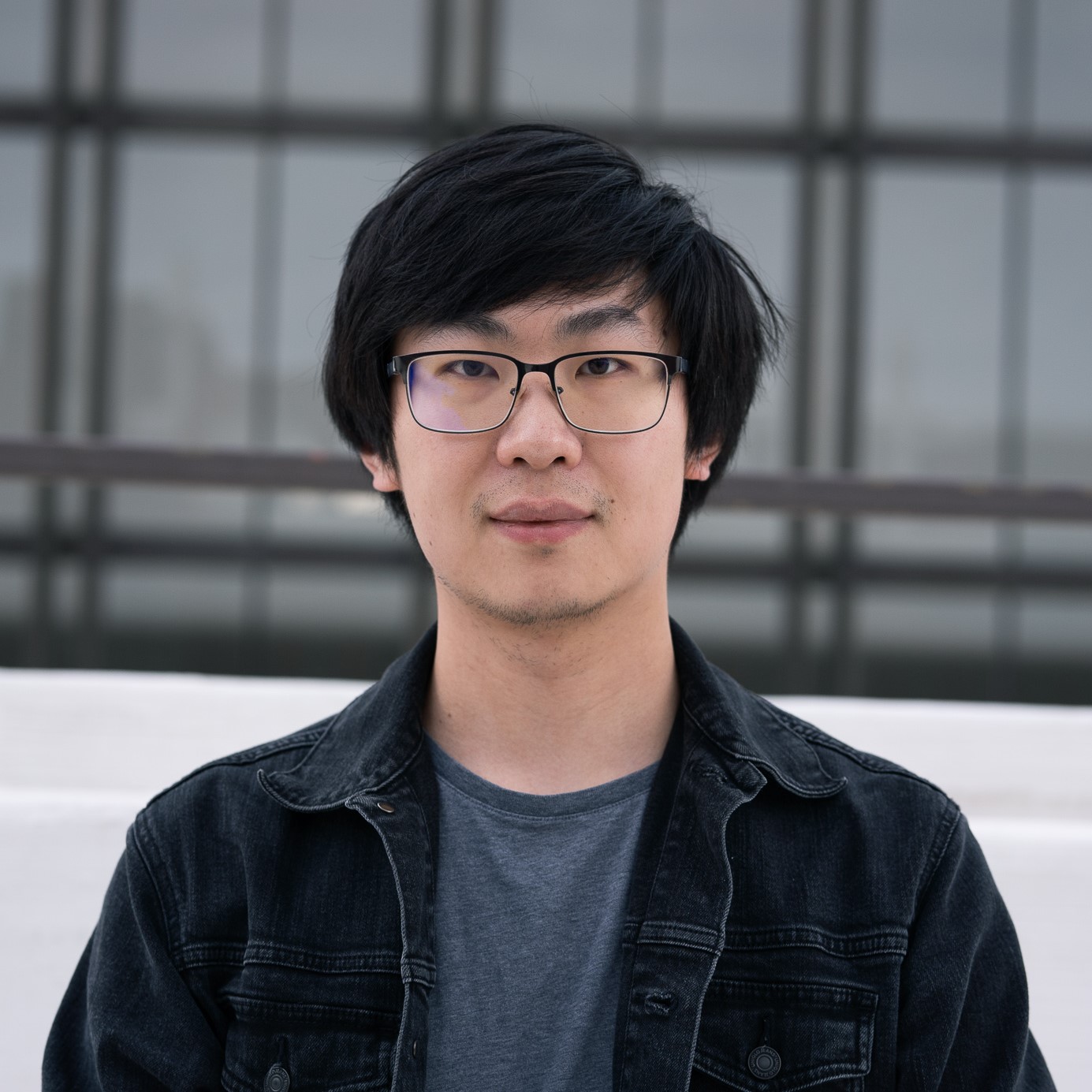
 Tianshi Wang
· 2 previous affiliations
- Amazon (United States)Since 2025
- Researcher · Since 2025
- Current
- PhD student · 2019–2024
1 other author named Tianshi Wang: Tianshi Wang (Tongji University · 3 papers)
Research Overview
Tianshi Wang focuses on generative AI for the Internet of Things (IoT), self-supervised learning, and edge computing. His work addresses the challenges of data scarcity and environmental variability in sensing applications by developing generative data augmentation frameworks and foundation models for time-series signals. Currently, he is investigating multimodal fusion techniques and cross-modal alignment for heterogeneous IoT data, aiming to improve the robustness of deep learning models in real-world deployments.
Research Trajectory
Wang’s research trajectory began with a focus on numerical analysis and the dynamics of physical systems. In 2016, his work explored the mathematical foundations of Spectral Discretization for Exponential Convergence, addressing the trade-offs between local approximations and global spectral methods. This period involved investigating Stable Polynomial Interpolation with Chebyshev and Leja Nodes to mitigate Stable High Degree Polynomial Interpolation and Runge's Phenomenon, where uniform sampling leads to catastrophic oscillations in high-degree polynomials. He also contributed to the development of Sparse Spectral Methods via Ultraspherical Basis Transformations, which achieve spectral accuracy while maintaining the computational efficiency of sparse matrices.
In 2017, Wang extended these analytical interests to physical systems, presenting the first experimental demonstration of Sub-harmonic Injection Locking in Metronomes. By employing phase-macromodel analysis, he identified the mechanisms that prevent standard metronomes from locking to higher frequencies and physically modified the escapement mechanisms to enable synchronization. This work also touched upon Lur’e Systems for Robust Analysis and Control, bridging the gap between mathematical tractability and physical realism in complex nonlinear systems.
During his doctoral studies at the University of Illinois Urbana-Champaign (UIUC), Wang transitioned toward applied deep learning for IoT and edge computing. Between 2019 and 2021, he participated in several collaborative projects focused on optimizing neural network inference for resource-constrained devices. This included work on Deep compressive offloading: speeding up neural network inference by trading edge computation for network latency, which integrated compressive sensing theory with deep learning to reduce data transfer overhead. He also contributed to research on scheduling real-time deep learning services as imprecise computations, allowing for anytime inference by preempting neural network workflows based on execution utility.
From 2022 onward, Wang’s focus shifted toward generative AI and foundation models for IoT sensing. He led the development of frameworks designed to enhance the robustness of sensing models against environmental disturbances and data scarcity. This phase of his work is characterized by the use of diffusion models and knowledge-informed generative models to synthesize training data that mimics diverse experimental configurations. His recent contributions also include investigating self-supervised learning for inertial sensor signals, demonstrating that pre-training on large unlabeled datasets from multiple applications can significantly benefit downstream tasks in data-scarce domains.
Current Directions
Wang’s current research is centered on the development of foundation models for IoT and the advancement of multimodal fusion techniques. A primary focus is Decoupled Staged Training for Multimodal Fusion, which addresses the "lazy student" problem where models trained end-to-end on multiple modalities tend to rely on the most informative signal at the expense of others. By decoupling the training process, he aims to ensure that each modality contributes effectively to the final representation.
He is also exploring cross-modal alignment for heterogeneous IoT signals, such as inertial, acoustic, and wireless data. This work involves developing pairing-efficient frameworks like InfoMAE: Pairing-Efficient Cross-Modal Alignment with Informational Masked Autoencoders for IoT Signals, which facilitates the alignment of pretrained unimodal models without requiring large-scale synchronized multimodal datasets. Additionally, he continues to refine generative data augmentation methods for human activity recognition (HAR), focusing on interpolating within the condition space of generative models to close the distribution gap between laboratory training and real-world deployment.
Representative Work
SudokuSens: Enhancing Deep Learning Robustness for IoT Sensing Applications using a Generative Approach This work introduces a generative framework for the automated generation of training data in IoT applications. SudokuSens is designed to mimic experimental configurations not encountered during actual sensor data collection, thereby improving the robustness of deep learning models. The framework addresses the challenge of IoT time-series data entangling object signatures with confounding environmental disturbances by generating synthetic data that incorporates sufficient variability to handle real-world deployment scenarios.
Data Augmentation for Human Activity Recognition via Condition Space Interpolation within a Generative Model Wang presented a generative data augmentation approach for wearable sensor-based HAR to address performance degradation caused by training data scarcity. Unlike traditional methods that interpolate in data or feature space, this approach innovates by interpolating within the condition space of a generative model. This allows for the creation of new, diverse data points informed by domain expertise, effectively enhancing the diversity of training datasets and improving model performance in real-world settings.
AdaMask: Enabling Machine-Centric Video Streaming with Adaptive Frame Masking for DNN Inference Offloading In this paper, Wang designed a machine-centric video streaming framework, AdaMask, for remote deep neural network (DNN) inference. The framework optimizes the accuracy of offloaded DNNs by adaptively changing video compression parameters at runtime. The core contribution is an adaptive frame masking mechanism that reduces bandwidth consumption by preserving only the regions of interest for the downstream task, achieving a Pareto-optimal tradeoff between inference accuracy and network bandwidth.
Sub-harmonic Injection Locking in Metronomes This early work provides the first experimental demonstration of sub-harmonic injection locking (SHIL) in mechanical metronomes. Wang utilized phase-macromodel analysis to understand why standard metronomes resist locking to higher frequencies. By breaking the symmetry of the escapement mechanism, he successfully enabled a 1Hz metronome to lock to a 2Hz neighbor, providing a physical validation of SHIL theory in mechanical systems.
InfoMAE: Pairing-Efficient Cross-Modal Alignment with Informational Masked Autoencoders for IoT Signals Wang participated in the development of InfoMAE, a cross-modal alignment framework that tackles the challenge of multimodal pair efficiency in self-supervised learning. The framework facilitates the alignment of pretrained unimodal models for IoT signals, which are often heterogeneous and non-interpretable. This approach reduces the reliance on high-quality synchronized multimodal pairs, which are scarce in IoT applications compared to abundant unimodal data.
Deep compressive offloading: speeding up neural network inference by trading edge computation for network latency Wang contributed to the development of a general framework for deep compressive offloading. This work addresses the computational limitations of low-end IoT devices by offloading neural network inference to edge servers. By integrating compressive sensing theory with deep learning, the framework reduces the time spent transferring data between local and edge devices, which is a primary bottleneck for low-latency intelligent services.
Profile updated
Loading new papers…
Other researchers whose papers cluster into the same research directions — a proxy for overlapping technical interests and shared intellectual neighborhoods.
See something wrong? Report a mistake