

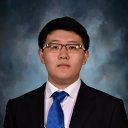
 Dachun Sun
· 4 previous affiliations
- Worcester Polytechnic InstituteSince 2025
- Assistant Professor · Since 2025
- Doctoral Student · 2020–2025
- Bachelor of Arts - BA, Music Technology · 2016–2020
- Tripadvisor2017–2019
- Full-stack Developer · 2019
- Software Engineer Internship · 2017
- Intern Researcher · 2018–2019
Research Overview
Dachun Sun focuses on the intersection of machine learning, social network analysis, and knowledge graph mining. His research investigates how computational models can be used to understand community behavior, mitigate misinformation, and represent complex human beliefs. Sun’s work frequently employs large language models (LLMs), variational autoencoders (VAEs), and graph neural networks (GNNs) to address challenges in information diffusion, truth discovery, and cross-domain recommendation.
Research Trajectory
Sun’s early research, beginning around 2020, focused on the development of recommendation systems and the refinement of generative models. During this period, he explored methods for bridging the gap between academic literature and open-source software by developing systems that could automatically suggest relevant code repositories for research papers. Simultaneously, he contributed to the development of controllable generative frameworks, specifically focusing on stabilizing and tuning variational autoencoders (VAEs) through the application of automatic control theory. This foundational work in generative modeling provided a basis for his subsequent explorations into more complex social and temporal data structures.
By 2021, Sun’s focus shifted toward social sensing and the veracity of information in online environments. He began developing unsupervised algorithms to evaluate the reliability of sources and the truthfulness of observations in social media contexts without the need for labeled training data. This period also saw an expansion into information diffusion prediction, where he participated in research using dynamic variational frameworks to estimate how information spreads across social networks by modeling evolving user interests and social influences.
In 2022 and 2023, Sun’s work transitioned toward knowledge graph (KG) reasoning, particularly in temporal and noisy environments. He addressed the problem of few-shot reasoning in temporal knowledge graphs, aiming to predict future facts for new entities with minimal observations. His research also tackled the inherent noise in real-world knowledge graphs, developing frameworks that treat fact correctness as a latent variable to filter out incorrect data while discovering missing information. During this time, he also began investigating the classification of multimodal content, such as political memes, by analyzing user-content interaction patterns to infer ideological affiliations.
Sun’s most recent work, spanning 2024 to 2026, emphasizes belief representation learning and the integration of LLMs into recommendation pipelines. He has led efforts to develop active learning frameworks that identify the most informative nodes in social graphs for human labeling, thereby improving the efficiency of AI models in representing ideological divides. Additionally, he has explored the capacity of LLMs to perform cross-domain recommendation, investigating how these models can transfer knowledge from high-resource domains to low-resource target domains. His current focus continues to integrate these themes, applying AI-assisted tools to analyze conflict dynamics and belief shifts in target populations.
Representative Work
In paper2repo: GitHub Repository Recommendation for Academic Papers, Sun served as the lead author in developing a recommender system designed to link academic manuscripts with their corresponding open-source implementations. The system utilizes a constrained Graph Convolutional Network (GCN) to map papers and GitHub repositories into a shared embedding space. This approach allows for the automatic suggestion of relevant code even when authors have not explicitly provided links in their publications, addressing a significant hurdle in the reproducibility of computational research.
Sun’s work on Truth Discovery With Multi-Modal Data in Social Sensing addresses the challenge of estimating source reliability and observation veracity in an unsupervised manner. As a primary contributor, he helped develop algorithms that combine multimodal content features with propagation patterns. By jointly learning the importance of different content features alongside the veracity of observations, the framework operates without prior training data, making it applicable to emerging social sensing scenarios where labeled examples are unavailable.
In the area of belief representation, Sun contributed to the development of Perturbation-based Graph Active Learning for Weakly-Supervised Belief Representation Learning. This research introduces PerbALGraph, an active learning framework designed to optimize the selection of social media nodes for human labeling under strict budget constraints. By identifying the most "informative" messages to label, the method enhances the ability of AI models to capture and represent complex human ideologies and beliefs within social graphs.
Sun also explored the evolving capabilities of generative agents in Uncovering Cross-Domain Recommendation Ability of Large Language Models. This work investigates the LLM4CDR pipeline, which evaluates whether large language models can effectively transfer user preference knowledge across disparate domains, such as from movies to video games. The research highlights the potential for LLMs to mitigate the "cold-start" problem in recommender systems by leveraging the broad world knowledge inherent in pre-trained models.
In the domain of temporal knowledge graphs, Sun participated in the development of Learning to Sample and Aggregate: Few-shot Reasoning over Temporal Knowledge Graphs. This research addresses the problem of predicting future facts for newly emerging entities in evolving graphs. The proposed method handles the challenges of limited observations and dynamic distributions, providing a mechanism for deriving instant knowledge about new entities with minimal supervision.
Addressing the issue of data quality in relational learning, Sun contributed to Noisy Positive-Unlabeled Learning with Self-Training for Speculative Knowledge Graph Reasoning. This work introduces nPUGraph, a variational framework that accounts for both missing facts (false negatives) and incorrect facts (false positives) in knowledge graphs. By treating fact correctness as a hidden variable, the model can filter noise and iteratively improve its reasoning capabilities through self-training, leading to more robust performance on real-world, imperfect data.
Current Directions
Sun’s current research continues to refine the application of AI to social and political analysis. He is increasingly focused on the "Anatomy of Conflict," developing tools that use social media data to help analysts and anthropologists understand the dynamics of belief shifts in conflicted areas. This involves uncovering opinion leaders, discovering position changes over time, and identifying the underlying cultural or political drivers of divide. His work remains grounded in the use of advanced machine learning techniques—such as active learning and multimodal analysis—to provide actionable insights into complex social phenomena.
Profile updated
Loading new papers…
Other researchers whose papers cluster into the same research directions — a proxy for overlapping technical interests and shared intellectual neighborhoods.
See something wrong? Report a mistake