

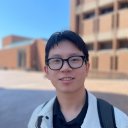
 Tianrui Guan
· 4 previous affiliations
- waymoSince 2025
- Research Scientist · Since 2025
- University of Maryland, College Park2016–2024
- PhD student · 2021–2024
- MS student · 2019–2021
- Research Assistant · 2019–2020
- Undergrad student · 2016–2019
- Applied Scientist · 2023
- Semiconductor Research Corporation2020–2022
- Research Scholar · 2020–2022
Research Overview
Tianrui Guan focuses on equipping autonomous systems with adaptable intelligence through the intersection of computer vision, robotic foundation models, and large vision-language models. His trajectory spans from early work in trajectory forecasting and terrain segmentation to recent investigations into the safety, reasoning capabilities, and vulnerabilities of deploying multimodal models in embodied agents.
Research Trajectory
Early in his career, Guan investigated predictive modeling for urban traffic scenarios. With collaborators, he developed Forecasting Trajectory and Behavior of Road-Agents Using Spectral Clustering in Graph-LSTMs, which utilized a two-stream graph-LSTM network and dynamic geometric graphs to predict both future spatial coordinates and high-level behaviors, such as overspeeding or underspeeding, of road agents.
He subsequently led research on perception systems for unstructured outdoor environments. In GA-Nav: Efficient Terrain Segmentation for Robot Navigation in Unstructured Outdoor Environments, he introduced a deep learning approach that uses a group-wise attention mechanism to segment terrain navigability from RGB images, improving real-world trajectory smoothness and navigation performance. Expanding into 3D perception, he developed M3DETR: Multi-representation, Multi-scale, Mutual-relation 3D Object Detection with Transformers. This architecture unified raw point clouds, voxels, and bird's-eye view representations within a single transformer framework to capture mutual relationships and improve detection accuracy across multiple scales. During this period, he also contributed to aerial video analysis. In FAR: Fourier Aerial Video Recognition, he and his co-authors leveraged Fourier transforms to disentangle human actors from complex backgrounds, capturing long-range spatial-temporal relationships efficiently while significantly reducing computational costs.
His work on robotic navigation continued to evolve by integrating multimodal sensor data and addressing cross-source challenges. He proposed VINet: Visual and Inertial-based Terrain Classification and Adaptive Navigation over Unknown Terrain, a network that combines visual and inertial inputs with an adaptive scheduling control framework to generalize terrain classification to unknown surfaces. Addressing large-scale point matching, he introduced CrossLoc3D: Aerial-Ground Cross-Source 3D Place Recognition, which utilizes multi-grained features and an iterative refinement process inspired by diffusion models to bridge the representation gap between different depth sensors, such as those with varying accuracies or perspectives.
In parallel, Guan explored decision-making in dense traffic. He co-authored Intent-Aware Planning in Heterogeneous Traffic via Distributed Multi-Agent Reinforcement Learning, an algorithm allowing autonomous vehicles to infer nearby drivers' intents solely from local observations. This work contributes to the broader area of Latent Representations for Multi Agent Coordination by modeling explicit behavioral incentives that dictate high-level decision-making strategies and planning sub-goals. By late 2023, his focus expanded to the evaluation and reasoning capabilities of large vision-language models (LVLMs). He helped develop HallusionBench: You See What You Think? Or You Think What You See? An Image-Context Reasoning Benchmark Challenging for GPT-4V(ision), LLaVA-1.5, and Other Multi-modality Models. This benchmark provides a controlled structure of paired images and questions to quantitatively analyze logical consistency, response tendencies, and failure modes in LVLMs, advancing the research direction of Temporal and Causal Reasoning in Multimodal Sequences.
More recently, Guan has investigated the intersection of foundation models, causal inference, and robotics. He participated in a comprehensive review of the field in Large Language Models and Causal Inference in Collaboration: A Comprehensive Survey, which examined how causal reasoning can enhance the predictive accuracy, fairness, robustness, and explainability of generative models. Applying these insights to embodied agents, he co-authored On the Safety Concerns of Deploying LLMs/VLMs in Robotics: Highlighting the Risks and Vulnerabilities. This research highlights the susceptibility of LLM-integrated robots to adversarial attacks and misguidance, touching upon critical areas such as Executable Code as a Universal Interface for Embodied AI and the ongoing challenge of Linguistic Brittleness in Vision Language Models.
Current Directions
The most recent papers in the evidence indicate a strong focus on the safety, robustness, and reasoning capabilities of large language and vision-language models when deployed in physical or robotic contexts. Guan is actively investigating the vulnerabilities of integrating foundation models into embodied agents, particularly how adversarial inputs or prompt sensitivities can lead to catastrophic failures in robotic manipulation and navigation. Alongside these safety concerns, his recent work addresses the evaluation of multimodal reasoning, seeking to build rigorous benchmarks that expose logical inconsistencies and hallucination tendencies in state-of-the-art vision-language models.
Profile updated
Loading new papers…
Other researchers whose papers cluster into the same research directions — a proxy for overlapping technical interests and shared intellectual neighborhoods.
See something wrong? Report a mistake