

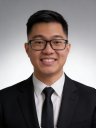
 Thai-Hoang Pham
· 3 previous affiliations
- Texas State UniversitySince 2026
- Assistant Professor · Since 2026
- The Ohio State University2020–2025
- PhD student · 2020–2025
- FPT University2011–2015
- Undergrad student · 2011–2015
Research Overview
Thai-Hoang Pham focuses on trustworthy artificial intelligence, domain generalization, and machine learning applications in healthcare and biomedicine. His early work developed deep learning frameworks for drug discovery and clinical risk prediction, emphasizing robust representations of complex biological data. Currently, he investigates algorithmic fairness and causal analysis to ensure equitable clinical decision-making under real-world distribution shifts.
Research Trajectory
The evolution of Pham’s research begins with the application of deep learning to complex biological and chemical data. In 2021, he introduced A deep learning framework for high-throughput mechanism-driven phenotype compound screening and its application to COVID-19 drug repurposing. This work, contributing to the area of Overcoming Data Sparsity in Single Cell Sequencing, presented the DeepCE framework. By combining Graph Convolutional Networks (GCNs) with multihead attention mechanisms, the model predicted how unseen chemical compounds alter gene expression across different cell lines, enabling mechanism-driven screening of potential drugs.
By 2023, his focus expanded into clinical risk prediction and physiological monitoring, with an increasing emphasis on model interpretability and reliability. He developed A fair and interpretable network for clinical risk prediction: a regularized multi-view multi-task learning approach to address the complex interactions between heterogeneous clinical entities. This approach tackled the limitations of single-view clinical data while actively mitigating pre-existing biases that could lead to discrimination against certain social groups. Around the same time, he addressed automatic sleep staging in Domain Invariant Representation Learning and Sleep Dynamics Modeling for Automatic Sleep Staging. The resulting DREAM framework utilized Variational Autoencoders (VAEs), Transformers, and Conditional Random Fields (CRFs) to learn subject-invariant brain wave patterns, notably providing a confidence score to assist clinicians in verifying automated results.
This interest in invariant representations naturally led to a deeper theoretical investigation of domain generalization and algorithmic fairness. Recognizing that machine learning models often fail when deployed in environments that differ from their training data, he published Fairness and Accuracy under Domain Generalization. This work challenged the common assumption of identical training and deployment distributions, studying the simultaneous transfer of both fairness and accuracy and advancing the research direction of The Fragility of Algorithmic Fairness Under Distribution Shift.
In 2024, Pham further formalized his work on distribution shifts. He addressed environments where data distributions evolve continuously over time or space in Non-stationary Domain Generalization: Theory and Algorithm, moving beyond traditional stationary settings that assume homogeneous source domains. He also tackled more complex adaptation scenarios in Open-Set Heterogeneous Domain Adaptation: Theoretical Analysis and Algorithm. This research explored situations where source and target domains suffer from mismatches in both feature and label spaces, expanding the broader area of Selective Alignment for Open Set Domain Adaptation.
In 2025, his research synthesized these theoretical advances with sophisticated biomedical applications. Returning to cellular biology, he developed Integrating Biological Knowledge for Robust Microscopy Image Profiling on De Novo Cell Lines. This framework improved generalization to entirely unseen cellular environments by combining protein-protein interaction graphs with transcriptomic data from single-cell foundation models, effectively disentangling the biological effects of a perturbation from the visual characteristics of a specific cell line. Simultaneously, he pushed the boundaries of fairness in medical imaging. In The Boundaries of Fair AI in Medical Image Prognosis: A Causal Perspective, he introduced the FairTTE framework, utilizing causal analysis to uncover and address pervasive biases in time-to-event predictions—a critical gap in AI fairness research, which had previously focused heavily on static diagnosis rather than prognosis. Continuing this trajectory, he collaborated on Achieving Fairness Without Harm via Selective Demographic Experts, proposing a constrained selection process that improves algorithmic fairness for marginalized groups without degrading overall performance, thereby avoiding the traditional "accuracy tax" in high-stakes medical applications.
Current Directions
Recent work investigates the intersection of causal inference, algorithmic fairness, and foundation models in biomedicine. The most recent papers in the evidence address the complexities of medical prognosis, specifically focusing on time-to-event predictions where traditional fairness algorithms often fail under real-world distribution shifts. A major ongoing theme is the development of frameworks that maintain equity without incurring an "accuracy tax" on overall model performance, utilizing specialized demographic experts and causal analysis to ensure robust clinical decision-making. Additionally, current research explores the integration of external biological knowledge—such as protein-protein interaction graphs—with single-cell foundation models. This hybrid approach aims to improve the generalization of microscopy image profiling and drug screening to entirely novel cellular environments, disentangling underlying biological mechanisms from superficial domain characteristics.
Profile updated
Loading new papers…
Other researchers whose papers cluster into the same research directions — a proxy for overlapping technical interests and shared intellectual neighborhoods.
See something wrong? Report a mistake