

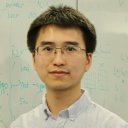
 Jiang Guo
· 2 previous affiliations
- Amazon (United States)Since 2022
- Researcher · Since 2022
- Postdoc · 2017–2022
Research Overview
Jiang Guo focuses on natural language processing, cross-lingual transfer learning, and structured information extraction. His early research explored word embeddings and dependency parsing across languages before expanding into graph-based extraction methods and domain adaptation. Most recently, his work addresses scientific document understanding, chemical informatics, and retrieval-augmented models for autonomous agents.
Research Trajectory
Guo's early research investigated the integration of continuous word embeddings into natural language processing pipelines. He explored methods for incorporating embedding features into linear models for semi-supervised learning, including distributional prototype approaches, in Revisiting Embedding Features for Simple Semi-supervised Learning. Expanding on lexical semantics, he developed techniques to induce sense-specific word embeddings by leveraging bilingual parallel corpora. By observing how single words translate into distinct terms in other languages, this work improved word similarity and named entity recognition in Learning Sense-specific Word Embeddings By Exploiting Bilingual Resources, contributing to the research direction of Nonparametric Word Sense Induction. During this period, he also collaborated on approaches to automatically construct semantic hierarchies by identifying hypernym-hyponym relations through word-embedding projections in Learning Semantic Hierarchies via Word Embeddings.
Building on his work with distributed representations, Guo shifted focus toward cross-lingual dependency parsing, aiming to transfer syntactic knowledge from resource-rich to low-resource languages. He introduced algorithms to map vocabularies from different languages into a shared vector space, bridging the lexical feature gap in Cross-lingual Dependency Parsing Based on Distributed Representations. This foundational work was formalized into a broader framework in A Distributed Representation-Based Framework for Cross-Lingual Transfer Parsing, which advanced the broader areas of Overcoming Syntactic Divergence in Cross Lingual Transfer and Overcoming the Projectivity Constraint in Dependency Parsing.
Concurrently, Guo investigated joint learning architectures for structured prediction tasks. By leveraging bidirectional LSTMs to capture global context and syntactic dependency paths, he proposed a unified neural model that treated semantic role labeling and relation classification as interrelated tasks in A Unified Architecture for Semantic Role Labeling and Relation Classification, engaging with the research direction of Asymmetric Transfer Dynamics Across Label Granularities. He subsequently contributed to attention-based memory networks for distant supervised relation extraction, capturing the importance of context words for entity pairs in Effective Deep Memory Networks for Distant Supervised Relation Extraction. Addressing the challenge of adapting models across diverse text sources, he developed a mixture-of-experts approach utilizing point-to-set metrics and meta-training to robustly handle negative transfer in Multi-Source Domain Adaptation with Mixture of Experts. His interest in complex structural dependencies also led to collaborative work on directed acyclic graph parsing in A Neural Transition-Based Approach for Semantic Dependency Graph Parsing and the development of graph-based information extraction frameworks in GraphIE: A Graph-Based Framework for Information Extraction, aligning with the area of Learning Latent Graph Topologies Directly from Data.
In recent years, Guo has applied sequence generation and graph-based extraction techniques to scientific document understanding, particularly in chemical informatics. He led efforts to automatically extract chemical reactions from scientific literature in Automated Chemical Reaction Extraction from Scientific Literature. This was followed by specialized models for parsing complex visual data, including RxnScribe: A Sequence Generation Model for Reaction Diagram Parsing and MolScribe: Robust molecular structure recognition with image-to-graph generation. The latter explicitly predicts atom positions and bonds to convert 2D chemical drawings into structured molecular graphs. Most recently, his research has expanded into the domain of autonomous systems, collaborating on retrieval-augmented world models to mitigate hallucination in computer-use agents in R-WoM: Retrieval-augmented World Model For Computer-use Agents.
Current Directions
The most recent papers in the evidence indicate a dual focus on multimodal scientific document understanding and the reliability of autonomous agents. In the domain of chemical informatics, recent work investigates robust image-to-graph generation, developing deep learning models capable of accurately translating complex 2D chemical drawings into structured, interpretable molecular graphs by explicitly modeling chemical knowledge and spatial relationships. Concurrently, Guo is exploring the architecture of computer-use agents, specifically addressing the challenge of hallucination in large language models during long-horizon tasks. This involves designing retrieval-augmented world models that ground agent simulations in external knowledge, ensuring that automated navigation of digital interfaces remains tethered to realistic state transitions rather than drifting into impossible actions.
Profile updated
| Paper | Venue | Year |
|---|---|---|
| RxnScribe: A Sequence Generation Model for Reaction Diagram ParsingGitHubthomas0809/ | Journal of Chemical Information and Modeling | 2023 |
| Automated Chemical Reaction Extraction from Scientific LiteratureGitHubjiangfeng1124/ | Journal of Chemical Information and Modeling | 2022 |
| Multi-Source Domain Adaptation with Mixture of ExpertsGitHubjiangfeng1124/ | EMNLP | 2018 |
| Exploring Segment Representations for Neural Segmentation ModelsGitHubOneplus/ | IJCAI | 2016 |
Loading new papers…
Other researchers whose papers cluster into the same research directions — a proxy for overlapping technical interests and shared intellectual neighborhoods.
See something wrong? Report a mistake