

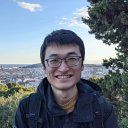
 Tengda Han
· 2 previous affiliations
- Google (United States)Since 2024
- Researcher · Since 2024
- University of Oxford2018–2024
- Postdoc · 2022–2024
- PhD student · 2018–2022
Research Overview
Tengda Han focuses on video understanding, self-supervised learning, and the adaptation of vision-language foundation models. His trajectory spans from early work on dense predictive coding for spatio-temporal embeddings to generating context-aware audio descriptions for movies. Currently, his research investigates temporal alignment, discriminative video captioning, and learning representations from continuous video streams.
Research Trajectory
The trajectory begins around 2019 with foundational work on self-supervised learning for video. He introduced Video Representation Learning by Dense Predictive Coding, a framework that learns spatio-temporal embeddings by recurrently predicting future representations. This curriculum-based approach encouraged models to encode slowly varying signals, yielding robust semantic representations for human action recognition.
Moving into 2022, his focus expanded to the intersection of video and natural language. He developed Temporal Alignment Networks for Long-term Video, which addressed the challenge of aligning noisy text sentences with raw instructional videos. By employing a novel co-training method, this work enabled models to denoise and train on large-scale datasets like HowTo100M without manual annotation. In parallel, he explored the research direction of Efficient Specialization of Large Scale Foundation Models by adapting pre-trained image-language architectures for video tasks. In Prompting Visual-Language Models for Efficient Video Understanding, he demonstrated that optimizing a small set of continuous prompt vectors alongside a lightweight temporal Transformer could achieve strong few-shot and zero-shot performance. This approach significantly reduced the number of trainable parameters while advancing the broader area of Temporal Grounding for Static Vision Language Models.
In 2023, his research increasingly addressed complex, long-form audio-visual narratives, particularly in the domain of movies. He participated in the development of WhisperX: Time-Accurate Speech Transcription of Long-Form Audio, a system that integrated voice activity detection and forced phoneme alignment to extract word-level timestamps from weakly-supervised speech recognition models. Building on the need for context-aware multimodal understanding, he introduced AutoAD: Movie Description in Context. This work leveraged foundation models like GPT and CLIP to automatically generate audio descriptions for movies, incorporating context from previous clips and subtitles to overcome limited training data. He subsequently expanded this line of inquiry with AutoAD III: The Prequel - Back to the Pixels (2024), proposing a Q-former-based architecture to ingest raw video directly for audio description generation, alongside new approaches for constructing aligned video datasets.
During this period, he also investigated the research direction of Scalable Object Counting via Limited Supervision. In Learning to Count Without Annotations, he proposed a method to bypass the tedious manual annotation typically required for object counting, offering a scalable alternative for visual enumeration.
By 2024, he joined Google DeepMind as a research scientist, continuing to push the boundaries of video understanding and multimodal alignment. In 2025, he further refined movie audio description with Shot-by-Shot: Film-Grammar-Aware Training-Free Audio Description Generation. This two-stage framework utilized "shots" as fundamental units and incorporated film grammar devices—such as shot scales and thread structures—to guide generation without requiring additional training of the underlying visual-language models.
His recent work also tackles fundamental challenges in continuous and egocentric video learning. He contributed to Learning from Streaming Video with Orthogonal Gradients, which introduced an Orthogonal Optimizer to decorrelate updates and stabilize learning from continuous, highly correlated video streams. In Seeing without Pixels: Perception from Camera Trajectories, he oversaw the development of CamFormer, a lightweight Transformer that aligns abstract 3D camera motion curves with natural language to recognize actions without relying on visual pixels. Additionally, he participated in Unique Lives, Shared World: Learning from Single-Life Videos, which demonstrated that vision models trained exclusively on the egocentric video of a single individual can learn universal geometric principles, matching the performance of models trained on diverse web data.
In 2026, his research has focused on fine-grained temporal discrimination and cross-modal representation alignment. He developed It’s Just Another Day: Unique Video Captioning by Discriminitive Prompting, introducing a framework that generates distinct captions for visually similar, repetitive clips by predicting discriminative text prompts. Finally, he directed research in Dynamic Reflections: Probing Video Representations with Text Alignment, which extended the Platonic Representation Hypothesis to the temporal domain. By scaling the number of frames and captions at inference, this work established test-time scaling laws for cross-modal understanding, contributing to the broader area of Dense Spatial Awareness in Vision-Language Foundation Models.
Current Directions
Recent work investigates the fundamental alignment between video and natural language representations, particularly in challenging or constrained environments. The most recent papers in the evidence address the temporal extension of the Platonic Representation Hypothesis, demonstrating that video and text encoders naturally converge toward shared internal structures when scaled appropriately at inference. Additionally, current research focuses on fine-grained video captioning, developing discriminative prompting techniques to generate unique descriptions for highly repetitive egocentric and movie clips. This is complemented by explorations into alternative perceptual signals, such as learning universal geometric principles from single-life egocentric videos and utilizing abstract camera trajectories for privacy-preserving action recognition.
Profile updated
| Paper | Venue | Year |
|---|---|---|
| CountGD: Multi-Modal Open-World CountingGitHubniki-amini-naieni/ | NeurIPS | 2024 |
Loading new papers…
Other researchers whose papers cluster into the same research directions — a proxy for overlapping technical interests and shared intellectual neighborhoods.
See something wrong? Report a mistake