

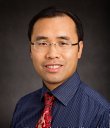
 Tao Xie
· 6 previous affiliations
- Peking UniversitySince 2019
- Chair Professor · Since 2019
- Director · Since 2025
- Fudan UniversitySince 2025
- Dean · Since 2025
- Dean · Since 2025
- Full Professor · 2017–2022
- Associate Professor · 2013–2017
- North Carolina State University2005–2013
- Associate Professor · 2010–2013
- Assistant Professor · 2005–2010
4 other authors named Tao Xie: Tao Xie (2 papers), Tao Xie (Meituan (China) · 1 paper), Tao Xie (Zhejiang University · 1 paper), Tao Xie (University of Illinois Urbana-Champaign · North Carolina State University · 1 paper)
Research Overview
Tao Xie focuses on software testing, software analytics, and intelligent software engineering. His early work established foundational techniques in automated test generation, API usage mining, and mobile application security. More recently, his research addresses the intersection of artificial intelligence and software systems, emphasizing the dependability of machine learning models, automated synthesis of test oracles, and the use of generative AI for formal verification and code generation.
Research Trajectory
His early research established core methodologies in software testing and analysis. In 2006, he explored techniques for improving test suites in Augmenting Automatically Generated Unit-Test Suites with Regression Oracle Checking. He subsequently expanded into software analytics with MAPO: Mining and Recommending API Usage Patterns (2009), which provided automated recommendations for developers. As mobile platforms proliferated, his focus broadened to include security, leading to WHYPER: Towards Automating Risk Assessment of Mobile Applications (2013), which sought to automate the evaluation of mobile app risks.
By 2018, his work increasingly addressed the dependability of artificial intelligence systems in industrial settings. He led the development of a reference-free test oracle for neural machine translation in Testing Untestable Neural Machine Translation: An Industrial Case, successfully deploying a system to identify translation failures in real-time at scale. Continuing to investigate AI reliability, he contributed to a comprehensive systematization of knowledge in SoK: Certified Robustness for Deep Neural Networks (2023). This benchmark of verification methods aligns with his broader interest in the research direction of Certified Robustness through Randomized Smoothing. That same year, he directed research applying large language models (LLMs) to security workflows; VulLibGen: Generating Names of Vulnerability-Affected Packages via a Large Language Model introduced a framework combining retrieval-augmented generation and local search to automate the linking of security vulnerabilities to affected software packages.
In 2024, his research bridged traditional software engineering and generative AI. Returning to mobile testing, he oversaw An empirical study of Android test generation tools in industrial cases, which evaluated UI test generation tools on real-world applications and highlighted the necessity of combining different exploration strategies. Concurrently, he investigated the evaluation of AI-generated code in CoderEval: A Benchmark of Pragmatic Code Generation with Generative Pre-trained Models. Advancing work in the area of Automated Test Oracle Generation, he introduced an automated re-ranking method for text-to-SQL models in Using LLM to select the right SQL Query from candidates, utilizing LLMs to generate test cases and predicted execution results to identify optimal SQL candidates.
His most recent work from 2025 and 2026 focuses heavily on the efficiency, formal verification, and practical capabilities of large language models. To improve LLM inference speed, he guided the design of EPIC: Efficient Position-Independent Caching for Serving Large Language Models (2025), a system that reuses cached document representations across different prompt positions. He also participated in developing a self-evolving framework to synthesize training data for AI to verify Rust code in Automated Proof Generation for Rust Code via Self-Evolution, contributing to the research direction of Language Agnostic Representations for Cross Language Portability. Addressing the environmental impact of these massive models, he co-authored Data and System Perspectives of Sustainable Artificial Intelligence, analyzing hardware-software co-optimization and automated data engineering.
In 2026, his research continued to push the boundaries of LLM systems and agentic software development. He contributed to Mosaic: Unlocking Over 30$\times$ Context Length for Diffusion LLMs Inference via Global Memory Planning and Dynamic Peak Taming, which significantly expanded context capacities for diffusion-based LLMs through global activation planning. He also led the development of KernelBand: Steering LLM-based Kernel Optimization via Hardware-Aware Multi-Armed Bandits, framing GPU kernel optimization as a structured search problem to achieve substantial speedups. Finally, investigating the limits of AI agents in software engineering, he oversaw From Assistant to Independent Developer — Are GPTs Ready for Software Development?. This work introduced a benchmark of real-world Android development tasks, demonstrating the ongoing challenges LLMs face in producing functionally correct applications from scratch, a problem central to the broader area of Functional Correctness via Execution-Based Evaluation.
Current Directions
Recent work investigates the systemic efficiency and practical software engineering capabilities of large language models. The most recent papers in the evidence address the optimization of LLM inference, including position-independent caching and global memory planning to handle massive context lengths and improve throughput. Additionally, his current research focuses on the intersection of generative AI and rigorous software development, exploring how LLMs can be utilized for hardware-aware GPU kernel optimization, automated formal proof generation for memory-safe languages like Rust, and the evaluation of AI agents as independent software developers. A parallel theme in his recent work is the environmental sustainability of artificial intelligence, emphasizing hardware-software co-optimization to mitigate the carbon footprint of large-scale models.
Profile updated
Loading new papers…
Other researchers whose papers cluster into the same research directions — a proxy for overlapping technical interests and shared intellectual neighborhoods.
See something wrong? Report a mistake