

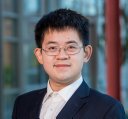
 Linyi Li
· 7 previous affiliations
- Simon Fraser UniversitySince 2024
- Assistant Professor · Since 2024
- ByteDance (China)2023–2024
- Senior Research Scientist · 2023–2024
- PhD student · 2018–2023
- Microsoft (United States)2019–2022
- Research Intern · 2022
- Intern · 2019
- Research Intern · 2021
- Tsinghua University2014–2018
- Undergrad student · 2014–2018
- Visiting Student · 2017
Research Overview
Linyi Li focuses on certifiably trustworthy deep learning, machine learning security, and the rigorous evaluation of foundation models. His trajectory spans foundational methods for adversarial robustness and fairness in distributed systems, establishing mathematical guarantees for neural network behavior under distribution shifts. Currently, his work addresses the comprehensive evaluation of large language models, particularly their reasoning and coding capabilities.
Research Trajectory
Linyi Li’s early research addressed challenges in software engineering, specifically leveraging natural language processing for automated testing. In Clustering test steps in natural language toward automating test automation, he and his collaborators developed methods to map semantically similar natural language test steps to executable API methods, reducing the manual effort required in large-scale industrial test automation.
By 2021, his focus shifted toward machine learning security, with an emphasis on adversarial robustness and gradient estimation. He investigated query-efficient black-box attacks in Nonlinear Projection Based Gradient Estimation for Query Efficient Blackbox Attacks, establishing theoretical bounds for gradient estimation under both linear and nonlinear projections. Concurrently, he began developing defensive frameworks. In TSS: Transformation-Specific Smoothing for Robustness Certification, he introduced a unified framework for certifying machine learning robustness against general semantic transformations, moving beyond traditional Lp-bounded perturbations. This interest in robust model architectures also led to TRS: Transferability Reduced Ensemble via Promoting Gradient Diversity and Model Smoothness, a training strategy that mitigates adversarial transferability. This work contributed to the research direction of Orthogonal Gradient Diversity for Robust Neural Ensembles.
In 2022, Li significantly expanded his work on certified robustness, applying mathematical guarantees to diverse data modalities and learning paradigms. To address the "curse of dimensionality" that often limits randomized smoothing on high-dimensional data, he co-developed Double Sampling Randomized Smoothing. This framework leverages information from multiple noise distributions to tighten robustness guarantees, advancing work in Provable L2 Radius Guarantees through Noise Sampling and the domain of Tractable Convex Reformulations for Robust Optimization. He also explored architectural constraints in LOT: Layer-wise Orthogonal Training on Improving l2 Certified Robustness, proposing an efficient method to train 1-Lipschitz convolutional layers via Fourier domain parameterization.
Extending these certification techniques to new domains, Li adapted randomized smoothing for 3D vision in TPC: Transformation-Specific Smoothing for Point Cloud Models, providing scalable guarantees against semantic attacks like rotation and shearing. This contributed to the broader area of Certified Robustness through Randomized Smoothing. In the realm of sequential decision-making, he co-authored CROP: Certifying Robust Policies for Reinforcement Learning through Functional Smoothing, which established robustness criteria at both the action and reward levels, aligning with the research area of Adversarial Perturbations on Reinforcement Learning Observations.
Beyond adversarial perturbations, Li’s 2022 research also addressed distribution shifts, logical reasoning, and algorithmic fairness. He introduced a framework for Certifying Out-of-Domain Generalization for Blackbox Functions, utilizing Hellinger distance and Gram matrices to provide non-vacuous performance guarantees for large models under data shifts. To integrate deep learning with formal logic, he developed CARE: Certifiably Robust Learning with Reasoning via Variational Inference, a pipeline that uses Graph Convolutional Networks to scale complex logical reasoning and improve certified robustness. Additionally, he investigated equity in distributed systems in Fairness in Federated Learning via Core-Stability, formalizing the problem of heterogeneous data quality among agents. This work advanced the broader area of Non Convex Optimization for Algorithmic Fairness.
In 2026, Li contributed to deterministic and probabilistic verification methods for modern machine learning pipelines. For deterministic bounds, they co-developed FocusBranch: Combinatorial Branch-and-Bound for $\ell_0$ Neural Network Robustness Verification, introducing a decomposable node abstraction that combines concrete and super nodes to verify sparse $\ell_0$ perturbations. For probabilistic guarantees, Li participated in developing ProCerDCL: Query-Efficient Black-Box Probabilistic Verification of Deep Learning Compiler Optimization, which uses sequential testing to verify local semantic consistency between reference and compiled models under black-box sampling. They also collaborated on Terrarium: Growing Personal Assistants via Scalable Synthesis of App Worlds, creating a framework that synthesizes executable environments and outcome-based rubrics to train and evaluate interactive personal assistants.
Current Directions
The most recent papers in the evidence indicate a strategic shift toward the rigorous evaluation and benchmarking of Large Language Models (LLMs). Rather than focusing solely on certifying traditional deep neural networks, recent work investigates the empirical capabilities and reliability of foundation models. In InfiBench: Evaluating the Question-Answering Capabilities of Code Large Language Models, Li and collaborators introduced a large-scale, freeform question-answering benchmark designed to measure how code LLMs handle diverse, real-world coding questions beyond standard code generation tasks. Furthermore, to address concerns about data contamination in existing evaluations, Benchmarking LLMs’ Mathematical Reasoning with Unseen Random Variables Questions proposes a methodology that generates novel mathematical problems by randomizing variables within existing benchmark templates, providing a more reliable assessment of genuine mathematical reasoning.
Profile updated
Loading new papers…
Other researchers whose papers cluster into the same research directions — a proxy for overlapping technical interests and shared intellectual neighborhoods.
See something wrong? Report a mistake