

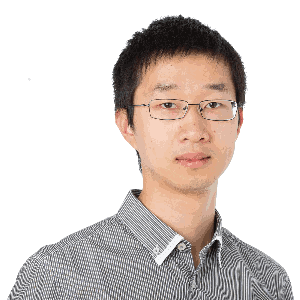
 Tao Wang
· 3 previous affiliations
- Minjiang UniversitySince 2017
- Associate Professor · Since 2021
- Lecturer · 2017–2021
- Australian National University2010–2016
- PhD student · 2010–2016
- South China University of Technology2005–2009
- Undergrad student · 2005–2009
31 other authors named Tao Wang: Tao Wang (94 papers), Tao Wang (Beijing Jiaotong University · 86 papers), Tao Wang (Vivo · 53 papers), Tao Wang (48 papers), Tao Wang (King's College London · 24 papers), and 26 more
Research Overview
Tao Wang focuses on computer vision and medical image analysis, with specific emphasis on robust object detection, image segmentation, and semi-supervised learning. Early work addressed occlusion reasoning and multi-level scene segmentation, while recent research investigates out-of-distribution detection and distribution alignment techniques for clinical and autonomous driving applications.
Research Trajectory
Wang’s early research centered on improving object detection in complex, cluttered environments. As the first author of Learning Structured Hough Voting for Joint Object Detection and Occlusion Reasoning (2013), Wang proposed an extended Hough hypothesis space that incorporated both object location and visibility patterns. By utilizing RGB-D data to build a depth-encoded object-context model, this work demonstrated how layered context representations could allow image patches from both objects and backgrounds to accumulate votes for simultaneous object detection and occlusion prediction. This data-driven 2.1D representation effectively captured the correlation between target objects and their surrounding environments.
In subsequent years, Wang’s focus expanded into specialized segmentation tasks across both robotic perception and medical imaging. Leading the work on A Multi-Level Approach to Waste Object Segmentation (2020), Wang developed a pipeline to localize objects using color images and optional depth data. This approach integrated intensity and depth information across multiple levels of spatial granularity, utilizing a scene-level deep network for coarse segmentation, followed by targeted fine segmentation and a densely connected conditional random field to achieve pixel-level accuracy. During this period, Wang also contributed to medical image segmentation, including collaborative work on isolating white blood cells and tongue regions using sparsity and geometry constraints.
By 2021, Wang’s research included senior-author contributions to image quality assessment and enhancement. In Illumination-Aware Image Quality Assessment for Enhanced Low-Light Image, Wang directed the development of a learnable, illumination-aware metric designed to evaluate low-light image enhancement. This work addressed the common problem of state-of-the-art enhancement methods introducing visual artifacts or over-sharpening, proposing a metric that reduced overshoot effects and better aligned with both visual aesthetics and downstream vision system performance.
More recently, Wang has investigated the robustness and reliability of computer vision models in safety-critical domains. In the context of autonomous driving, Wang co-authored Spatio-Temporal Context Modeling for Road Obstacle Detection (2022), which improved detection robustness by combining data-driven spatial scene layouts with temporal optical flow tracking. Concurrently, in the medical domain, Wang addressed system security and reliability in A Multi-scale Framework for Out-of-Distribution Detection in Dermoscopic Images (2022). This second-author work extracted features from multiple neural network layers and applied rectified activations to better identify out-of-distribution skin disease images, preventing the diagnostic system from producing high-confidence predictions on unfamiliar data.
Wang’s most recent primary research emphasizes semi-supervised learning to overcome the high cost of medical image annotation. As the first author of Semi-Supervised Medical Image Segmentation with Co-Distribution Alignment (2023), Wang proposed a method to align marginal predictions on unlabeled data with those on labeled data in a class-wise manner. By utilizing two differently initialized models to stabilize the alignment process, this approach directly addresses the challenge of uneven class distributions in medical datasets. This methodology aligns closely with the broader research direction of Representing Categories as Distributions instead of Static Points, shifting away from deterministic point estimates to better capture the underlying structure of clinical data.
Current Directions
The most recent papers in the evidence indicate a continued focus on semi-supervised learning and model robustness, particularly within medical image classification and segmentation. Recent work investigates how to effectively leverage limited annotated data while mitigating the effects of severe class imbalance. By exploring class-specific distribution alignment and multi-scale feature extraction, Wang aims to build diagnostic and perception systems that are not only accurate on standard benchmarks but also reliable when deployed in real-world, out-of-distribution scenarios. Additional collaborative efforts in the recent corpus explore generative modeling, including GAN-based methods for generating multiple layout designs using conditional convolution and attention mechanisms.
Profile updated
Loading new papers…
Other researchers whose papers cluster into the same research directions — a proxy for overlapping technical interests and shared intellectual neighborhoods.
See something wrong? Report a mistake