

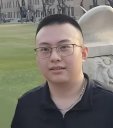
 Tao Feng
· 1 previous affiliation
- University of Illinois Urbana-ChampaignSince 2024
- PhD student · 2024–2029
- Current
3 other authors named Tao Feng: Tao Feng (Tsinghua University · 76 papers), Tao Feng (Shandong University · 13 papers), Tao Feng (1 paper)
Research Overview
Tao Feng focuses on large language model routing, graph-based reasoning architectures, and reinforcement learning for complex decision-making. His trajectory spans early work in graph neural networks for epidemiological modeling to the development of dynamic routing frameworks that optimize multi-model AI ecosystems. Currently, he investigates memory-augmented agents and latent retrieval mechanisms to enhance the efficiency of autonomous systems.
Research Trajectory
Tao Feng’s research trajectory begins with the application of deep reinforcement learning and graph neural networks to complex societal and epidemiological challenges. In 2023, he developed an individual-based reinforcement learning agent to optimize epidemic control strategies, aiming to minimize both infection rates and mobility intervention costs in Contact Tracing and Epidemic Intervention via Deep Reinforcement Learning. This early work established a foundation in modeling complex, interacting systems through graph structures and reinforcement learning—themes that would soon transition into the domain of large language models (LLMs).
By 2024, his focus shifted toward the capabilities and architectural limitations of foundation models. He organized discussions on the trajectory toward artificial general intelligence, exploring historical approaches and fundamental limitations in How Far Are We From AGI, which touched upon efficient alternatives to monolithic model scaling. Concurrently, he addressed the context-length bottlenecks inherent in retrieval-augmented generation. With Thought-Retriever: Don’t Just Retrieve Raw Data, Retrieve Thoughts, he introduced a model-agnostic algorithm designed to help LLMs condition their outputs on arbitrarily long external data by retrieving higher-level "thoughts" rather than raw data chunks.
In 2025, Feng significantly expanded his work on model routing and graph-based reasoning architectures. Recognizing the growing diversity of specialized foundation models, he introduced GraphRouter: A Graph-based Router for LLM Selections. This inductive graph framework models the relationships between tasks, queries, and models to intelligently route user queries, contributing directly to the research direction of Dynamic Model Routing for Evolving AI Ecosystems and the broader area of Dynamic Routing and Cascading for Efficient Language Model Inference. He further explored the practical integration of multiple models in Fusing LLM Capabilities with Routing Data, investigating how multi-LLM log data can be leveraged to combine complementary model strengths in real-world serving scenarios. Expanding reinforcement learning to diverse ranking tasks, he also developed IRanker: Towards Ranking Foundation Model, which utilizes an iterative decoding strategy to improve zero-shot performance across recommendation and passage routing benchmarks.
Graph structures remained central to his methodology for structuring complex knowledge and reasoning throughout 2025. In GraphEval: A Lightweight Graph-Based LLM Framework for Idea Evaluation, he moved beyond standard prompting by decomposing research ideas into structured viewpoint-graphs, allowing smaller models combined with graph neural networks to evaluate ideas efficiently. He oversaw related work applying these principles to academic data in ResearchArcade: Graph Interface for Academic Tasks, standardizing challenges like citation prediction and revision generation as neighborhood retrieval tasks on a unified, multi-modal graph. Pushing graph representations to a more fundamental level, he introduced the Graph World Model, a framework that represents world states as multi-modal graphs and tasks as action nodes, enabling multi-hop message passing across diverse domains from recommendation systems to multi-agent collaboration. Additionally, he applied hierarchical psychological decision processes and imitation learning to simulate realistic user consumption sequences in EPR-GAIL: An EPR-Enhanced Hierarchical Imitation Learning Framework to Simulate Complex User Consumption Behaviors.
Moving into 2026, Feng’s research has increasingly focused on the memory and routing mechanisms of autonomous LLM agents. He developed ExpWeaver: LLM Agents Learn from Experience via Latent RAG, a framework that integrates retrieved memories directly into a model's hidden states rather than its text prompt. This approach advances the broader research direction of General Purpose Reasoning from Specialized Reinforcement Learning by enabling token-efficient learning from past experiences. He also collaborated on Learning Query-Aware Budget-Tier Routing for Runtime Agent Memory, which introduces a reinforcement learning-based router to dynamically select compute tiers for memory extraction, balancing accuracy with processing costs. Building on these themes of agentic routing and graph memory, he introduced GraphPlanner: Graph Memory-Augmented Agentic Routing for Multi-Agent LLMs. Rather than simply selecting a single model, GraphPlanner dynamically constructs tailored multi-agent workflows using a heterogeneous graph memory, significantly reducing GPU memory requirements while improving task accuracy. Continuing this line of work, Feng co-developed TSRouter: Dynamic Modality-Model Selection for Time Series Reasoning, a graph-based dynamic routing framework that contextualizes interactions across task, query, modality, and model nodes to select cost-effective model-modality candidates, aligning with research on Replacing Abstract Labels with Natural Language Descriptions. Extending graph memory to reinforcement learning fine-tuning, Feng co-introduced MemReward: Graph-Based Experience Memory for LLM Reward Prediction with Limited Labels, which propagates reward signals across heterogeneous rollout graphs to optimize reasoning policies under sparse supervision, contributing to Scaling Language Model Reasoning Beyond Verifiable Rewards. In addition, Feng contributed to MemSkill: Learning and Evolving Memory Skills for Self-Evolving Agents, which formalizes agent memory operations into learnable and evolvable skills using controller, executor, and designer components to manage interaction histories adaptively.
Current Directions
The most recent papers in the evidence indicate a strong focus on the memory architectures and dynamic routing capabilities of autonomous LLM agents. Recent work investigates how agents can efficiently retrieve and process long-term experiences without incurring prohibitive computational costs. This includes the development of latent retrieval-augmented generation techniques that integrate memories directly into a model's hidden states, as well as modular runtime memory frameworks that dynamically route queries to different compute tiers based on budget constraints. Furthermore, current research addresses the orchestration of multi-agent systems and reinforcement learning, exploring how heterogeneous graph memory can be used to optimize multi-agent workflows, route queries across multimodal models, and propagate sparse reward signals for self-evolving reasoning policies.
Profile updated
Loading new papers…
Other researchers whose papers cluster into the same research directions — a proxy for overlapping technical interests and shared intellectual neighborhoods.
See something wrong? Report a mistake