

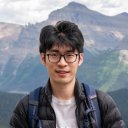
 Jiaxuan You
· 7 previous affiliations
- University of Illinois Urbana-ChampaignSince 2024
- Assistant Professor in CS · Since 2024
- Nvidia (United States)2023–2025
- Researcher · 2023–2025
- Kumo.AI2021–2023
- Founding Member · 2021–2023
- Stanford University2017–2023
- Lecturer · 2023
- PhD student · 2017–2022
- Doctor of Philosophy (Ph.D.), Computer Science · 2017–2021
- Meta (United States)2019–2020
- Research Intern · 2019–2020
- Research Intern · 2018
- Tsinghua University2013–2017
- Bachelor’s Degree, Automation · 2013–2017
Research Overview
Jiaxuan You focuses on graph representation learning, neural architecture search, and the design of multi-agent systems for large language models. His early work established foundational methods for generating and explaining complex graph structures, as well as optimizing graph neural network architectures. More recently, his research addresses reasoning, memory augmentation, and dynamic evaluation in advanced language models.
Research Trajectory
His early research explored the application of modern representation learning to spatial and structured data. This began with introducing a scalable dimensionality reduction and deep learning approach for agricultural monitoring in Deep Gaussian Process for Crop Yield Prediction Based on Remote Sensing Data (2017). He then shifted focus to the core mechanisms of Graph Neural Networks (GNNs). He collaborated on DiffPool, a differentiable pooling module that enables GNNs to learn hierarchical representations for graph classification, detailed in Hierarchical Graph Representation Learning with Differentiable Pooling (2018).
Expanding into generative models, he developed autoregressive approaches for modeling complex network distributions in GraphRNN: Generating Realistic Graphs with Deep Auto-regressive Models (2018). He extended these generative techniques to the domain of chemistry by combining graph convolutional networks with reinforcement learning to discover novel molecules that optimize specific chemical properties, as presented in Graph Convolutional Policy Network for Goal-Directed Molecular Graph Generation (2018). Concurrently, he participated in the development of interpretability tools for these complex models, helping to introduce a model-agnostic approach to identify crucial subgraphs and features in GNNExplainer: Generating Explanations for Graph Neural Networks (2019).
Between 2020 and 2022, his focus transitioned toward the structural properties and automated design of neural networks themselves. He investigated the relationship between the relational graph structure of neural networks and their predictive performance in Graph Structure of Neural Networks (2020). Recognizing the combinatorial explosion of possible GNN architectures, he introduced a systematic framework and task similarity metric to efficiently discover optimal architectures in Design Space for Graph Neural Networks (2020), contributing to the broader direction of Accelerating Neural Architecture Search Without Full Model Training. He continued to refine automated machine learning (AutoML) for graphs by co-developing a solution that transfers architectural design knowledge across tasks to reduce computational costs in AutoTransfer: AutoML with Knowledge Transfer - An Application to Graph Neural Networks (2022).
In recent years, his lab has pivoted to orchestrating, evaluating, and augmenting Large Language Models (LLMs) and multi-agent systems. To improve complex planning and mathematical problem-solving, his group introduced a framework that models reasoning steps as iteratively populated relational tables in Tables as Thought: Exploring Structured Thoughts in LLM Reasoning (2025). Addressing the limitations of static benchmarks and label leakage, he led the creation of a live benchmark utilizing recent arXiv papers to test long-context generation in AcademicEval: Live Long-Context LLM Benchmark (2025). This work advances the area of Shifting from Static Benchmarks to Dynamic Evaluation and research in Iterative Retrieval Augmented Generation for Multi Hop Reasoning.
His recent work heavily emphasizes the dynamic routing and agentic deployment of LLMs. He oversaw the development of a reinforcement learning framework that transforms LLM routing into a multi-round orchestration process in Router-R1: Teaching LLMs Multi-Round Routing and Aggregation via Reinforcement Learning (2025). This agentic approach was applied to complex academic workflows, such as automating peer review rebuttals through a decompose-retrieve-plan-generate pipeline in DRPG (Decompose, Retrieve, Plan, Generate): An Agentic Framework for Academic Rebuttal (2026), which contributes to research in Overcoming Context Window Constraints in Language Models and the area of Role Specialization in Multi-Agent Architectures.
To further enhance agent capabilities without overwhelming context windows, his lab introduced a latent retrieval-augmented generation framework that integrates memories directly into the model's hidden states in ExpWeaver: LLM Agents Learn from Experience via Latent RAG (2026). He also extended routing to multi-agent systems by dynamically constructing workflows using heterogeneous graph memory in GraphPlanner: Graph Memory-Augmented Agentic Routing for Multi-Agent LLMs (2026). Exploring the limits of these models, his group developed an interactive framework to systematically map out an LLM's extractable facts in Probing the Knowledge Boundary: An Interactive Agentic Framework for Deep Knowledge Extraction (2026). Finally, recognizing that communication overhead is a bottleneck in multi-agent systems, he led the creation of the first systematic benchmark and smart selector for multi-agent communication protocols in ProtocolBench: Which LLM MultiAgent Protocol to Choose? (2026).
Continuing to refine agent memory and reinforcement learning architectures, You's group proposed Auto-Dreamer: Learning Offline Memory Consolidation for Language Agents (2026), which decouples fast online memory acquisition from slow offline consolidation across sessions to abstract reusable procedures into compact memory banks. To enhance policy optimization under sparse rewards, You also oversaw the creation of MemReward: Graph-Based Experience Memory for LLM Reward Prediction with Limited Labels (2026), which organizes rollouts in a heterogeneous graph and uses graph neural networks to propagate reward signals to unlabeled rollouts during online reinforcement learning. Additionally, You contributed to automated scientific discovery by developing Epistemic Compass, an epistemic tree scaffold that maintains beliefs and directs hypothesis exploration, in Steering Automated Scientific Discovery via Audited Epistemic Exploration (2026).
Current Directions
The most recent papers in the evidence indicate a strong focus on the orchestration, memory augmentation, and evaluation of large language models within multi-agent frameworks. Recent work investigates how to dynamically route queries and construct multi-agent workflows using reinforcement learning and graph-based memory structures. Additionally, his lab is actively exploring methods to augment LLM agents with latent retrieval mechanisms, enabling them to learn from past experiences efficiently without expanding the standard context window. Another major current direction involves developing live, dynamic benchmarks to evaluate long-context generation and systematically probing the knowledge boundaries of foundation models through interactive, agentic data extraction frameworks.
Profile updated
Loading new papers…
Other researchers whose papers cluster into the same research directions — a proxy for overlapping technical interests and shared intellectual neighborhoods.
See something wrong? Report a mistake