

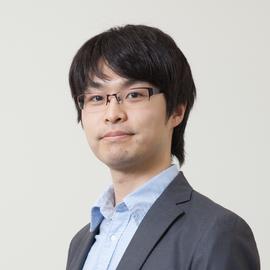
 Takuya Akiba
· 8 previous affiliations
- Sakana AI (Japan)Since 2023
- Chief Scientist · Since 2026
- Staff Research Scientist · Since 2025
- Researcher · 2023–2025
- stability.ai2023
- Researcher · 2023
- Stability AI2023
- Senior Research Scientist · 2023
- Preferred Networks (Japan)2016–2022
- VP of ML Infrastructure · 2018–2022
- Researcher · 2016–2018
- Japan Science and Technology Agency2015–2016
- JST PRESTO Researcher · 2015–2016
- AtCoder2015–2016
- Technology Advisor · 2015–2016
- National Institute of Informatics2015–2016
- Assistant Professor · 2015–2016
- The University of Tokyo2007–2015
- PhD, Computer Science · 2013–2015
- Master, Computer Science · 2011–2013
- Undergrad student · 2007–2011
Research Overview
Takuya Akiba focuses on large-scale machine learning infrastructure, hyperparameter optimization, and the development of efficient foundation models. His trajectory spans early work in graph algorithms and distributed deep learning frameworks to recent innovations in model merging and inference-time scaling. Currently, his research addresses nature-inspired intelligence and test-time compute strategies for advanced generative models.
Research Trajectory
Akiba’s early research focused on the design of highly efficient algorithms and data structures. In 2013, he developed Fast exact shortest-path distance queries on large networks by pruned landmark labeling, introducing a method that utilized pruned breadth-first searches to precompute distance labels. By exploiting bitwise operations to perform simultaneous searches, this work significantly reduced both the search space and the size of the resulting labels for large-scale networks.
Transitioning into machine learning infrastructure, Akiba began addressing the computational bottlenecks of deep learning. His work in the area of Synchronized Batch Normalization for Large-Scale Training laid the groundwork for massive parallelization. This was demonstrated in Extremely Large Minibatch SGD: Training ResNet-50 on ImageNet in 15 Minutes, where he and his collaborators successfully scaled minibatch sizes to 32,000 across 1,024 GPUs. To maintain accuracy at this scale, they employed RMSprop warm-up, specialized learning rate schedules, and batch normalization without moving averages. He later expanded on the limits of data parallelism in Online-Codistillation Meets LARS, Going beyond the Limit of Data Parallelism in Deep Learning, which combined the LARS optimizer with an online-codistillation algorithm to stabilize the training procedure using a collaborative ensemble of models.
During his tenure as VP of ML Infrastructure at Preferred Networks, Akiba led the creation of foundational open-source software that has become widely adopted in the machine learning community. He introduced Optuna: A Next-generation Hyperparameter Optimization Framework, which provided a novel "define-by-run" API allowing users to dynamically construct complex search spaces using standard Python syntax, paired with efficient sampling and aggressive pruning. Concurrently, he contributed to Chainer: A Deep Learning Framework for Accelerating the Research Cycle, detailing a framework that supported dynamic computation graphs and high-performance GPU acceleration via CuPy.
In parallel with his infrastructure work, Akiba investigated computer vision challenges, particularly those involving incomplete data. He participated in the development of Sampling Techniques for Large-Scale Object Detection From Sparsely Annotated Objects, proposing a part-aware sampling method to handle the hierarchical ambiguity of unverified objects. This research advanced the broader area of Sparsely Annotated Object Detection and contributed to the research direction of Learning from Sparse Labels via Partial Loss. Around this time, his work also touched upon the area of Specialized Experts for Long-Tailed Distribution Learning.
More recently, as a Research Scientist at Sakana AI, Akiba has focused on the efficient construction and deployment of foundation models. To automate the creation of powerful models without requiring extensive additional training data, he developed Evolutionary Optimization of Model Merging Recipes. This approach operates in both parameter and data flow spaces to discover effective combinations of diverse open-source models, addressing challenges in the area of Overcoming Parameter Interference in Model Merging. To tackle the deployment challenges of massive causal language models, his team introduced Temporally Adaptive Interpolated Distillation (TAID). Presented initially in TAID: Temporally Adaptive Interpolated Distillation for Efficient Knowledge Transfer in Language Models and further refined in a subsequent ICLR publication, this method dynamically interpolates between student and teacher distributions during training to bridge the capacity gap and mitigate mode collapse. Returning to his roots in algorithmic optimization, he also co-authored ALE-Bench: A Benchmark for Long-Horizon Objective-Driven Algorithm Engineering, establishing a framework to evaluate AI systems on computationally hard optimization problems drawn from heuristic programming contests.
Current Directions
The most recent papers in the evidence indicate a strong focus on scaling inference-time compute and rethinking fundamental neural network training paradigms. A major theme is enabling models to "think longer" and explore multiple reasoning paths during inference. In Wider or Deeper? Scaling LLM Inference-Time Compute with Adaptive Branching Tree Search, Akiba and collaborators introduced a Bayesian framework that dynamically decides whether a Large Language Model should generate a new solution or refine an existing one, significantly improving performance on complex coding tasks. This test-time scaling approach is also applied to Masked Diffusion Language Models in UnMaskFork: Test-Time Scaling for Masked Diffusion via Deterministic Action Branching, which replaces stochastic sampling with a deterministic search tree to maximize reasoning performance while reusing compute.
Alongside inference scaling, recent work investigates novel prompting and training architectures. To overcome the tendency of LLMs to collapse into deterministic patterns, he contributed to String Seed of Thought: Prompting LLMs for Distribution-Faithful and Diverse Generation, a technique that forces models to mathematically manipulate random strings within their reasoning traces to achieve true diversity. At the architectural level, DiffusionBlocks: Block-wise Neural Network Training via Diffusion Interpretation proposes breaking Transformer networks into independent, trainable blocks. By reinterpreting residual connections as steps in a diffusion process, this method drastically reduces memory requirements compared to standard end-to-end backpropagation. Collectively, these efforts—alongside contributions to the broader area of Logarithmic Scaling for Stable Long Context Attention—reflect an ongoing commitment to pushing the boundaries of efficiency, reasoning, and scalability in next-generation AI systems.
Profile updated
Loading new papers…
Other researchers whose papers cluster into the same research directions — a proxy for overlapping technical interests and shared intellectual neighborhoods.
See something wrong? Report a mistake