

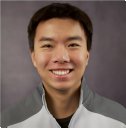
 Tairan He
· 5 previous affiliations
- Nvidia (United States)Since 2024
- Intern · Since 2024
- PhD Research Intern at GEAR Lab · 2024–2026
- OpenAI (United States)Since 2026
- Member of Technical Staff · Since 2026
- Carnegie Mellon University2023–2026
- PhD student · 2023–2026
- Shanghai Jiao Tong University2018–2023
- Bachelor of Engineering - BE, Computer Science · 2018–2023
- Intern · 2021
Research Overview
Tairan He focuses on the intersection of large-scale machine learning, general-purpose loco-manipulation, and robotics. His early work addressed safe reinforcement learning and representation learning for continuous control systems. More recently, his research emphasizes scalable sim-to-real transfer and whole-body control, aiming to develop reliable humanoid robots capable of operating in unstructured, real-world environments.
Research Trajectory
His early research concentrated on establishing safety guarantees for deep reinforcement learning (DRL) in continuous control tasks, a significant challenge when deploying agents in the physical world. In 2021, he contributed to Model-free Safe Control for Zero-Violation Reinforcement Learning, which proposed a model-free strategy to synthesize safeguards without requiring explicit analytical models of the dynamic system. This work advanced the research direction of Active Sampling for Efficient Safety Verification. Concurrently, he explored imitation learning, participating in the development of Energy-Based Imitation Learning, which touches upon the broader area of Decoupled Policy and Value Optimization.
To improve the state representations that underlie complex RL challenges, he introduced Reinforcement Learning with Automated Auxiliary Loss Search in 2022. This work formulated a principled method to automatically search a vast space of auxiliary loss functions based on trajectory data, reducing the reliance on handcrafted objectives.
Returning to the challenge of safe control in 2023, he developed frameworks to ensure agents respect strict constraints during training. He presented Probabilistic Safeguard for Reinforcement Learning Using Safety Index Guided Gaussian Process Models, which learns environment dynamics via Gaussian Processes to synthesize an energy function that guarantees the existence of safe control actions. He further expanded on zero-violation RL in AutoCost: Evolving Intrinsic Cost for Zero-Violation Reinforcement Learning. To synthesize the growing body of literature in this domain, he authored State-wise Safe Reinforcement Learning: A Survey, categorizing methods that enforce hard constraints at every time step and formalizing the area of Reinforcement Learning with Instantaneous Hard Safety Constraints. Alongside his safety research, he contributed to Visual Imitation Learning with Patch Rewards, which extracts multi-dimensional rewards from local image regions to improve visual explainability, aligning with the direction of Pixel-wise Adversarial Feedback for Generative Models.
In 2024, his focus shifted toward the complex domain of humanoid robotics, specifically addressing whole-body control and loco-manipulation. He participated in WoCoCo: Learning Whole-Body Humanoid Control with Sequential Contacts, a unified framework designed to overcome the long-horizon exploration issues typical of tasks involving contact sequences. Building on this foundation, he developed OmniH2O: Universal and Dexterous Human-to-Humanoid Whole-Body Teleoperation and Learning. This system utilizes kinematic pose as a universal interface, allowing humans to control full-sized humanoids via VR headsets or RGB cameras, and enables autonomous skill learning from teleoperated demonstrations.
His recent work continues to scale humanoid capabilities through advanced simulation and dynamics modeling. He contributed to Scalable Humanoid Whole-Body Control via Differentiable Neural Network Dynamics, which combines supervised and reinforcement learning to improve sample efficiency over traditional model-free methods. In 2025, he presented VIRAL: Visual Sim-to-Real at Scale for Humanoid Loco-Manipulation, a framework that trains policies entirely in simulation and deploys them zero-shot to real hardware. By utilizing a privileged teacher-student distillation process, the system achieved robust autonomous loco-manipulation on physical humanoids. Concurrently, he has maintained an interest in formal safety guarantees, as evidenced by his work on the Implicit Safe Set Algorithm for Provably Safe Reinforcement Learning.
Most recently, he has explored the integration of foundation models with robotic control. He participated in the development of Self-Improving Vision-Language-Action Models with Data Generation via Residual RL, a 2026 framework that allows VLA models to autonomously refine their performance by targeting specific failure points through lightweight residual reinforcement learning.
Current Directions
The most recent papers in the evidence indicate a strong focus on scaling autonomous capabilities for humanoid robots in unstructured environments. A primary direction involves visual sim-to-real transfer, where policies for complex, whole-body loco-manipulation are trained entirely in highly parallelized simulations and deployed zero-shot to physical hardware. This includes developing teacher-student distillation frameworks to bridge the gap between privileged simulation data and real-world visual inputs. Additionally, recent work investigates the autonomous refinement of Vision-Language-Action (VLA) models. By employing residual reinforcement learning to generate recovery behaviors, this research aims to create self-improving robotic systems that can operate continuously and recover from execution errors without requiring extensive human intervention.
Profile updated
Loading new papers…
Other researchers whose papers cluster into the same research directions — a proxy for overlapping technical interests and shared intellectual neighborhoods.
See something wrong? Report a mistake