

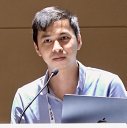
 Tai Hoang
· 4 previous affiliations
- Karlsruhe Institute of TechnologySince 2023
- PhD student · Since 2023
- Current
- Volkswagen Group (Germany)2021–2023
- Working Student at Machine Learning Research Lab (argmax.ai) · 2021–2023
- Technical University of Munich2020–2023
- Master's degree, Computer Science · 2020–2023
- Devanthro - the Robody Company2021–2022
- Student Intern · 2021–2022
Research Overview
Tai Hoang focuses on graph neural networks, physical modeling, and reinforcement learning for complex robotic manipulation. His early work explored modular neural network construction and the mechanics of soft robotic grasping. More recently, his research addresses the simulation of deformable objects and the development of geometry-aware policies for embodied intelligence, emphasizing robust physical representations and long-horizon planning.
Research Trajectory
Tai Hoang’s early research explored deep learning architectures for natural language processing before transitioning into robotics and physical simulation. In 2019, he developed novel models leveraging autoencoding variational inference to improve aspect discovery and sentiment classification in Towards Autoencoding Variational Inference for Aspect-Based Opinion Summary. This work addressed the scalability limitations of traditional latent Dirichlet allocation approaches by integrating functional abstractions into neural network construction.
By 2022, his focus shifted toward the physical mechanics of robotic interaction. He investigated the transition from rigid anthropomorphic hands to underactuated designs in the research direction of Embodied Intelligence through Mechanical Compliance. His comprehensive review, Autonomous soft hand grasping - Literature review, highlighted how mechanical compliance simplifies autonomous control by prioritizing robust grasps over high-degree-of-freedom complexity, contributing to broader work in the area of Hybrid Architectures for Rigid Soft Robotic Interaction.
Building on this interest in physical systems, he began developing advanced simulation frameworks. In 2023, he directed the development of a framework combining graph neural networks with Bayesian meta-learning in Latent Task-Specific Graph Network Simulators. By predicting entire trajectories simultaneously using movement primitives and inferring unknown material properties from context data, this architecture addressed core challenges in the area of Mitigating Compounding Errors in Autoregressive Physical Simulators.
Throughout 2025, his work expanded significantly across both physical simulation and reinforcement learning for robotic manipulation. In the domain of simulation, he participated in research on trajectory-level meta-learning for mesh-based physics in Context-aware Learned Mesh-based Simulation via Trajectory-Level Meta-Learning, which sought to better exploit temporal context for inferring material properties. He also helped develop adaptable graph network simulators in MaNGO — Adaptable Graph Network Simulators via Meta-Learning. This framework balances accuracy and computational speed while adapting to new materials, touching upon the research direction of Mitigating Temporal Memory Overhead in Spiking Networks and the broader area of Emergent Physical Representations in Latent Spaces. Additionally, he contributed to automating adaptive mesh generation through hierarchical graph neural networks in AMBER: Adaptive Mesh Generation by Iterative Mesh Resolution Prediction, advancing the direction of Hierarchical Geometric Refinement for 3D Shape Generation by iteratively predicting sizing fields to mimic human expert meshing.
Parallel to his simulation research, he advanced the capabilities of robotic manipulation policies. He introduced a reinforcement learning framework that treats manipulation as a heterogeneous graph problem in Geometry-aware RL for Manipulation of Varying Shapes and Deformable Objects. By incorporating 3D geometric symmetries and explicitly modeling the different roles of actuators and objects, this approach improved sample efficiency and generalization to unseen object shapes. Concurrently, he collaborated on integrating diffusion models into hybrid off-policy reinforcement learning for non-prehensile manipulation tasks in Enhancing Exploration With Diffusion Policies in Hybrid Off-Policy RL: Application to Non-Prehensile Manipulation.
In 2026, his trajectory encompasses both advanced policy learning and long-range physical simulation. He contributed to preference-based reinforcement learning by optimizing policies over whole trajectory segments in PAWS: Preference Learning with Advantage-Weighted Segments, avoiding the noisy process of per-step credit assignment in data-scarce robotic tasks. He also participated in stabilizing massively parallel on-policy reinforcement learning using trust-region constraints over diffusion trajectories in Trust-Region Diffusion Policies for Massively Parallel On-Policy RL, enabling agents to master complex, multimodal behaviors. Returning to physical simulators, he introduced Information-preserving Graph Neural Simulators in Improving Long-Range Interactions in Graph Neural Simulators via Hamiltonian Dynamics. This work utilizes port-Hamiltonian dynamics to maintain information across meshes, ensuring stability when simulating fluids and highly deformable materials over extended time horizons.
Current Directions
The most recent papers in the evidence address the intersection of advanced reinforcement learning and robust physical simulation. Recent work investigates the integration of diffusion models into both on-policy and off-policy reinforcement learning to stabilize complex, multi-modal robotic behaviors and improve exploration. Concurrently, research in physical modeling focuses on preserving information over long-range interactions in graph neural simulators. By applying Hamiltonian dynamics and trajectory-level meta-learning, these recent frameworks aim to ensure long-term stability and accuracy when simulating fluids, elastic materials, and highly deformable objects.
Profile updated
Loading new papers…
Other researchers whose papers cluster into the same research directions — a proxy for overlapping technical interests and shared intellectual neighborhoods.
See something wrong? Report a mistake