

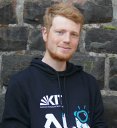
 Philipp Dahlinger
2 previous affiliations
- Karlsruhe Institute of Technology2019–2026
- PhD student · 2021–2026
- MS student · 2019–2021
- Heidelberg University2015–2019
- Undergrad student · 2015–2019
Research Overview
Philipp Dahlinger focuses on machine learning for physical simulations, Bayesian meta-learning, and human-machine interaction. His trajectory spans the development of adaptable graph network simulators and adaptive mesh refinement techniques, alongside foundational work in variational inference and optimization. His most recent research investigates context-aware physical simulation and the integration of haptic feedback in robotic teleoperation.
Research Trajectory
Dahlinger’s early published work establishes a foundation in Bayesian inference and optimization, particularly for complex neural network architectures. In 2023, he introduced Information-Theoretic Trust Regions for Stochastic Gradient-Based Optimization (arTuRO), a method that leverages uncertain second-order information to improve neural network optimization without the prohibitive computational costs typically associated with Hessian matrices. Concurrently, he collaborated on Accurate Bayesian Meta-Learning by Accurate Task Posterior Inference, which examined the influence of variational inference schemes on Neural Processes, contributing to the research direction of The Amortization Gap in Latent Variable Models. He further explored expressive generative modeling by co-authoring A Unified Perspective on Natural Gradient Variational Inference with Gaussian Mixture Models, which unified existing approaches to highly tractable, multi-modal approximations, advancing the broader area of Beyond Unimodal Gaussian Approximations for Bayesian Inference.
Building on these methodological foundations, Dahlinger began applying meta-learning and reinforcement learning to the domain of physical simulation. A major focus of this work has been overcoming the computational bottlenecks of the Finite Element Method (FEM). He contributed to Swarm Reinforcement Learning for Adaptive Mesh Refinement, which framed mesh elements as a swarm of collaborating agents communicating via Graph Neural Networks to accelerate simulation refinement. He subsequently expanded on this approach in Adaptive Swarm Mesh Refinement using Deep Reinforcement Learning with Local Rewards. To further automate the traditionally hand-crafted meshing process, he developed Iterative Sizing Field Prediction for Adaptive Mesh Generation From Expert Demonstrations (AMBER), utilizing imitation learning to balance computational speed and accuracy in complex geometries.
Alongside mesh refinement, Dahlinger has extensively researched Graph Network Simulators (GNS) as differentiable alternatives to traditional physics engines. In 2023, he proposed Latent Task-Specific Graph Network Simulators, framing mesh-based simulation as a meta-learning problem to improve adaptability to new scenarios with limited data.
Parallel to his core focus on physical simulation, Dahlinger has maintained a sustained research track in human-machine interaction and robotics. In 2023, he participated in developing a holistic framework for physically coupled systems in Human-machine symbiosis: A multivariate perspective for physically coupled human-machine systems. This interest in the human element of robotics continued into 2025, where he co-authored Beyond Task Performance: Human Experience in Human-Robot Collaboration, examining how varying levels of automation impact human psychology during physical collaboration. He also investigated practical interfaces for robot teaching, collaborating on Beyond Visuals: Investigating Force Feedback in Extended Reality for Robot Data Collection, which demonstrated that haptic force feedback significantly improves success rates in high-precision teleoperation tasks.
Returning to his primary focus on simulation, Dahlinger’s recent work addresses the limitations of single-step observations in learned physics models. He introduced Context-aware Learned Mesh-based Simulation via Trajectory-Level Meta-Learning to enable models to exploit temporal context and infer hidden material properties. He further advanced this paradigm with MaNGO — Adaptable Graph Network Simulators via Meta-Learning, a framework designed to balance accuracy, speed, and adaptability. This work intersects with several active research areas, including Mitigating Compounding Errors in Autoregressive Physical Simulators, Emergent Physical Representations in Latent Spaces, and Mitigating Temporal Memory Overhead in Spiking Networks. Most recently, his 2026 paper, Point Cloud Sequence Encoding for Material-conditioned Graph Network Simulators (PEACH), bypasses the need for explicit mesh data entirely, using 3D point cloud sequences to adapt to unseen material properties and facilitate zero-shot sim-to-real transfer.
Current Directions
Dahlinger’s most recent research focuses on bridging the gap between learned physical simulators and real-world deployment. A primary theme in his current work is context-aware simulation, where models must infer hidden physical parameters—such as material properties or temporal dynamics—directly from observational data rather than relying on explicit parameter estimation. This is evident in his development of trajectory-level meta-learning techniques and frameworks that condition simulators on raw 3D point cloud sequences. By removing the dependency on pristine mesh data, his recent architectures aim to make Graph Network Simulators more robust for downstream applications like robotic manipulation and sim-to-real transfer. Additionally, his ongoing collaborative work in robotics continues to explore the intersection of extended reality (XR), haptic feedback, and human-robot collaboration, focusing on how multimodal interfaces can improve both data collection for robot learning and the overall human experience in shared workspaces.
Profile updated
Loading new papers…
Other researchers whose papers cluster into the same research directions — a proxy for overlapping technical interests and shared intellectual neighborhoods.
See something wrong? Report a mistake