

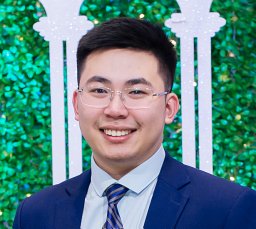
 Tai Duc Nguyen
5 previous affiliations
- Drexel University2016–2025
- Doctor of Science, Artificial Intelligence · 2021–2025
- Undergrad student · 2016–2021
- MS student · 2018–2020
- Dell Boomi2019
- DevOps Engineer Intern · 2019
- IT Software Developer & Full Stack Developer · 2018
- SEEDS Vietnam2018
- Co-Founder · 2018
- FPT Information System2017
- Internship and Computer Lab Worker · 2017
Research Overview
Tai Duc Nguyen focuses on media forensics, the security of smart contracts, and the alignment and adaptation of large language models. His trajectory spans early work in blockchain vulnerability detection to extensive contributions in identifying AI-generated synthetic media. Most recently, he investigates lifelong knowledge editing and agent-based evaluation frameworks for ensuring the safety and legal compliance of foundation models.
Research Trajectory
Nguyen’s early research addressed the security and reliability of blockchain technologies, specifically focusing on identifying and mitigating vulnerabilities in smart contracts. In 2020, he explored automated vulnerability discovery in sFuzz: an efficient adaptive fuzzer for solidity smart contracts. This was followed by SGUARD: Towards Fixing Vulnerable Smart Contracts Automatically, which proposed automated patching mechanisms to secure immutable blockchain programs against code-based exploits. While his core focus later expanded into machine learning and forensics, he continued to contribute to the blockchain domain through visual analytics, participating in the development of tools to make contract behavior more transparent. This includes PonziLens+: Visualizing Bytecode Actions for Smart Ponzi Scheme Identification, which translates complex bytecodes into semantic sequences to detect fraudulent schemes, and PrettiSmart: Visual Interpretation of Smart Contracts via Simulation, which simulates user interactions to clarify cryptocurrency flows for investors and auditors.
By 2024, a major portion of his work shifted toward media forensics, addressing the rapid proliferation of generative AI and the resulting challenges in authenticating digital media. He investigated the distinct artifacts left by video generators in Beyond Deepfake Images: Detecting AI-Generated Videos, demonstrating that synthetic video traces can be learned and used for source attribution even after re-compression. This research naturally extended into the broader area of Recovering Forensic Traces from Heavily Compressed Media. To handle a wide variety of video manipulations, he developed VideoFACT: Detecting Video Forgeries Using Attention, Scene Context, and Forensic Traces, a network that combines forensic and context embeddings with self-attention to localize fake content. Recognizing that static detectors quickly become obsolete as new generative models emerge, he also introduced E3: Ensemble of Expert Embedders for Adapting Synthetic Image Detectors to New Generators Using Limited Data. This continual learning framework fuses insights from specialized expert networks to maintain detection accuracy on new generators without catastrophically forgetting older ones.
His forensic research continued to advance in 2025 with highly generalized and autonomous detection systems. He presented MVFNet: Multipurpose Video Forensics Network using Multiple Forms of Forensic Evidence, a multi-scale hierarchical transformer designed to simultaneously detect and localize multiple types of forgeries, such as deepfakes and splicing, without prior knowledge of the specific manipulation method. Pushing toward fully automated adaptation, he proposed an Autonomous and Self-Adapting System for Synthetic Media Detection and Attribution, which leverages an evolvable embedding space and unsupervised clustering to recognize images from entirely new AI generators on the fly. Further addressing the challenge of unseen generators, he explored zero-shot detection in Forensic Self-Descriptions Are All You Need for Zero-Shot Detection, Open-Set Source Attribution, and Clustering of AI-generated Images, utilizing self-supervised predictive filters to extract unique pixel-level microstructures. Additionally, he contributed to real-time defenses against videoconferencing impersonation in Unmasking Puppeteers: Leveraging Biometric Leakage to Expose Impersonation in AI-Based Videoconferencing, which detects attackers by analyzing biometric signatures leaked within compressed motion data.
In parallel with his forensics work, Nguyen has made significant contributions to the adaptation, alignment, and evaluation of large language models (LLMs). Addressing the challenge of updating model knowledge without retraining, he co-authored UniAdapt: A Universal Adapter for Knowledge Calibration. This plug-and-play adapter utilizes a vector-assisted router and a Mixture-of-Experts architecture to facilitate thousands of sequential facts, advancing the research direction of Scaling Sequential Model Editing for Lifelong Knowledge Updates. His work also encompasses the area of Preserving Knowledge Locality in Language Model Editing, as seen in AUTOLAW: Enhancing Legal Compliance in Large Language Models via Case Law Generation and Jury-Inspired Deliberation. This framework improves LLM legal compliance through dynamic synthesis of region-specific case law and a jury-inspired multi-agent reasoning process. Finally, to rigorously test model safety, he contributed to ALI-Agent: Assessing LLMs' Alignment with Human Values via Agent-based Evaluation. By employing an iterative emulation and refinement process to uncover rare misalignment risks, this work supports broader efforts in Open Source Evaluator Models for Reliable Benchmarking and Dynamic and Time Sensitive Benchmarking for Language Models.
Current Directions
The most recent papers in the evidence indicate a dual focus on generalized synthetic media detection and the robust alignment of foundation models. In the domain of media forensics, current work investigates autonomous, zero-shot systems capable of identifying and attributing AI-generated content from unseen generative architectures, relying on self-supervised extraction of forensic microstructures and biometric leakage. Concurrently, research in language modeling addresses the dynamic evaluation and adaptation of LLMs. This involves developing multi-agent deliberation frameworks for legal compliance and autonomous agents designed to stress-test model alignment, ensuring that foundation models remain safe, compliant, and up-to-date in rapidly evolving deployment environments.
Profile updated
Loading new papers…
Other researchers whose papers cluster into the same research directions — a proxy for overlapping technical interests and shared intellectual neighborhoods.
See something wrong? Report a mistake