

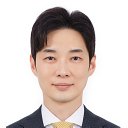
 Taeyoung Park
· 7 previous affiliations
- Yonsei UniversitySince 2010
- Underwood Distinguished Professor · Since 2024
- Professor · Since 2010
- Daehan Steel Co LtdSince 2024
- Outside director · Since 2024
- Korea Securities Depository (KSD)Since 2025
- Risk Management Committee Member · Since 2025
- Shawn & PartnersSince 2025
- Advisory Professor · Since 2025
- Bank of Korea2020–2023
- Advisory Professor · 2020–2023
- University of Pittsburgh2006–2010
- Assistant Professor · 2006–2010
- Harvard University2001–2003
- PhD student · 2001–2003
Research Overview
Taeyoung Park focuses on Bayesian computational statistics, time series forecasting, and generative modeling for structured data. His early research developed advanced Markov chain Monte Carlo methods for complex multilevel models and astrophysical data. More recently, his work emphasizes deep learning architectures and diffusion models to address non-stationarity, irregular sampling, and missingness in multivariate time series and tabular datasets.
Research Trajectory
Park's early research trajectory centered on Bayesian computational statistics, with a particular emphasis on improving Markov chain Monte Carlo (MCMC) methods. A major methodological contribution during this period was the development of partially collapsed Gibbs (PCG) samplers. In Partially Collapsed Gibbs Samplers and its subsequent expansion, Partially Collapsed Gibbs Samplers: Illustrations and Applications, he demonstrated how reducing conditioning in component draws could significantly accelerate convergence when fitting highly structured, complex multilevel models. Alongside these algorithmic advances, Park applied Bayesian frameworks to diverse domains. In astrophysics, this included Efficient EM‐type Algorithms for Fitting Spectral Lines in High‐Energy Astrophysics and the development of pyBLoCXS: Bayesian Low-Count X-ray Spectral analysis. He also addressed challenges in social science and epidemiology, utilizing data augmentation to model latent variables in Bayesian Analysis of Individual Choice Behavior With Aggregate Data, and conducting a time-series analysis of homicides in Policies for alcohol restriction and their association with interpersonal violence: a time-series analysis of homicides in Cali, Colombia.
Following this foundational work in statistical modeling, Park's research expanded into applied health technologies and clinical study methodologies. He contributed to the area of network-based sampling for hidden and stigmatized populations with Recruitment of family caregivers of persons with dementia: Lessons learned from a pilot randomized controlled trial, which provided an ecological framework for engaging participants amidst systemic barriers. Concurrently, his work in the area of robust physiological sensing under motion artifacts explored wearable technologies, as seen in A feasibility study using radio-frequency sensors to collect respiratory metrics in patients with chronic obstructive pulmonary disease., which identified objective respiratory signatures for subjective distress.
In recent years, Park's focus has shifted toward advanced machine learning architectures, specifically targeting the complexities of time series forecasting, multi-task learning, and generative modeling. He introduced the HiSS framework in Hierarchical multi-task learning with self-supervised auxiliary task, leveraging hierarchical and clustered structures for multi-task learning to improve predictive performance on elderly care robot data. Addressing the broader area of robust time series forecasting for non-stationary environments, he co-developed PITS in Learning to Embed Time Series Patches Independently. This work challenged the necessity of complex Transformers by demonstrating that simple MLPs could achieve highly efficient forecasting through patch independence.
Continuing to innovate in sequential data modeling, Park has explored both state-space models and diffusion processes. He guided the development of Sequential Order-Robust Mamba for Time Series Forecasting, which mitigates sequential order bias in channel dependencies. In the area of adaptive noise schedules and learnable diffusion trajectories, he introduced ANT: Adaptive Noise Schedule for Time Series Diffusion Models, a framework that automatically aligns noise transitions with a dataset's non-stationarity. He further addressed data irregularities with Soft Contrastive Learning for Irregular Multivariate Time Series, proposing a soft contrastive learning strategy to handle misaligned time points and inconsistent observation intervals.
Most recently, Park has extended these generative techniques to tabular data. In AugMask: Training Diffusion Models on Incomplete Tabular Data via Stochastic Augmentation and Masking, he contributed to the area of probabilistic data imputation with generative diffusion models by treating missing values as uncertain context rather than ground-truth targets. Alongside these technical advancements, he has maintained an interest in broader technological impacts, participating in interdisciplinary analyses such as Sectoral innovation policy adopting socio-technical systems (STS) perspectives: The case of autonomous vehicles (AVs) in five leading countries.
Current Directions
Recent work investigates advanced deep learning architectures for complex, real-world structured data, with a primary focus on multivariate time series and incomplete tabular datasets. A major ongoing theme is the adaptation of generative models—particularly diffusion processes—to handle non-stationarity and missingness. This includes developing adaptive noise schedules that respond to the intrinsic statistics of time series data, as well as stochastic augmentation techniques that allow diffusion models to natively process incomplete tabular data without architectural modifications. Additionally, current research addresses the structural challenges of sequential data by designing order-robust state-space models and soft contrastive learning frameworks tailored for irregular observation intervals and misaligned features.
Profile updated
Loading new papers…
Other researchers whose papers cluster into the same research directions — a proxy for overlapping technical interests and shared intellectual neighborhoods.
See something wrong? Report a mistake