

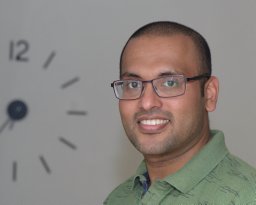
 Sumudu Samarakoon
· 5 previous affiliations
- University of OuluSince 2011
- Associate Professor (Tenure Track) of Machine Learning in Wireless Communications · Since 2026
- Assistant Professor (Tenure Track) of Machine Learning in Wireless Communications · 2021–2026
- Assistant Professor · 2021
- Postdoc · 2017–2021
- Postdoctoral Researcher · 2011–2018
- Doctor of Philosophy - PhD, Telecommunications Engineering · 2012–2017
- PhD student · 2011–2017
- 6G Flagship2021–2026
- Assistant Professor · 2021–2026
- Asian Institute of Technology2009–2011
- MS student · 2009–2011
- University of Moratuwa2005–2009
- Undergrad student · 2005–2009
- Huawei Tecnologies Lanka (PVT) LTD, Sri Lanka2007–2008
- Site Supervisor (Trainee Engineer) · 2007–2008
Research Overview
Sumudu Samarakoon focuses on energy-efficient resource allocation, ultra-reliable low-latency communications, and distributed machine learning in wireless networks. Early research addressed interference management and sleep mode strategies in dense small cell deployments using game-theoretic frameworks. More recent work investigates the application of federated learning and statistical modeling to guarantee strict reliability constraints in vehicular and autonomous systems.
Research Trajectory
Samarakoon’s early research in the early 2010s centered on interference management and resource allocation in heterogeneous cellular networks. A primary challenge in these environments is coordinating transmissions without relying on a centralized controller, which incurs heavy signaling overhead. In the 2012 first-author paper Enabling relaying over heterogeneous backhauls in the uplink of femtocell networks, Samarakoon proposed a rate-splitting technique and formulated a non-cooperative game to help macrocell users optimize their uplink transmissions via open-access femtocells. This approach allowed devices to independently decide on relaying strategies, contributing to the broader area of Decentralized Resource Allocation via Non-Cooperative Games.
By 2014, the focus of this work expanded to address the energy consumption of increasingly dense network deployments. Because cellular networks are typically provisioned for peak traffic, base stations often remain underutilized during off-peak hours, wasting significant energy. In Dynamic clustering and sleep mode strategies for small cell networks, Samarakoon introduced a spectral clustering mechanism that enabled small cell base stations to coordinate opportunistically, switching into sleep modes to balance energy expenditure with user delay requirements. This research aligns with the broader theme of Dynamic Sleep Modes for Energy Proportional Wireless Networks.
As network density continued to scale toward ultra-dense networks (UDNs), traditional game-theoretic models became computationally intractable due to the severe coupling of interference among numerous base stations. To overcome this, Samarakoon applied mean-field game theory. The 2016 paper Ultra Dense Small Cell Networks: Turning Density Into Energy Efficiency cast the joint power control and user scheduling problem as a mean-field game, reducing the complex interactions of a massive network into tractable partial differential equations. This methodology provided a scalable way to optimize bits-per-unit-energy in UDNs, advancing work in the area of Load Aware Coordination in Dense Wireless Networks.
Around 2018, Samarakoon’s trajectory shifted significantly toward the stringent requirements of 5G mission-critical applications, specifically ultra-reliable low-latency communications (URLLC) for vehicular networks (V2V). Traditional network design relies on average performance metrics, which fail to capture the rare, extreme delays that can cause catastrophic failures in autonomous systems. In the 2018 paper Federated Learning for Ultra-Reliable Low-Latency V2V Communications, Samarakoon utilized extreme value theory (EVT) to characterize the tail distribution of queue lengths. Crucially, the paper introduced a federated learning approach to estimate these extreme events across distributed vehicular users without centralizing raw data, intersecting with themes such as Overcoming the Cloud-to-Edge Latency Bottleneck and the research direction of Over-the-Air Computation for Distributed Learning.
This emphasis on tail distributions and extreme events continued into 2020 and 2021. Samarakoon contributed as a second author to Optimized Age of Information Tail for Ultra-Reliable Low-Latency Communications in Vehicular Networks, which moved beyond the standard metric of average Age of Information (AoI) to explicitly control the AoI tail distribution, ensuring that information freshness guarantees are met even in worst-case scenarios. Following this, the 2021 first-author letter Predictive Ultra-Reliable Communication: A Survival Analysis Perspective applied statistical learning—specifically survival analysis—to model wireless connectivity over dynamic channels, addressing the lack of accurate statistical models for URC systems.
Current Directions
The most recent papers in the evidence, published between 2020 and 2021, indicate a sustained focus on the theoretical and practical foundations of ultra-reliable low-latency communications. A central theme of this current work is the inadequacy of average-based metrics for mission-critical wireless systems. Instead, recent research investigates how to model, predict, and control extreme network events—such as rare queuing delays or severe losses in information freshness—using advanced statistical tools like extreme value theory and survival analysis.
Additionally, this recent work explores distributed intelligence at the network edge. By leveraging federated learning, the research addresses how highly mobile nodes, such as vehicles, can collaboratively learn the parameters of dynamic wireless channels and extreme event distributions without exchanging raw data. This combination of statistical reliability modeling and distributed machine learning aims to enable the strict latency and reliability guarantees required by next-generation autonomous systems.
Profile updated
Loading new papers…
Other researchers whose papers cluster into the same research directions — a proxy for overlapping technical interests and shared intellectual neighborhoods.
See something wrong? Report a mistake