

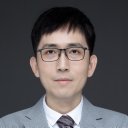
 Xiaofei Wang
· 4 previous affiliations
- Tianjin UniversitySince 2016
- Full Professor · Since 2016
- University of British Columbia2014–2016
- Postdoc · 2014–2016
- Seoul National University2006–2013
- PhD student · 2008–2013
- MS student · 2006–2008
- Undergrad student · 2001–2005
7 other authors named Xiaofei Wang: Xiaofei Wang (Duke Medical Center · Duke University · 135 papers), Xiaofei Wang (Microsoft (United States) · 50 papers), Xiaofei Wang (Northeast Normal University · 8 papers), Xiaofei Wang (Duolingo (United States) · 2 papers), Xiaofei Wang (SmartMore Corporation · University of Science and Technology of China · 1 paper), and 2 more
Research Overview
Xiaofei Wang focuses on edge intelligence, distributed systems, and resource allocation in networked environments. His early work established foundational frameworks for integrating artificial intelligence with edge computing and blockchain technologies. More recently, his research addresses predictive scheduling for large language model serving and spatiotemporal modeling for medical signal reconstruction.
Research Trajectory
Starting in 2020, Wang explored the intersection of artificial intelligence and edge networks. He detailed the architectural shifts required to move deep learning services from centralized clouds to the network edge in Convergence of Edge Computing and Deep Learning: A Comprehensive Survey and further outlined these paradigms in Edge AI - Convergence of Edge Computing and Artificial Intelligence. Concurrently, he collaborated on privacy-preserving decentralized intelligence, contributing to the broader area of Incentive Mechanisms for Collaborative Edge Computing through a comprehensive analysis of communication and security challenges in Federated Learning for 6G Communications: Challenges, Methods, and Future Directions.
Moving into system-level optimizations, Wang's research addressed complex resource dependencies in distributed environments. He participated in designing learning-based scheduling frameworks for Kubernetes-managed edge-cloud systems, utilizing coordinated multi-agent actor-critic algorithms in Tailored Learning-Based Scheduling for Kubernetes-Oriented Edge-Cloud System. As a principal investigator, he expanded into data querying efficiency, developing a novel frequent path mining index for large-scale knowledge graphs in PAIRPQ: An Efficient Path Index for Regular Path Queries on Knowledge Graphs. Returning to edge networks, his lab modeled dependent task offloading in multi-user scenarios as a Markov decision process, introducing an actor-critic approach to optimize directed acyclic graph topologies in Multitask Offloading Strategy Optimization Based on Directed Acyclic Graphs for Edge Computing.
A significant portion of Wang's subsequent work integrates decentralized ledger technologies with distributed computing. He outlined the structural synergies between these domains in Integrating Edge Intelligence and Blockchain - What, Why, and How. Building on this foundation, his group investigated multi-party resource transactions, proposing a blockchain sharding mechanism to parallelize resource allocation for edge-cloud services in Paramart: Parallel Resource Allocation Based on Blockchain Sharding for Edge-Cloud Services. He also oversaw research into the intersection of Web 3.0 and quantum information technologies, analyzing how quantum cloud computing impacts decentralized ecosystems and cryptographic consensus in Building Resilient Web 3.0 Infrastructure With Quantum Information Technologies and Blockchain: An Ambilateral View.
In recent years, Wang has advanced new paradigms for distributed intelligence and specialized foundation models. He introduced the concept of "socialized learning" to mitigate communication and resource bottlenecks in edge intelligence in Socialized Learning: A Survey of the Paradigm Shift for Edge Intelligence in Networked Systems. His lab has also tackled the computational demands of generative AI; in MAPS: Memory-Aware Predictive Scheduling Framework for Large Language Model Serving, they developed a framework that utilizes on-device models to forecast output lengths, significantly reducing latency. Concurrently, Wang has applied advanced spatiotemporal modeling to healthcare, directing the development of EpiTwin: Spatiotemporal Graph Transformers for Epileptic sEEG Signal Reconstruction, an architecture that reconstructs missing intracranial brain signals by integrating 3D spatial geometry and anatomical priors.
Current Directions
The most recent papers in the evidence address the optimization of large-scale generative models and the application of advanced spatiotemporal architectures to specialized domains. Recent work investigates predictive scheduling techniques to manage the memory and latency bottlenecks inherent in serving large language models, particularly through hierarchical scheduling and output length forecasting. Additionally, Wang's research explores the use of graph transformers and anatomical priors for high-fidelity medical signal reconstruction, indicating a growing focus on deploying robust, geometry-aware models in clinical and resource-constrained environments.
Profile updated
Loading new papers…
Other researchers whose papers cluster into the same research directions — a proxy for overlapping technical interests and shared intellectual neighborhoods.
See something wrong? Report a mistake