

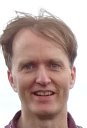
 Stephan C. Kramer
1 previous affiliation
- Imperial College London2006–2024
- Researcher · 2019–2024
- Postdoc · 2006–2019
Research Overview
Stephan C. Kramer focuses on the development and application of advanced numerical methods for geophysical fluid dynamics, with a particular emphasis on adaptive mesh techniques, tidal energy resource assessment, and hydro-morphodynamic modeling. His work bridges the gap between fundamental scientific computing—developing frameworks for automated model configuration and mesh optimization—and the practical simulation of complex environmental processes such as tsunamis, sediment transport, and renewable energy extraction. By integrating high-order discretisation methods with dynamic mesh adaptation and adjoint-based optimization, he addresses the computational challenges inherent in multiscale environmental simulations.
Research Trajectory
The evolution of Kramer’s research reflects a progression from the foundational infrastructure of scientific computing toward the resolution of increasingly complex, coupled physical systems. In the early stages of his career, approximately between 2008 and 2011, his work was primarily concerned with the formalization and automation of scientific software interfaces and the development of general-purpose computational fluid dynamics (CFD) solvers. During this period, he contributed to the development of systems like Spud 1.0, which sought to formalize model input formats through formal grammars, thereby reducing the error-prone nature of manual model configuration. This interest in the "usability" and "robustness" of scientific code was paired with contributions to the Fluidity project, an open-source CFD framework. His work on Compressible Flows on Adaptive and Unstrucured Meshes with FLUIDITY demonstrated the utility of moving finite element methods and unstructured meshes for solving the Navier-Stokes equations in complex geometries, setting the stage for his later focus on adaptive simulations.
By the mid-2010s, Kramer’s focus shifted toward applying these numerical frameworks to large-scale geophysical events and renewable energy challenges. A significant area of inquiry involved the simulation of tsunamis, specifically the How does multiscale modelling and inclusion of realistic palaeobathymetry affect numerical simulation of the Storegga Slide tsunami?. This work highlighted the necessity of multiscale modeling to capture both the broad-scale propagation of waves across the Norwegian-Greenland Sea and the high-resolution dynamics required near coastal run-up sites. Simultaneously, he began investigating the optimization of tidal-stream renewable energy farms. His research in this domain addressed the computational bottlenecks of designing large-scale turbine arrays, introducing methods such as the "continuous turbine approach" to efficiently manage turbine placement as a spatial density function rather than a collection of discrete coordinates.
In the late 2010s and early 2020s, Kramer’s research trajectory moved into the domain of hydro-morphodynamics—the study of how fluid flow interacts with and reshapes bed topography through sediment transport. This area represents a significant increase in physical complexity due to the non-linear coupling between flow, sediment concentration, and bed evolution. He participated in the development of the first full morphodynamic models using discontinuous Galerkin (DG) finite element discretisations within the Thetis coastal ocean model. This period also saw a deepening of his work on mesh adaptation, specifically $r$-adaptation (mesh movement), where nodes are dynamically redistributed to follow features like migrating trenches or wet-dry interfaces. This methodological evolution was further bolstered by the application of adjoint methods for sensitivity analysis and parameter calibration, allowing for more rigorous inversion of environmental data.
Current Directions
Kramer’s recent work continues to push the boundaries of mesh adaptation and numerical optimization, while increasingly incorporating machine learning techniques to enhance simulation efficiency. A primary current focus is Neural Mesh Movement for Real-Time Simulation, which explores the use of neural networks to automate the redistribution of mesh nodes. This approach aims to circumvent the high computational cost of traditional mesh movement algorithms, potentially enabling real-time high-fidelity simulations of complex flows. This intersects with broader themes of Preventing Mesh Self Intersection and Element Inversion, where the goal is to maintain the geometric integrity of the mesh during extreme deformations.
Furthermore, Kramer is exploring the intersection of scientific computing and modern artificial intelligence through In-Context Learning for Differential Equation Operators. This research direction seeks to move beyond "specialist" models that require retraining for every new parameter set, instead developing operators that can adapt to new physical contexts in a zero-shot or few-shot manner. This shift toward "foundation models" for scientific computing suggests a move toward more generalized and flexible simulation tools.
Additionally, his interest in the formal structures of scientific modeling persists through work on Standardized Model Exchange for Unified Formal Verification. This theme addresses the fragmentation of tools in formal methods and automated reasoning, advocating for standardized formats that allow for better interoperability between different verification environments. This reflects a career-long commitment to the formalization and standardization of the tools used in computational science.
Representative Work
Software Frameworks and CFD Foundations
Kramer’s early contributions to the infrastructure of scientific modeling are exemplified by Spud 1.0: generalising and automating the user interfaces of scientific computer models. This work addressed the "translation tax" associated with ad-hoc text-based model inputs by providing a model-independent system that uses formal grammars to generate automated graphical user interfaces. This focus on the interface between the user and the numerical engine was a precursor to his work on the Fluidity framework. In Compressible Flows on Adaptive and Unstrucured Meshes with FLUIDITY, he demonstrated the capability of unstructured finite element meshes to handle compressible Navier-Stokes equations, specifically for stratified test cases like rising thermal bubbles. This work established the viability of using adaptive, unstructured grids for complex atmospheric and oceanic flows.
Multiscale Geophysical Simulation
The application of these numerical techniques to historical geophysical events is best seen in the study of the Storegga Slide tsunami. Kramer and his colleagues utilized a multiscale numerical model to simulate the ~8.15 ka submarine slide off the coast of Norway. The research demonstrated that capturing realistic palaeobathymetry and employing high spatial resolution near the coasts were critical for matching observed run-up heights of 10–20 meters. This study underscored the practical necessity of the adaptive mesh techniques Kramer had been developing, as a uniform high-resolution mesh for the entire Norwegian-Greenland Sea would have been computationally prohibitive.
Renewable Energy Optimization
In the field of marine renewable energy, Kramer has focused on the spatial optimization of tidal turbine arrays. In Design optimisation and resource assessment for tidal-stream renewable energy farms using a new continuous turbine approach, he served as a key contributor to a method that treats turbine placement as a continuous spatial density function. This approach allows for the optimization of massive farms with hundreds of turbines, accounting for complex environmental constraints and wake interactions more efficiently than discrete coordinate-based methods. His subsequent work in this area has also involved rigorous comparisons between 2D depth-averaged models and high-fidelity 3D simulations to ensure that the computational efficiencies gained in the design phase do not sacrifice physical accuracy.
Hydro-morphodynamics and Discontinuous Galerkin Methods
A significant methodological milestone in Kramer’s career is the development of Hydro-morphodynamics 2D modelling using a discontinuous Galerkin discretisation. This work represents one of the first implementations of a full morphodynamic model—incorporating both bedload and suspended sediment transport—using a DG-based finite element discretisation. By building this model within the Firedrake code-generating framework, Kramer and his team leveraged automated code optimization to handle the highly non-linear and coupled nature of sediment transport. This work provided a more robust numerical foundation for simulating how coastal and estuarine environments evolve over time.
Adjoint Methods and Sensitivity Analysis
To address the uncertainties inherent in complex environmental models, Kramer has applied adjoint methods to hydro-morphodynamic systems. In Calibration, inversion and sensitivity analysis for hydro-morphodynamic models through the application of adjoint methods, he contributed to the development of a fully flexible adjoint framework. This allowed for the verification of model sensitivities to spatially varying parameters and the inversion of historical events—such as reconstructing the characteristics of a tsunami-like wave based on final sediment deposits. This work signifies a shift toward more mathematically rigorous "inverse modeling," where the goal is not just to predict the future but to understand the parameters and past events that shaped the present state of an environmental system.
Profile updated
Loading new papers…
Other researchers whose papers cluster into the same research directions — a proxy for overlapping technical interests and shared intellectual neighborhoods.
See something wrong? Report a mistake