

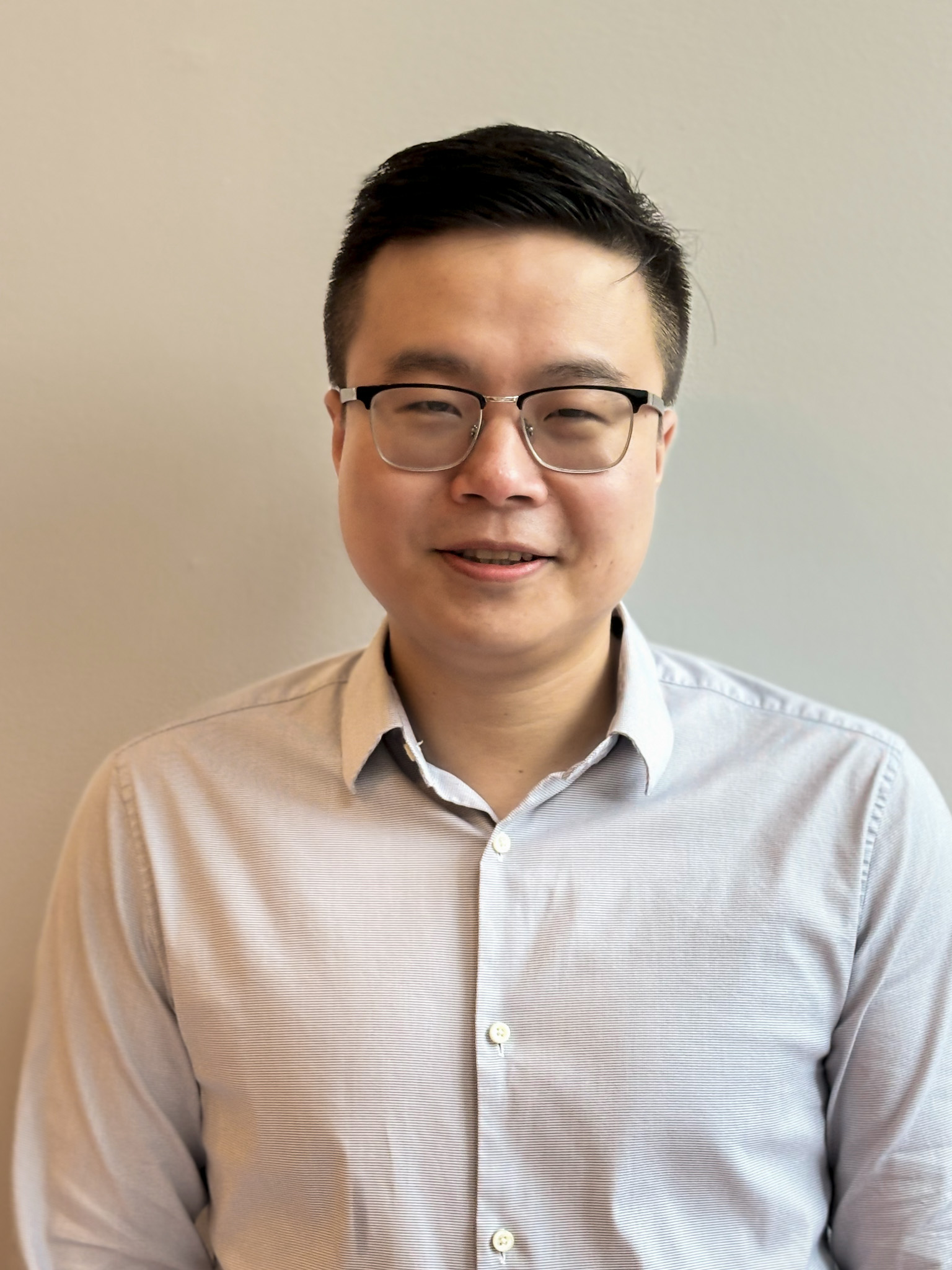
 Qi Tang
· 5 previous affiliations
- Georgia Institute of TechnologySince 2024
- Assistant Professor · Since 2024
- Los Alamos National LaboratorySince 2018
- Guest Scientist · Since 2024
- Staff Scientist 3 · 2023–2024
- Researcher · 2018–2024
- Staff Scientist 2 · 2021–2023
- Rensselaer Polytechnic Institute2015–2018
- Eliza Ricketts Foundation Postdoctoral Fellow · 2015–2018
- Michigan State University2010–2015
- PhD student · 2010–2015
- Zhejiang University2006–2010
- B.S., Math & Applied Math · 2006–2010
3 other authors named Qi Tang: Qi Tang (Nanjing University · 5 papers), Qi Tang (1 paper), Qi Tang (1 paper)
Research Overview
Qi Tang focuses on high-performance computing, scientific machine learning, and the development of scalable numerical solvers for complex multiphysics problems, with a particular emphasis on fusion energy and plasma physics. His work integrates high-order numerical schemes, structure-preserving algorithms, and machine learning surrogates to address challenges in computational fluid dynamics and magnetohydrodynamics (MHD). By leveraging open-source libraries such as MFEM, PETSc, and p4est, he develops solvers designed for massive parallelism and GPU acceleration, aiming to bridge the gap between traditional scientific computing and modern data-driven approaches.
Research Trajectory
The early stages of Tang’s research were primarily concerned with the development of robust numerical methods for hyperbolic conservation laws, specifically focusing on High Order WENO Schemes for Shock Capturing. During this period, he addressed the fundamental challenge of maintaining high-order accuracy in the presence of discontinuities, such as shock waves, without introducing spurious oscillations. This work was critical for the simulation of ideal magnetohydrodynamics, where maintaining physical constraints is essential for stability. A key contribution involved the integration of Constraint Preserving Numerical Methods for Vector Field Evolution, specifically the divergence-free condition of the magnetic field ($\nabla \cdot \mathbf{B} = 0$). Failure to satisfy this constraint in discrete simulations often leads to non-physical results and numerical instability.
As his work progressed, Tang expanded these methods to include Positivity Preserving High Order Methods for Fluid Dynamics. In extreme physical regimes, such as those found in fusion plasmas or high-Mach number flows, standard numerical schemes can produce negative values for naturally positive quantities like density or pressure, causing simulations to fail. Tang developed specialized limiters and single-stage time-stepping methods that guarantee the positivity of these variables while maintaining high-order spatial accuracy. This period also saw an exploration of high-dimensional problems, where he utilized Sparse Grids and the Smolyak Construction to mitigate the curse of dimensionality in elliptic equations, providing a more efficient alternative to standard tensor-product grids.
During his tenure at Los Alamos National Laboratory, Tang’s focus shifted toward the intersection of traditional numerical analysis and scientific machine learning (SciML). This transition was driven by the need for more efficient surrogate models and solvers for multiscale and multiphysics problems. He began developing structure-preserving neural networks that embed physical laws—such as Hamiltonian dynamics or symplectic symmetry—directly into the architecture of the model. This approach ensures that the learned surrogates remain physically consistent and stable over long-duration simulations, a significant improvement over black-box machine learning models.
In tandem with SciML, Tang has worked on Physics Aware Block Preconditioning for Scalable Multiphysics Solvers. This research addresses the ill-conditioned linear systems that arise from the discretization of coupled partial differential equations. By designing preconditioners that exploit the underlying physical structure of the problem, he has contributed to the development of solvers that scale efficiently on high-performance computing architectures. His current work at Georgia Tech continues this trajectory, focusing on Adaptive Mesh Refinement for Efficient Physical Simulations and the use of machine learning to enhance traditional iterative solvers.
Current Directions
Tang’s current research program is centered on three primary pillars: scientific machine learning, high-performance scientific computing, and fusion energy modeling. A major focus is the development of structure-preserving data reduction and processing techniques for particle representations, supported by a DOE Early Career Research Program (ECRP) award. This work aims to manage the massive data volumes generated by particle-in-cell (PIC) simulations while preserving essential physical properties.
He is also actively involved in the development of high-order plasma turbulence models for Z-pinch and other fusion configurations. This involves the creation of scalable, high-order solvers that can handle the extreme multiscale nature of plasma turbulence. His team utilizes and contributes to several open-source ecosystems, including MFEM for high-order finite elements and PETSc for scalable linear and nonlinear solvers. Furthermore, Tang is exploring the use of transformers and other advanced neural architectures for predicting atomistic transitions and learning dynamical systems, aiming to create surrogates that can bridge disparate temporal and spatial scales in materials science and fluid dynamics.
Representative Work
In Finite difference weighted essentially non-oscillatory schemes with constrained transport for ideal magnetohydrodynamics, Tang developed a framework for solving MHD equations that maintains the divergence-free constraint of the magnetic field. By combining WENO schemes with a constrained transport method, the work provided a robust approach for capturing shocks while ensuring the physical validity of the magnetic field evolution.
Building on this, Positivity-Preserving Finite Difference Weighted ENO Schemes with Constrained Transport for Ideal Magnetohydrodynamic Equations introduced a positivity-preserving limiter for MHD. This method ensures that the numerical solution for density and pressure remains positive, which is vital for simulations involving low-pressure regions or strong shocks where standard methods often fail.
In A high-order positivity-preserving single-stage single-step method for the ideal magnetohydrodynamic equations, Tang proposed an efficient time-stepping strategy that maintains positivity without the computational overhead of multi-stage Runge-Kutta methods. This single-stage approach is particularly advantageous for large-scale parallel simulations where communication costs are a primary bottleneck.
Tang’s work on high-dimensional problems is exemplified by Sparse grid discontinuous Galerkin methods for high-dimensional elliptic equations. This paper demonstrates the application of sparse grid techniques to discontinuous Galerkin methods, significantly reducing the number of degrees of freedom required to solve elliptic PDEs in higher dimensions compared to traditional grid-based methods.
In the domain of fluid-structure interaction, A stable partitioned FSI algorithm for rigid bodies and incompressible flow. Part I: Model problem analysis addresses the stability issues common in partitioned solvers. The work provides a rigorous analysis of a stable coupling scheme for rigid bodies interacting with incompressible fluids, offering a path toward more reliable simulations of complex engineering systems.
More recently, Approximation of nearly-periodic symplectic maps via structure-preserving neural networks represents Tang’s contributions to scientific machine learning. The paper introduces "symplectic gyroceptrons," a neural network architecture designed to learn the dynamics of highly oscillatory Hamiltonian systems. By embedding symplectic structures and adiabatic invariants into the network, the model achieves long-term stability and accuracy that standard neural networks cannot match.
Profile updated
Loading new papers…
Other researchers whose papers cluster into the same research directions — a proxy for overlapping technical interests and shared intellectual neighborhoods.
See something wrong? Report a mistake