

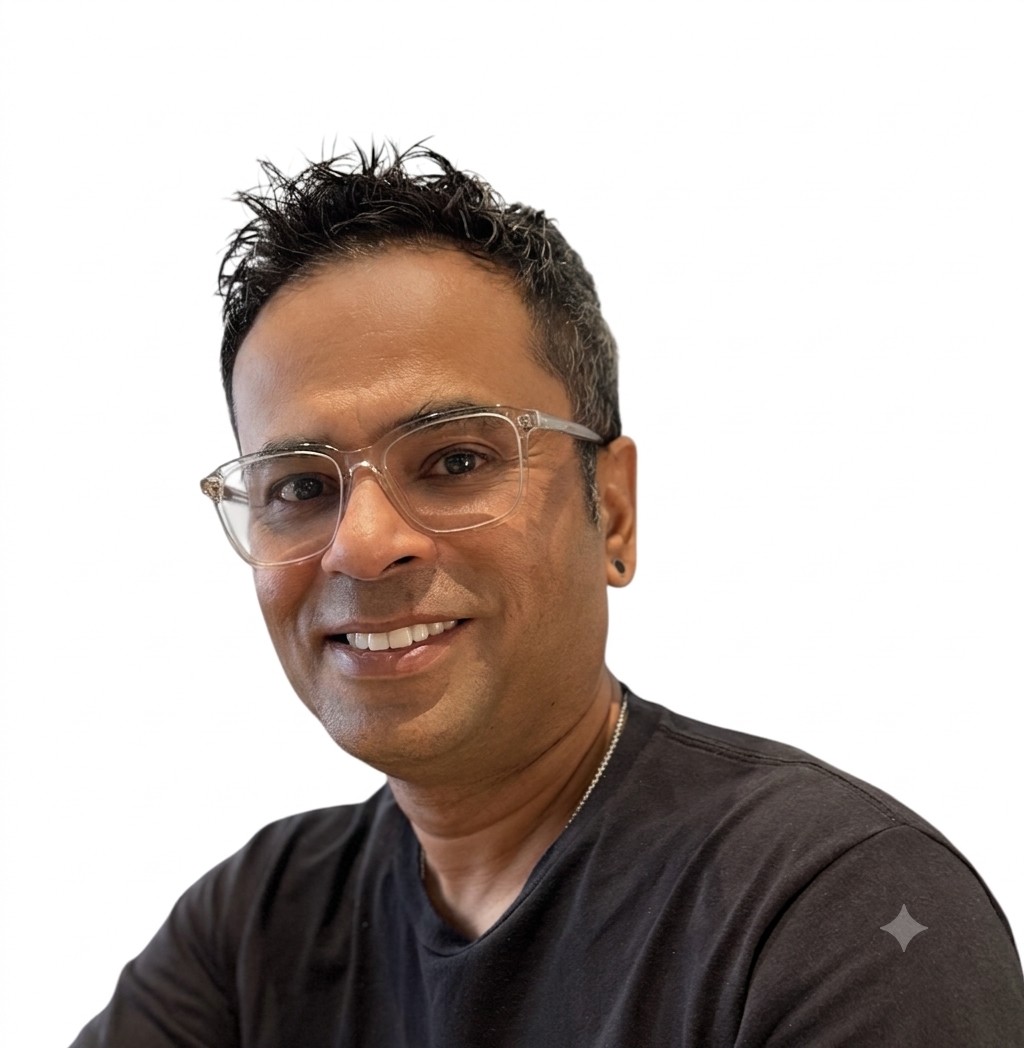
 Sourav S Bhowmick
· 1 previous affiliation
- Nanyang Technological UniversitySince 2005
- Associate Professor · Since 2005
Research Overview
Sourav S Bhowmick focuses on the management and analysis of complex data structures, with a primary emphasis on graph data processing, web information systems, and privacy-preserving query services. His research addresses the challenges of efficiently querying, summarizing, and securing large-scale networked data, ranging from early web-based warehouses to contemporary cloud-hosted graph databases. Currently, his work explores the intersection of graph analytics and data privacy, as well as the development of user-centric visual interfaces for graph query formulation.
Research Trajectory
Bhowmick’s early research, beginning in the late 1990s, was situated within the emerging field of web warehousing. During this period, he was a key architect of the Whoweda (Warehouse Of Weda Data) project, which sought to treat the World Wide Web as a large-scale database rather than a mere collection of documents. His work in Information Coupling in Web Databases introduced the concept of web information coupling, a method for associating topically related web documents through global and local operators. This period was characterized by an effort to apply relational database concepts, such as bags and sets, to the semi-structured environment of the web. In Cost-benefit analysis of web bag in a web warehouse: An analytical approach, he explored the utility of "web bags"—tables allowing multiple occurrences of identical web tuples—to discover structural patterns like luminous paths and visible sites, while performing rigorous cost-benefit analyses on storage and transmission.
By the mid-2000s, Bhowmick’s focus expanded to include semantic analysis of user interactions and the optimization of graph-structured queries. He participated in research regarding the temporal dynamics of search engine data, contributing to models that used historical click-through data to measure query similarity. However, his most significant shift during this era was toward the fundamental problems of graph query processing. As graph databases became central to social media and bioinformatics, he focused on the computational complexity of subgraph isomorphism. In Efficient algorithms for generalized subgraph query processing, he addressed queries that map edges to paths within a graph database, constrained by specific length thresholds. This work established a cost-model-driven branch-and-bound framework and indexing techniques that significantly improved online query performance.
In the 2010s, Bhowmick’s research increasingly integrated security and privacy concerns into the domain of graph analytics. As data owners began outsourcing large-scale graph processing to third-party cloud service providers, the need for trusted execution in untrusted environments became paramount. He led efforts to develop Structure-preserving subgraph query services, which allowed for efficient subgraph isomorphism queries while protecting the underlying graph structure from potentially untrusted providers. This period also saw him formalizing the research landscape at Nanyang Technological University, where he founded the Data and Information Management Research Group (DANTE) in 2009, as detailed in DANTE: Data and Information Management Research at Nanyang Technological University.
Current Directions
Bhowmick’s recent work continues to push the boundaries of graph data management, focusing on three primary areas: usability, privacy, and streaming analytics. Recognizing that manual formulation of complex subgraph queries is labor-intensive, he has contributed to the development of data-driven frameworks for visual graph query interfaces. The TATTOO framework, discussed in Towards Plug-and-Play Visual Graph Query Interfaces: Data-driven Canned Pattern Selection for Large Networks, automates the selection of "canned patterns" to facilitate pattern-at-a-time query construction, moving away from the reliance on domain-specific manual selection.
In the realm of privacy, Bhowmick has advanced the state of localized graph pattern queries (LGPQs). His recent research in A Framework for Privacy Preserving Localized Graph Pattern Query Processing addresses the protection of query structures—such as subgraph homomorphism and strong simulation—when processed by untrusted service providers. This work is critical for maintaining confidentiality in sensitive domains like social network analysis and healthcare data.
Additionally, Bhowmick has participated in research involving high-velocity data streams and local clustering. This includes the development of the SURGE system for detecting bursty regions in spatial object streams and the TEA framework for estimating heat kernel PageRank. These contributions reflect a broader interest in making complex graph and spatial analytics scalable to billion-edge graphs and real-time data environments. His most recent collaborative work, such as the SCALE framework for secure dynamic skyline query processing, continues to refine the efficiency of encrypted data operations in the cloud.
Representative Work
Information Coupling in Web Databases This early work established the semantics for associating topically related documents within a web warehouse. By defining global and local web coupling operators, Bhowmick provided a framework for deriving secondary information from the World Wide Web, treating the web as a structured repository rather than a flat collection of files.
Cost-benefit analysis of web bag in a web warehouse: An analytical approach In this paper, Bhowmick introduced the "web bag" concept to the Whoweda warehouse system. The research demonstrated how allowing duplicate tuples in web tables could facilitate the discovery of site visibility and path luminosity, while providing an analytical model to balance the resulting storage and transmission costs.
Efficient algorithms for generalized subgraph query processing Addressing the limitations of traditional subgraph isomorphism, this paper introduced a generalized query type where edges map to paths of constrained lengths. Bhowmick developed a branch-and-bound algorithm and three distinct indexing techniques to minimize the computational overhead of these complex graph queries.
Structure-preserving subgraph query services This research tackled the security challenges of outsourcing graph data to untrusted cloud providers. Bhowmick proposed a service model that enables efficient subgraph query processing while preserving the structural integrity and privacy of the graph data, a foundational step for secure graph-as-a-service paradigms.
Towards Plug-and-Play Visual Graph Query Interfaces: Data-driven Canned Pattern Selection for Large Networks As a contributor to the TATTOO framework, Bhowmick helped develop a data-driven approach to visual query formulation. By automatically selecting diverse and representative subgraph patterns, the framework reduces the manual effort required for users to construct complex queries on large networks.
A Framework for Privacy Preserving Localized Graph Pattern Query Processing In this senior-authored work, Bhowmick presented a comprehensive framework for protecting the structure of localized graph pattern queries in the cloud. The research covers a variety of matching semantics, including subgraph isomorphism and strong simulation, ensuring that sensitive query patterns remain hidden from the service provider during the matching process.
Profile updated
Loading new papers…
Other researchers whose papers cluster into the same research directions — a proxy for overlapping technical interests and shared intellectual neighborhoods.
See something wrong? Report a mistake