

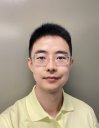
 Shixun Huang
· 3 previous affiliations
- University of WollonongSince 2023
- Assistant Professor · Since 2023
- University of WollongongCurrent
- Current
- RMIT University2017–2023
- Postdoc · 2021–2023
- PhD student · 2017–2021
Research Overview
Shixun Huang focuses on graph algorithms, network representation learning, and influence maximization in dynamic social networks. His trajectory spans foundational graph partitioning and temporal node embeddings to scalable active learning for graph neural networks. Most recently, his work addresses dataset assemblage and distinctiveness maximization for efficient machine learning pipelines.
Research Trajectory
Huang's early research addressed fundamental structural problems in graph theory. In A Linear-Time Algorithm for Finding Induced Planar Subgraphs, he developed algorithmic techniques for identifying planar subgraphs efficiently, establishing a baseline for his subsequent work on complex network structures.
Building on this graph-theoretic foundation, his focus expanded to the dynamics of evolving social networks. The problem of identifying key users whose influence shifts over time was explored in Finding Temporal Influential Users Over Evolving Social Networks. Recognizing that social networks are constantly changing and that the most influential users fluctuate, this work addressed the limitations of static seed sets. He proposed methods to continuously update target users under various stochastic diffusion models, ensuring optimal influence over a sustained period.
To better capture these temporal evolutions, he transitioned toward deep learning approaches for dynamic graphs. He introduced the EHNA framework in Temporal Network Representation Learning via Historical Neighborhoods Aggregation, which utilizes temporal random walks and a two-level attention mechanism to effectively learn node embeddings. By capturing the temporal evolution of network structures, this method improved performance on network reconstruction and link prediction tasks. This contribution intersects with several broader research areas, including the direction of Dynamic Network Embedding, as well as work in Hierarchical Graph Attention Networks and the area of Adapting Homogeneous Graph Learning to Heterogeneous Structures.
Alongside representation learning, Huang continued to investigate scalable algorithms for massive graph structures. In Towards Efficient Motif-based Graph Partitioning: An Adaptive Sampling Approach, he tackled the computational bottleneck of enumerating motif instances in large graphs. By designing an unbiased sampling mechanism and an adaptive framework (SMGP+), this work enabled efficient estimation of edge weights. The framework iteratively partitions the input graph based on up-to-date estimates, preserving partitioning quality while drastically reducing computational overhead.
Returning to the domain of information diffusion, he investigated environments where content sharing is restricted to selected connections, such as private messaging applications. The resulting framework, PSNA, detailed in Influence Maximization in Real-World Closed Social Networks, optimizes information spread by intelligently selecting which existing friendships to leverage for optimal diffusion. This research advances the broader areas of Submodular Optimization for Influence Maximization in Networks and Generalizing Influence Maximization Across Diffusion Models. During the same period, he also collaborated on spatial data challenges. In Representative Routes Discovery from Massive Trajectories, he and his co-authors developed approximate solutions with rapid response times to identify the most representative routes in large-scale trajectory data. Rather than performing an exhaustive depth-first search, the team built a lookup table for trajectories covered by specific road network edges and implemented an approximate solution to support adaptive traffic monitoring and public transportation planning.
As Graph Neural Networks (GNNs) became central to his methodology, Huang addressed the practical bottleneck of acquiring supervised training data. He proposed an unsupervised, scalable active learning method in Cost-effective Data Labelling for Graph Neural Networks. This approach reduces the dependency on initial labels and predefined models to guide the active learning process, significantly improving both the flexibility and scalability of training GNNs on limited data budgets.
Most recently, his focus on data efficiency has broadened beyond graph structures to general dataset curation. With collaborators, he explored how to assemble diverse collections of datasets under budget constraints in Distinctiveness Maximization in Datasets Assemblage. By introducing a machine learning-based approach to quantify the novel information a dataset adds, this work improves the accuracy and speed of dataset valuation. This research contributes directly to the research direction of Knowledge Inheritance for Efficient Language Model Pretraining.
Current Directions
The most recent papers in the evidence indicate a strong focus on data efficiency and curation for scalable machine learning. Recent work investigates cost-effective data labeling strategies, particularly unsupervised active learning frameworks that reduce the need for extensive initial annotations when training Graph Neural Networks. Additionally, Huang is exploring the optimization of dataset assemblage, developing methods to quantify and maximize the distinctiveness of new data sources. This direction addresses the critical challenge of building highly informative, diverse training corpora under strict budget constraints, a problem that is increasingly relevant for efficient model pretraining and large-scale machine learning pipelines.
Profile updated
Loading new papers…
Other researchers whose papers cluster into the same research directions — a proxy for overlapping technical interests and shared intellectual neighborhoods.
See something wrong? Report a mistake