

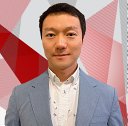
 Song Gao
· 3 previous affiliations
- University of Wisconsin–MadisonSince 2017
- Associate Professor · Since 2022
- Assistant Professor · 2017–2022
- PhD student · 2012–2017
- Peking University2009–2012
- MS student · 2009–2012
3 other authors named Song Gao: Song Gao (1 paper), Song Gao (1 paper), Song Gao (Yunnan University · 1 paper)
Research Overview
Song Gao focuses on geospatial artificial intelligence, human mobility modeling, and spatial network analysis. His work traces an arc from early intra-urban trajectory mining and social sensing to the integration of deep learning and foundation models for geographic reasoning. Recently, he investigates the spatial capabilities and privacy implications of multi-modal large language models in heterogeneous urban environments.
Research Trajectory
His early research investigated human mobility patterns using emerging urban datasets. He participated in analyzing large-scale taxi trajectories to extract spatio-temporal regularities in Understanding intra-urban trip patterns from taxi trajectory data. Building on the proliferation of individual-level geospatial data, he subsequently helped formalize the concept of social sensing in Social Sensing: A New Approach to Understanding Our Socioeconomic Environments, framing mobile and social data as a critical complement to traditional remote sensing for capturing socioeconomic features.
During the COVID-19 pandemic, he applied these mobility insights to epidemiological modeling, contributing to the research direction of Demographic Bias in Digital Trace Mobility Data. He developed frameworks that integrated high-resolution human mobility data to capture spatial heterogeneity in disease transmission. This work, detailed in Intra-county modeling of COVID-19 infection with human mobility: assessing spatial heterogeneity with business traffic, age and race and its subsequent publication Intracounty modeling of COVID-19 infection with human mobility: Assessing spatial heterogeneity with business traffic, age, and race, demonstrated that epidemic spread varies significantly across different geographic and socioeconomic environments. He further examined the social inequities exposed by the pandemic in Staying at Home Is a Privilege: Evidence from Fine-Grained Mobile Phone Location Data in the United States during the COVID-19 Pandemic, using machine learning to correlate demographic variables with disparities in home-dwelling time.
As his focus expanded to broader urban analytics, he sought to improve how geographic spaces are digitally represented and partitioned. He provided a comprehensive review of Points of Interest (POI) data in Points of Interest (POI): a commentary on the state of the art, challenges, and prospects for the future, arguing for a shift from simple coordinate points to high-fidelity geometries that capture temporal dynamics and social utility. To analyze systemic vulnerabilities, he introduced a geospatial knowledge graph framework in Measuring network resilience via geospatial knowledge graph, quantifying the resilience of the U.S. food supply chain across different geographic scales. Concurrently, he contributed to the area of Enforcing Spatial Contiguity in Clustering Algorithms by co-developing a multivariate clustering method in STICC: a multivariate spatial clustering method for repeated geographic pattern discovery with consideration of spatial contiguity, which identifies recurring spatial structures while maintaining geographic contiguity.
A major theme in his recent trajectory is the formalization and ethical application of Geospatial Artificial Intelligence (GeoAI). He explored the theoretical intersections of these fields in Artificial Intelligence and Human Geography, emphasizing the need for human-in-the-loop frameworks to ensure AI systems are socially responsible. This conceptual work aligns with his broader contributions to the area of Deep Learning for Spatially Heterogeneous Environments. He further synthesized the state of the field by editing a Special issue on geospatial artificial intelligence and conducting a systematic review of automated map-making in Artificial Intelligence Studies in Cartography: A Review and Synthesis of Methods, Applications, and Ethics.
Recognizing the transformative potential and risks of large-scale models, he outlined a blueprint for secure geospatial systems in Building Privacy-Preserving and Secure Geospatial Artificial Intelligence Foundation Models (Vision Paper). His empirical work in this domain includes Predicting human mobility flows in cities using deep learning on satellite imagery, where he developed a framework to infer urban mobility patterns directly from the built environment, bypassing the need for private mobile data. He also actively investigates the research direction of Geospatial Grounding and Physical Reasoning in Large Language Models. In Foundation models for geospatial reasoning: assessing the capabilities of large language models in understanding geometries and topological spatial relations, he evaluated how well models process vector geometries, finding that while they show promise, they still struggle with precise spatial logic. Most recently, he participated in assessing the privacy risks of visual deduction in Doxing via the Lens: Revealing Location-related Privacy Leakage on Multi-modal Large Reasoning Models, which quantified the ability of advanced models to infer sensitive geolocations from everyday images.
Current Directions
Recent work investigates the intersection of large language models, multi-modal reasoning, and geospatial privacy. The most recent papers in the evidence address how foundation models interpret complex spatial geometries and topological relations, while simultaneously evaluating the severe privacy risks these models pose when inferring sensitive locations from visual data. Additionally, ongoing research focuses on developing privacy-preserving deep learning frameworks that can predict urban dynamics, such as human mobility flows, directly from satellite imagery rather than relying on invasive individual tracking.
Profile updated
Loading new papers…
Other researchers whose papers cluster into the same research directions — a proxy for overlapping technical interests and shared intellectual neighborhoods.
See something wrong? Report a mistake