

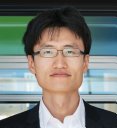
 Jinhua Zhao
· 4 previous affiliations
- Massachusetts Institute of TechnologySince 2023
- Head, Department of Urban Studies and Planing · Since 2026
- Full Professor · Since 2023
- Research Scientist · 2009–2010
- PhD, Urban and Regional Planning · 2004–2009
- Master, Transportation · 2002–2004
- Tram Global2022–2023
- Chief Scientist · 2022–2023
- University of British Columbia2010–2013
- Assistant Professor · 2010–2013
- Transport for London2006–2007
- Associate · 2006–2007
Research Overview
Jinhua Zhao focuses on urban mobility, travel behavior analysis, and the integration of artificial intelligence with transportation systems. His trajectory spans from foundational discrete choice modeling and shared mobility optimization to advanced spatiotemporal graph neural networks. Currently, his work addresses spatial reasoning in multimodal models and the use of generative AI for safety-critical driving scenarios.
Research Trajectory
Zhao’s early research established foundational methods for understanding travel behavior and transit demand through data-driven approaches. In 2007, he developed techniques for Estimating a Rail Passenger Trip Origin-Destination Matrix Using Automatic Data Collection Systems, leveraging automated fare data to model passenger flows. This interest in quantifying human mobility evolved into more sophisticated behavioral modeling, such as Measuring Regularity of Individual Travel Patterns (2018), which introduced an entropy-rate metric to capture the frequency and sequence of travel events over multiple days.
As shared mobility platforms expanded, Zhao began applying advanced computational techniques to optimize fleet operations and passenger experiences. He explored model-free fleet management in Rebalancing Shared Mobility-on-Demand Systems: A Reinforcement Learning Approach (2018), utilizing deep Q-networks to adaptively reposition idle vehicles. Recognizing that efficiency metrics alone do not fully capture human social dynamics, his subsequent work on Mobility Sharing as a Preference Matching Problem (2019) integrated passenger peer preferences directly into ridesharing matching algorithms.
A major theme in Zhao's trajectory is the synthesis of domain-specific behavioral theories with modern deep learning. To bridge the gap between interpretable but rigid discrete choice models and highly predictive but opaque neural networks, his group introduced a hybrid framework in Theory-based residual neural networks: A synergy of discrete choice models and deep neural networks (2020). This approach aligns with his broader contributions to the area of Self-Explainable Neural Networks without Performance Loss. He further expanded this interdisciplinary modeling by integrating computer vision with demand forecasting in Deep hybrid model with satellite imagery: how to combine demand modeling and computer vision for behavior analysis? (2023).
In parallel, Zhao has made significant contributions to the research direction of Spatio-Temporal Graph Neural Networks, particularly addressing the challenges of sparsity and uncertainty in travel demand. He proposed the STZINB-GNN architecture in Uncertainty Quantification of Sparse Travel Demand Prediction with Spatial-Temporal Graph Neural Networks (2022) to handle zero-inflated origin-destination matrices. This line of inquiry continued with SAUC: Sparsity-Aware Uncertainty Calibration for Spatiotemporal Prediction with Graph Neural Networks (2024), which refined uncertainty calibration for spatiotemporal forecasting. His work in this domain frequently intersects with the broader area of Fusing Exogenous Context into Spatio-Temporal Neural Networks.
Zhao's research also investigates the complex dynamics of traffic networks and the societal impacts of routing decisions. His participation in The Braess's Paradox in Dynamic Traffic (2022) utilized microscopic simulations to demonstrate how adding network capacity can paradoxically degrade overall throughput, contributing to the broader field of Aligning Selfish Routing with Socially Optimal Traffic Flow. Returning to ride-hailing systems, he addressed the critical issue of service equity in Fairness-Enhancing Vehicle Rebalancing in the Ride-hailing System (2024), ensuring that demand forecasting and vehicle repositioning do not disproportionately disadvantage underserved communities.
More recently, Zhao has focused on the reliability and scalability of complex neural architectures. In GETS: Ensemble Temperature Scaling for Calibration in Graph Neural Networks (2025), he introduced a post-hoc calibration framework that adaptively combines node features and graph topology. This work, alongside RAST-MoE-RL: A Regime-Aware Spatio-Temporal MoE Framework for Deep Reinforcement Learning in Ride-Hailing (2026)—which optimizes delayed matching across different traffic regimes—advances the research direction of Conditional Computation via Sparse Mixture of Experts. His methodological toolkit has also expanded to include time series interpretability, as seen in Correlating Time Series With Interpretable Convolutional Kernels (2025).
In the latest phase of his career, Zhao is exploring the intersection of large language models, multimodal reasoning, and autonomous systems. He addressed the research area of The Spatial Reasoning Bottleneck in Multimodal Models through Sparkle: Mastering Basic Spatial Capabilities in Vision Language Models Elicits Generalization to Spatial Reasoning (2025), enhancing the ability of vision-language models to navigate two-dimensional environments. He also developed AlphaOPT: Formulating Optimization Programs with Self-Improving LLM Experience Library (2025), a system that enables language models to autonomously learn mathematical optimization modeling from solver feedback. Extending generative AI to physical mobility, his work on Risk-Controllable Multi-View Diffusion for Driving Scenario Generation (2026) introduces a framework for synthesizing geometrically consistent, safety-critical driving scenarios.
Zhao has also extended multimodal and reinforcement learning techniques to large-scale urban dynamics, energy modeling, and transit-oriented development. In DySENSE: Dynamic Spatiotemporal ENergy Synthesis and Emulation with Satellite Imagery (2026), Zhao's group proposed a multimodal generative framework that decouples static urban morphology from dynamic building energy consumption. To support broader urban decision-making, Zhao introduced AgenticCity-Bench: Longitudinal Multimodal Observations of Urban Dynamics with Agentic Reasoning (2026), a benchmark tracking multi-layer urban and environmental states across 16 global cities for cross-modal forecasting and planning. In the realm of urban form and transit integration, they developed Transit-Oriented Land Use Planning Using Deep Reinforcement Learning (2026), combining graph neural networks and deep reinforcement learning to optimize parcel land-use types and floor area ratios around transit stations.
At the same time, Zhao's research increasingly evaluates the algorithmic and communicative capacities of LLM agents in optimization and decision support. Zhao co-organized The FrontierOR Challenge: Agentic Algorithm Design for Operations Research (2026) to test agentic workflows capable of writing and improving code for diverse operations research problems. Additionally, through participation in From Questions to Decisions: Benchmarking How LLM Agents Acquire Decision-Relevant Information from Human Beings (2026), Zhao studied how interactive planning agents elicit missing facts from human operators to avoid infeasible decisions.
Current Directions
Recent work investigates the application of foundational AI models—including large language models, vision-language models, and diffusion models—to complex spatial and optimization challenges in transportation. The most recent papers in the evidence address the spatial reasoning limitations of multimodal models, proposing methods to improve their performance in navigation and physical environment interaction. Additionally, Zhao is exploring self-improving frameworks that allow language models to formulate mathematical optimization programs autonomously. In the domain of urban computing and operations, their current focus also spans generative spatiotemporal energy modeling, reinforcement learning for transit-oriented land use planning, and benchmarking LLM agents on operations research algorithm design and interactive information acquisition.
Profile updated
Loading new papers…
Other researchers whose papers cluster into the same research directions — a proxy for overlapping technical interests and shared intellectual neighborhoods.
See something wrong? Report a mistake