

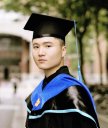
 Siyang Jiang
2 previous affiliations
- Chinese University of Hong Kong2022–2026
- PhD student · 2022–2026
- National Taiwan University2019–2021
- MS student · 2019–2021
Research Overview
Siyang Jiang focuses on distributed machine learning, privacy-preserving inference, and few-shot learning under distribution shifts. His trajectory spans from hardware acceleration and secure neural network inference to robust federated learning systems designed for dynamic edge environments. Most recently, his work investigates the integration of large language models with multimodal sensor data to enable proactive, context-aware AI agents and privacy-preserving human behavior understanding.
Research Trajectory
Jiang's early research addressed hardware acceleration for edge computing. In 2021, he introduced a novel accelerator for matrix operations in Dataflow Systolic Array Implementations of Exploring Dual-Triangular Structure in QR Decomposition Using High-Level Synthesis, utilizing a dual-triangular structure to achieve high parallelism in QR decomposition. Following this, his focus expanded into robust computer vision, specifically tackling distribution shifts in few-shot learning. He developed PGADA: Perturbation-Guided Adversarial Alignment for Few-Shot Learning Under the Support-Query Shift to mitigate the misalignment between support and query sets caused by small image perturbations.
In 2023, Jiang deepened his work across several machine learning domains. He continued to advance few-shot learning by addressing multiple, unknown distribution shifts within meta-tasks in Dual Adversarial Alignment for Realistic Support-Query Shift Few-shot Learning. Concurrently, he contributed to foundational machine learning theory by overseeing research on Pairwise learning problems with regularization networks and Nyström subsampling approach. He also collaborated on reinforcement learning techniques for expanding search spaces in Incremental Reinforcement Learning with Dual-Adaptive ε-Greedy Exploration. A major focus during this period was secure machine learning; his lab developed XNET: A Real-Time Unified Secure Inference Framework Using Homomorphic Encryption, which combined unified network architectures with GPU acceleration to process encrypted image queries. This work contributed significantly to the broader area of Mitigating the Computational Overhead of Encrypted Machine Learning.
By 2024, Jiang's research increasingly integrated privacy constraints with distributed edge environments, particularly through Federated Learning (FL). He designed ArtFL: Exploiting Data Resolution in Federated Learning for Dynamic Runtime Inference via Multi-Scale Training, a system that uses data resolution as a control mechanism to meet stringent inference deadlines on resource-constrained devices. Building on his prior work in homomorphic encryption, he also introduced Lancelot: Towards Efficient and Privacy-Preserving Byzantine-Robust Federated Learning within Fully Homomorphic Encryption, addressing vulnerabilities to poisoning attacks while maintaining data decentralization. Alongside these core systems contributions, he participated in applied research leveraging large language models (LLMs) for healthcare, co-developing DrHouse: An LLM-empowered Diagnostic Reasoning System through Harnessing Outcomes from Sensor Data and Expert Knowledge.
In 2025, Jiang extended his few-shot learning methodologies with a Dual Alignment Framework for Few-shot Learning with Inter-Set and Intra-Set Shifts, combining pixel-level image repair and optimal transport alignment to handle complex data variations. Simultaneously, his work on LLM-empowered systems evolved to focus on physical-world sensing and proactive assistance. He collaborated on ContextAgent: Context-Aware Proactive LLM Agents with Open-world Sensory Perceptions, a framework enabling agents to process wearable sensor data and autonomously decide when to intervene, contributing to the research direction of Proactive AI Agents for Anticipatory Assistance. He also led the development of An LLM-Empowered Low-Resolution Vision System for On-Device Human Behavior Understanding, which fine-tunes vision-language models using LLM-generated captions for privacy-preserving sensors. This work intersects with broader efforts in areas such as Disentangling Overlapping Signals in Multi User Wireless Sensing.
Current Directions
Recent work investigates the intersection of large language models, multimodal sensory perception, and privacy-preserving edge computing. The most recent papers in the evidence address how LLMs can be adapted to interpret low-resolution or encrypted sensor data—such as depth and thermal imagery—to enable on-device human behavior understanding without compromising user privacy. Additionally, this research explores the design of proactive AI agents capable of continuous, context-aware reasoning from wearable devices. Alongside these systems-level innovations, ongoing theoretical work continues to refine few-shot learning frameworks, specifically developing optimal transport and adversarial alignment techniques to manage simultaneous inter-set and intra-set distribution shifts in visual recognition tasks.
Profile updated
Loading new papers…
Other researchers whose papers cluster into the same research directions — a proxy for overlapping technical interests and shared intellectual neighborhoods.
See something wrong? Report a mistake