

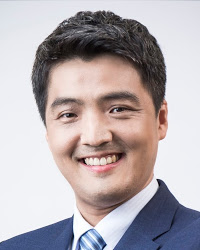
 Jung Ho Ahn
· 2 previous affiliations
- Seoul National UniversitySince 2018
- Full Professor · Since 2018
- Samsung (South Korea)2024–2025
- Researcher · 2024–2025
Research Overview
Jung Ho Ahn focuses on computer architecture, memory systems, and hardware acceleration for machine learning. His trajectory spans from foundational DRAM and cache optimizations to memory security and the efficient execution of deep neural networks. Most recently, his work addresses inference acceleration for diffusion-based language models and privacy-preserving machine learning.
Research Trajectory
Ahn’s early research focused on the reliability and performance of memory hierarchies at the hardware level. In 2011, he proposed methods to mitigate process variation-induced bit errors in low-voltage SRAM by utilizing access behavior history in Matching cache access behavior and bit error pattern for high performance low Vcc L1 cache. He subsequently addressed main memory bottlenecks, introducing asymmetric DRAM bank organizations to reduce random access latency in Reducing memory access latency with asymmetric DRAM bank organizations (2013). With collaborators, he also explored 3D-stacked memory architectures, evaluating Through-Silicon Interposer (TSI) designs and proposing bank partitioning to balance energy efficiency in Microbank: Architecting Through-Silicon Interposer-Based Main Memory Systems (2014). Moving toward system-level interconnects, he participated in analyzing performance fairness in multi-hop networks, demonstrating how history-based arbitration can resolve bandwidth inequities in History-Based Arbitration for Fairness in Processor-Interconnect of NUMA Servers (2017).
By 2018, his focus expanded to the memory demands of datacenter workloads and deep learning. He contributed to a comprehensive microarchitectural evaluation of commercial search engines in Memory Hierarchy for Web Search. To accelerate Convolutional Neural Networks (CNNs), he developed techniques to restructure Batch Normalization layers, fusing them with convolutional layers to optimize mini-batch calculations during training in Restructuring Batch Normalization to Accelerate CNN Training. He also addressed memory bandwidth bottlenecks in CNN accelerators by partitioning compute units for statistical memory traffic shaping in Partitioning Compute Units in CNN Acceleration for Statistical Memory Traffic Shaping.
A major theme in Ahn’s trajectory is DRAM security, specifically within the research direction of Architectural Rowhammering via Implicit Hardware Side Effects. In 2019, he introduced TWiCe, a counter-based refresh mechanism that accurately detects and prevents row-hammer attacks with minimal performance overhead in TWiCe: preventing row-hammering by exploiting time window counters. He continued to advance memory security as a co-author of Graphene: Strong yet Lightweight Row Hammer Protection (2020), which provided lightweight row-hammer mitigation. This line of work culminated in Mithril: Cooperative Row Hammer Protection on Commodity DRAM Leveraging Managed Refresh (2022), a cooperative security framework leveraging the Refresh Management (RFM) interface for deterministic protection. Parallel to his security research, Ahn investigated resource isolation in shared-memory systems, identifying how last-level cache capacity allocations can inadvertently degrade performance and proposing memory virtual channels to enforce fairness in Enforcing Last-Level Cache Partitioning through Memory Virtual Channels (2019).
In 2023, his work spanned profile-guided optimization, privacy-preserving AI, and emerging memory standards. He contributed to MaPHeA: A Framework for Lightweight Memory Hierarchy-aware Profile-guided Heap Allocation, a framework utilizing hardware performance monitoring units for memory hierarchy-aware heap allocation. Addressing the high computational overhead of secure AI, he developed hybrid packing methods to optimize Fully Homomorphic Encryption-based neural networks in HyPHEN: A Hybrid Packing Method and Optimizations for Homomorphic Encryption-Based Neural Network. He also participated in early comprehensive evaluations of disaggregated memory systems using genuine hardware in Demystifying CXL Memory with Genuine CXL-Ready Systems and Devices.
Most recently, in 2026, Ahn focused on the efficiency of generative AI models. He introduced DyLLM: Efficient Diffusion LLM Inference via Saliency-based Token Selection and Partial Attention, a training-free framework that accelerates Masked Diffusion Language Models through saliency-based token selection and partial attention. This research contributes to several broader areas, including Exploiting Temporal Redundancy in Iterative Generative Models, Hierarchical Token Pruning for Efficient Transformers, Caching for Bidirectional Diffusion Language Models, and Differential Attention for Noise Cancellation in Transformers.
Current Directions
The most recent papers in the evidence point toward the optimization of advanced machine learning models and next-generation memory systems. A primary focus is the efficient inference of generative architectures, particularly exploring how temporal sparsity and token selection can accelerate diffusion-based language models without sacrificing accuracy. Alongside generative AI efficiency, recent efforts address privacy-preserving computation, investigating hybrid packing methods to make fully homomorphic encryption viable for deep neural network inference. Finally, ongoing research explores the system-level implications of emerging interconnects, evaluating how Compute eXpress Link (CXL) technologies can enable scalable and disaggregated memory architectures.
Profile updated
Loading new papers…
Other researchers whose papers cluster into the same research directions — a proxy for overlapping technical interests and shared intellectual neighborhoods.
See something wrong? Report a mistake