

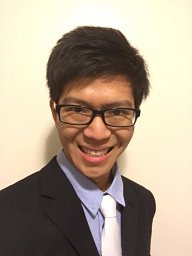
 Sin Yong Tan
· 4 previous affiliations
- Musco LightingSince 2021
- Artificial Intelligence Scientist · Since 2022
- Computer Vision Intern · 2021
- Musco Sports LightingSince 2022
- AI Scientist · Since 2022
- Iowa State University2014–2022
- PhD student · 2017–2022
- President of Iowa State University Badminton Club · 2019–2021
- Research Assistant - Machine Learning · 2017–2019
- Grader for Manufacturing Engineering(ME 324) · 2016
- Vice Leader of ASME Student Design Team · 2014–2016
- Undergraduate Research Assistant (Engineering Graphic Design) · 2015
- Graduate III- Electrical Engineering · 2020
Research Overview
Sin Yong Tan focuses on the development of optimization algorithms, decentralized learning frameworks, and spatiotemporal modeling for multivariate time series. Tan’s research addresses the algorithmic challenges of training deep learning models in distributed environments, particularly when data is non-identically and independently distributed (non-IID), and seeks to improve the interpretability and performance of predictive models through novel attention mechanisms and higher-order statistical methods.
Research Trajectory
Tan’s research trajectory reflects a progression from fundamental optimization mechanics to the application of deep learning in complex, networked, and multi-variable environments. In the early stages of this observed period, Tan’s work centered on the internal dynamics of stochastic gradient descent variants. Specifically, this involved investigating the statistical foundations of adaptive gradient methods, moving beyond standard lower-order moment estimations to explore how higher-order moments influence convergence and performance in deep learning routines.
By 2021, Tan’s focus shifted toward the structural and spatial constraints of machine learning. This evolution is marked by two distinct but related directions: decentralized learning and multivariate time series analysis. In the domain of decentralized learning, Tan has addressed the limitations of traditional centralized parameter-server architectures. This work explores how multiple agents can collaborate over fixed or ad-hoc communication topologies, which is a critical requirement for applications in field robotics, mobile networks, and power systems. A significant component of this research involves mitigating the stability and accuracy issues that arise when data is distributed across agents in a non-IID fashion.
Simultaneously, Tan has contributed to the field of time series forecasting. This line of research emphasizes the need for both predictive accuracy and model interpretability. By developing architectures that can simultaneously isolate critical time steps and identify the most influential variables in a multivariate dataset, Tan’s work aims to provide domain experts with actionable insights into model decision-making processes.
Representative Work
Tan’s contributions are evidenced across several key papers focusing on optimization, decentralized consensus, and attention mechanisms.
In the area of optimization, Tan participated in an investigation of the Adam algorithm from the perspective of statistical moments. The resulting work, On Higher-order Moments in Adam, proposes an extension termed HAdam. This research explores the use of higher-order moments of the stochastic gradient, rather than the lower-order moments typically utilized by adaptive methods. The study provides an analytical framework for understanding how odd and even moments affect empirical results, demonstrating that certain higher-order configurations can enhance performance over the vanilla Adam algorithm.
Tan has also contributed significantly to the challenge of learning from distributed, heterogeneous data. In Cross-Gradient Aggregation for Decentralized Learning from Non-IID Data, Tan served as a key contributor to the development of the Cross-Gradient Aggregation (CGA) algorithm. CGA is designed for decentralized environments where participants hold disparate types of information. The algorithm utilizes quadratic programming to identify update directions that are mutually beneficial for an individual agent and its neighbors. This approach addresses the instability often encountered in extreme data-sharing scenarios, resulting in improved accuracy compared to existing decentralized methods.
Furthering the study of decentralized systems, Tan collaborated on the analysis of Decentralized Deep Learning Using Momentum-Accelerated Consensus. This work moves away from the central parameter-server model, which can be inefficient or impractical in networked systems like mobile ad-hoc networks. The research proposes a decentralized algorithm where agents interact over a fixed communication topology. By incorporating momentum-accelerated consensus, the method aims to improve the efficiency of model parameter aggregation across a distributed set of agents.
In the domain of predictive modeling, Tan contributed to the design of a novel deep learning architecture for time series analysis in Spatiotemporal Attention for Multivariate Time Series Prediction and Interpretation. This work introduces the Spatiotemporal Attention Mechanism (STAM), which is designed to handle multivariate time series data. STAM is characterized by its causality—relying only on past inputs—and its scalability. The primary contribution of this research is the simultaneous learning of important temporal intervals and spatial variables, allowing for a more granular interpretation of which factors most significantly drive the model's output. This dual focus on prediction and interpretation is intended to assist domain experts in understanding complex multivariate dependencies.
Profile updated
Loading new papers…
Other researchers whose papers cluster into the same research directions — a proxy for overlapping technical interests and shared intellectual neighborhoods.
See something wrong? Report a mistake