

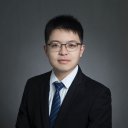
 Si-Yuan Cao
· 1 previous affiliation
- Zhejiang UniversitySince 2016
- Assistant Professor · Since 2022
- PhD student · 2016–2022
Research Overview
Si-Yuan Cao focuses on computer vision and spatial perception, specifically addressing cross-modal image registration, homography estimation, and LiDAR-based localization. His trajectory spans from early work on multispectral alignment to recent advances in unsupervised cross-modal flow and semantic scene completion. Currently, he investigates self-supervised frameworks and transformer architectures for robust 3D scene understanding and geometric matching.
Research Trajectory
Cao’s early research concentrated on the challenges of aligning images across different spectral bands and modalities. In 2020, he introduced a structure consistency boosting transform in Boosting Structure Consistency for Multispectral and Multimodal Image Registration, addressing the computational inefficiencies of standard measures like sum of squared differences when applied to multispectral data. This focus on robust alignment extended into spatial perception and autonomous navigation. With collaborators, he developed BVMatch: Lidar-Based Place Recognition Using Bird's-Eye View Images (2021), a frame-to-frame place recognition framework that discretizes ground areas into grids and uses Log-Gabor filters to encode orientation information. The following year, he contributed to LiDAR-Based Global Localization Using Histogram of Orientations of Principal Normals (2022), which tackled the sparsity of point clouds by projecting them into bird's-eye view images and matching them using a novel local descriptor.
In parallel with his localization research, Cao advanced the methodology of image fusion and homography estimation. He guided the development of a two-stage algorithm for Unaligned Hyperspectral Image Fusion via Registration and Interpolation Modeling (2022), which explicitly accounts for viewpoint differences between hyperspectral and multispectral sensors. That same year, he proposed Iterative Deep Homography Estimation, an architecture featuring a fully trainable iterator with tied weights. This approach improved accuracy across both static and dynamic scenes, contributing to the broader area of Iterative Weight Sharing for Deep Recursive Refinement.
Moving into 2023, Cao expanded his work on structural similarity and deep geometric estimation. He developed PCNet: A structure similarity enhancement method for multispectral and multimodal image registration, leveraging phase congruency theory to handle nonlinear intensity and gradient variations. He also introduced a recurrent framework in Recurrent Homography Estimation Using Homography-Guided Image Warping and Focus Transformer, which progressively enhances feature consistency while aggregating intra- and inter-correspondences. In the domain of 3D spatial perception, he participated in the design of BEVPlace: Learning LiDAR-based Place Recognition using Bird's Eye View Images, a method that improves robustness to view variations. This work intersects with several broader research directions, including Group Equivariant Neural Networks for Geometric Symmetry, Rotation Invariant Neural Architectures via Group Equivariance, and the area of Beyond the Flat World Assumption in Spatial Perception. Additionally, he collaborated on Aggregating Feature Point Cloud for Depth Completion (2023), which directly propagates 3D depth information to recover dense depth maps without relying on repetitive convolutional blocks.
More recently, Cao has focused on unsupervised learning and complex scene understanding. In 2024, he presented SCPNet: Unsupervised Cross-modal Homography Estimation via Intra-modal Self-supervised Learning, a framework that combines correlation-based estimation with consistent feature map projection. This approach aligns with the research direction of Reconstruction Objectives for Information Preservation in Latent Spaces. He also contributed to Context and Geometry Aware Voxel Transformer for Semantic Scene Completion (2024), inferring full 3D geometry and semantics from 2D images, advancing the field of Context Adaptive Queries for Vision Transformers. In 2026, Rethinking Unsupervised Cross-modal Flow Estimation: Learning from Decoupled Optimization and Consistency Constraint introduced a self-supervised framework that replaces appearance-based alignment with geometry-aware data synthesis to achieve cross-modal flow estimation without ground-truth labels. Cao also contributed to Unaligned Image Guided Denoising via Cross-modal Conditional Flow Matching (2026), developing a conditional flow matching scheme with adaptive sparse guidance propagation to tackle severe noise paired with cross-modal misalignment in few inference steps. Furthermore, they collaborated on SplatFlux: Feed-Forward 4D Gaussian Reconstruction and Generation from Video Latents (2026), a feed-forward framework that decodes shared video latents into static-dynamic decoupled 4D Gaussian splats for dynamic reconstruction and generation.
Current Directions
The most recent papers in the evidence indicate a strong focus on unsupervised and self-supervised frameworks for cross-modal perception and 3D scene understanding. Cao is actively investigating methods to bypass the need for ground-truth labels in complex alignment tasks, such as cross-modal flow estimation between RGB and thermal imagery. This involves decoupled optimization strategies and geometry-aware data synthesis to enforce cross-modal consistency. Additionally, his recent work addresses semantic scene completion, utilizing voxel-based transformer architectures to infer hidden 3D geometry and semantics from limited 2D observations. Across these domains, a unifying theme is the development of robust, context-aware neural architectures capable of handling severe modality gaps, cross-modal misalignment, and dynamic 4D scene synthesis in feed-forward perception systems.
Profile updated
Loading new papers…
Other researchers whose papers cluster into the same research directions — a proxy for overlapping technical interests and shared intellectual neighborhoods.
See something wrong? Report a mistake