

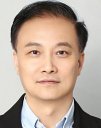
 Hui-liang Shen
· 2 previous affiliations
- Zhejiang UniversitySince 2005
- Full Professor · Since 2010
- Associate Professor · 2005–2009
- PhD student · 1996–2002
- Hong Kong Polytechnic University2001–2005
- Researcher · 2001–2005
Research Overview
Hui-liang Shen focuses on multispectral imaging, computer vision, and intelligent sensing. His early research addressed the physical characterization of optical devices and the mathematical alignment of multispectral images. More recently, his work has expanded into deep learning architectures for 3D scene understanding, cross-modal perception, and autonomous driving applications.
Research Trajectory
Shen’s early work investigated the non-linear signal unmixing of optical hardware in complex physical environments. In Spectral characterization of a color scanner by adaptive estimation (2004), he introduced an adaptive estimation method to model the local color statistics of scanners, correcting deviations from linear behavior to improve spectral reflectance estimation. Building on this foundation in computational photography and imaging, he later contributed to robust optimization techniques for spatial alignment. This included participating in the development of novel measures for aligning spectral band images, such as the gradient-based approach detailed in Normalized Total Gradient: A New Measure for Multispectral Image Registration (2018). To further address the computational complexity and distortion challenges inherent in multispectral data, he collaborated on Boosting Structure Consistency for Multispectral and Multimodal Image Registration (2020), which proposed a transform designed to efficiently handle structural variations across modalities.
As deep learning transformed computer vision, Shen’s group began designing neural architectures for motion estimation and image alignment, particularly contributing to the research direction of Iterative Weight Sharing for Deep Recursive Refinement. In Iterative Deep Homography Estimation (2022), his lab proposed a fully trainable architecture with tied weights that iteratively refines homography estimates for both static and dynamic scenes. Continuing this focus on overcoming local minima in alignment, he collaborated on Recurrent Homography Estimation Using Homography-Guided Image Warping and Focus Transformer (2023), a framework that combines iterative warping with an attention mechanism to reduce error rates while maintaining high parameter efficiency.
Shen has also directed research into efficient multi-modal fusion for edge intelligence and domain-specific applications. For instance, his team developed CMENet: A Cross-Modal Enhancement Network for Tobacco Leaf Grading (2023), which automates agricultural inspection by fusing standard reflection images with transmission images and metadata. In the domain of object detection, he oversaw Rethinking Early-Fusion Strategies for Improved Multispectral Object Detection (2024), introducing a lightweight, single-branch framework that mitigates information interference and domain gaps to achieve high accuracy on RGB-Thermal datasets suitable for edge devices.
In recent years, Shen’s research has heavily emphasized 3D scene understanding and robust perception for autonomous driving. His group has explored hybrid point-voxel architectures, as seen in Context and Geometry Aware Voxel Transformer for Semantic Scene Completion (2024), which infers full 3D geometry and semantics from 2D images, including occluded regions. To handle open-vocabulary recognition, his lab introduced Language Driven Occupancy Prediction (2024), a framework that generates 3D language ground truth from unlabeled image and LiDAR data via semantic transitive labeling. Expanding into novel representations, he directed RaGS: Unleashing 3D Gaussian Splatting from 4D Radar and Monocular Cues for 3D Object Detection (2025), which replaces rigid Bird’s Eye View (BEV) grids with adaptive 3D Gaussians to fuse radar and camera data. Concurrently, his team addressed large-scale LiDAR global localization with S-BEVLoc: BEV-Based Self-Supervised Framework for Large-Scale LiDAR Global Localization (2025), utilizing single BEV images and specialized loss functions to eliminate the need for expensive pose labels.
Shen’s most recent work continues to advance the broader area of Multi-Modal Image Registration via Contrast-Invariant Representations through self-supervised and unsupervised paradigms. In SSHNet: Unsupervised Cross-modal Homography Estimation via Problem Reformulation and Split Optimization (2025), his group reformulated the alignment challenge into separate homography and modality transfer sub-problems. Similarly, Rethinking Unsupervised Cross-modal Flow Estimation: Learning from Decoupled Optimization and Consistency Constraint (2026) replaces unreliable appearance-based alignment with a decoupled optimization strategy that generates its own explicit motion supervision. Further expanding his work on robust spatial perception, his lab proposed Large Depth Completion Model from Sparse Observations (2026) to generate dense depth maps from irregular sensor data in uncalibrated environments, and explored semantic-aware architectures in SADet: A semantic-aware tiny object detection network against missed detection (2026). His group also developed Unaligned Image Guided Denoising via Cross-modal Conditional Flow Matching (2026), which leverages cross-modal flow matching and adaptive sparse propagation to restore images suffering from severe noise and 2D spatial misalignment with only a few inference steps.
In generative modeling and embodied driving, Shen supervised SplatFlux: Feed-Forward 4D Gaussian Reconstruction and Generation from Video Latents (2026), introducing a feed-forward latent-to-4DGS architecture that disentangles static structures from dynamic regions to reconstruct and generate temporally coherent 4D scenes. Shen also contributed to RCVLA: 4D Radar-Grounded Semantic Reasoning and Trajectory Arbitration for Autonomous Driving (2026), combining radar-camera multimodal reasoning with diffusion-based trajectory arbitration and radar-derived risk calibration for driving safety.
Current Directions
The most recent papers in the evidence indicate a strong focus on self-supervised cross-modal perception and 3D spatial understanding for autonomous systems. Shen is actively investigating unsupervised frameworks for cross-modal flow and homography estimation, seeking to eliminate the reliance on ground-truth labels by leveraging geometry-aware synthesis and decoupled optimization. Additionally, Shen's research addresses dynamic 4D scene reconstruction, flow-based unaligned image restoration, and vision-language-action integration using 4D radar measurements to support safe trajectory arbitration and robust spatial perception.
Profile updated
Loading new papers…
Other researchers whose papers cluster into the same research directions — a proxy for overlapping technical interests and shared intellectual neighborhoods.
See something wrong? Report a mistake