

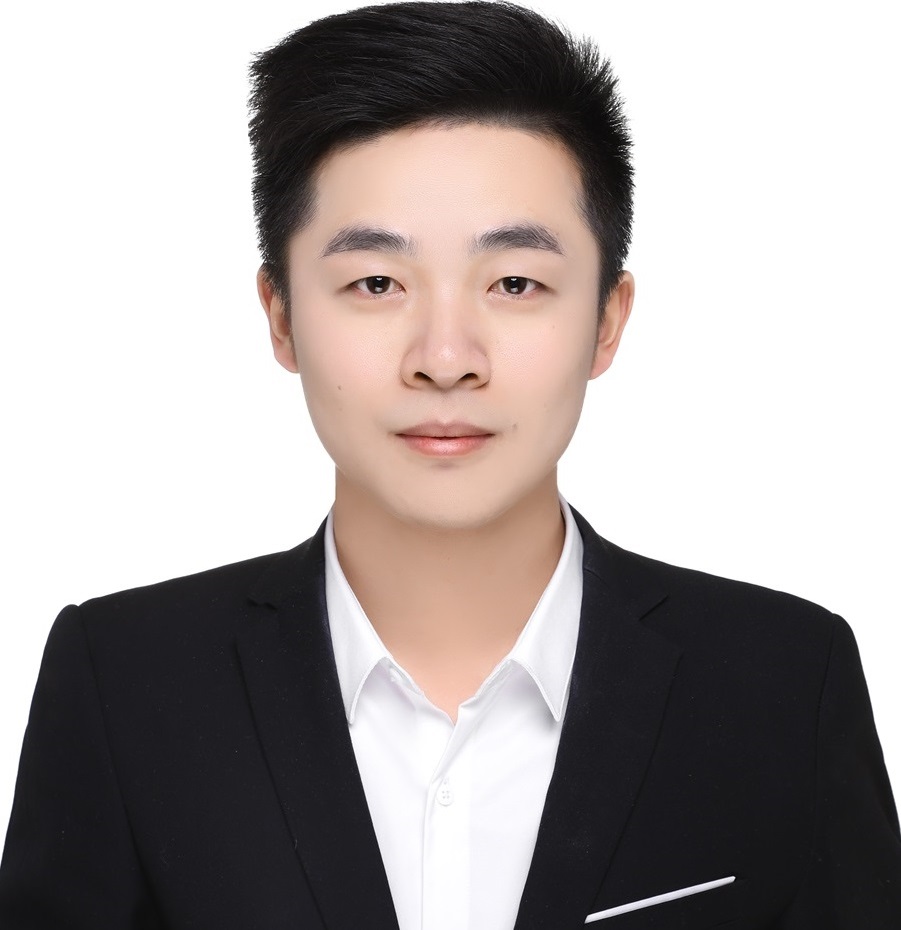
 Shuo Chen
· 3 previous affiliations
- Nanjing UniversitySince 2025
- Associate Professor · Since 2025
- RIKEN2020–2024
- Research Scientist · 2023–2024
- Postdoc · 2020–2023
- PhD student · 2016–2020
15 other authors named Shuo Chen: Shuo Chen (Beijing Institute for General Artificial Intelligence · 42 papers), Shuo Chen (Siemens Healthcare (United States) · Ludwig-Maximilians-Universität München · 14 papers), Shuo Chen (Nanjing University · 10 papers), Shuo Chen (6 papers), Shuo Chen (Huawei Singapore · Huawei Technologies (China) · 2 papers), and 10 more
Research Overview
Shuo Chen focuses on representation learning, self-supervised learning, and sparse and low-rank theory. His trajectory spans from robust image classification and subspace clustering to advancing contrastive learning and knowledge distillation under distribution shifts. Recently, his work addresses the optimization of generative models, focusing on efficient diffusion processes and learning from noisy, heterogeneous streaming data.
Research Trajectory
Chen’s early research concentrated on robust image analysis and the theoretical underpinnings of deep learning stability. In 2017, he developed Low-Rank Latent Pattern Approximation With Applications to Robust Image Classification, introducing a model to reconstruct test images afflicted by structural noise without relying on time-consuming iterative coefficient computations. He continued to address image corruption by proposing δ-Norm-Based Robust Regression With Applications to Image Analysis, which leveraged a novel norm to improve regression model resilience against outliers in heavily corrupted datasets. Alongside these application-focused methods, he investigated fundamental network training dynamics, identifying a critical variance shift conflict in Understanding the Disharmony Between Dropout and Batch Normalization by Variance Shift. This work theorized how transitioning from training to inference disrupts internal statistics, providing a structural explanation for why these two common techniques often degrade performance when combined.
Moving into the early 2020s, Chen expanded his focus to clustering and representation learning. He introduced Linearity-Aware Subspace Clustering, which utilized a Pearson correlation-inspired metric within a collaborative learning framework to better capture linear relationships in noisy, real-world data. Concurrently, he made significant contributions to the research direction of Semantic Collision and False Negatives in Contrastive Learning. In this area, he developed Large-Margin Contrastive Learning with Distance Polarization Regularizer, which forces pairwise distances to be distinctly small or large, creating a margin that improves feature representation across multiple domains. He further refined contrastive embeddings with Learning Contrastive Embedding in Low-Dimensional Space, proposing a regularized projection layer to prevent instances from becoming too sparsely distributed in high-dimensional spaces, thereby better capturing underlying similarities. This thematic arc culminated in Robust Similarity Learning with Difference Alignment Regularization, which ensured that the geometric differences between dissimilar items remained consistent across the embedding space to enhance model generalization.
As his work progressed, Chen increasingly addressed the challenges of knowledge distillation and model regularization. To overcome the lack of original training data, he explored the use of web-scraped images in Distribution Shift Matters for Knowledge Distillation with Webly Collected Images. This framework dynamically selected relevant web images and employed contrastive learning to help student networks learn representations invariant to stylistic distribution shifts. He also investigated the implicit biases of neural networks in Efficiency Calibration of Implicit Regularization in Deep Networks via Self-paced Curriculum-Driven Singular Value Selection, proposing an explicit regularization method to calibrate the tendency of linear neural networks toward low-rank solutions in matrix completion tasks. Continuing his work on distillation, he developed Hybrid Data-Free Knowledge Distillation, a method that combines a small amount of collected data with synthetic examples to train student networks. This approach aligns with broader efforts in the area of Preventing Discriminator Overfitting in Low Data Generative Training.
In recent years, Chen’s collaborative research has expanded into generative modeling, continual learning, and federated systems. He contributed to the broader area of The Fidelity-Editability Trade-off in Image Editing through his work on ERDDCI: Exact Reversible Diffusion via Dual-Chain Inversion for High-Quality Image Editing, which addressed the accumulation of errors caused by local linearization assumptions during the diffusion inversion process. He also participated in research on Optimizing Few-Step Generation with Adaptive Matching Distillation, introducing a self-correcting mechanism that reshapes optimization gradients to stabilize few-step diffusion model training, contributing to the research direction of Mitigating Hallucination Inheritance in Knowledge Distillation. Additionally, he has been involved in tackling data heterogeneity across clients in Heterogeneity-Aware Knowledge Sharing for Graph Federated Learning, and explored the theoretical causes of catastrophic forgetting in A Theoretical Perspective on Streaming Noisy Data with Distribution Shift, proposing a unified framework for learning from streaming data afflicted by both distribution shifts and label noise.
Current Directions
The most recent papers in the evidence indicate a strong focus on the optimization and deployment of advanced machine learning models in complex, resource-constrained, or noisy environments. A primary direction involves refining generative foundation models, particularly diffusion models, to achieve high-quality image synthesis and editing with fewer computational steps and reduced error accumulation. Concurrently, ongoing work addresses the robustness of learning algorithms in decentralized and continuous settings. This includes developing frameworks for graph federated learning that can handle severe structural and semantic data heterogeneity across clients, as well as establishing theoretical and practical solutions for continual learning systems that must adapt to streaming data characterized by simultaneous distribution shifts and label noise.
Profile updated
Loading new papers…
Other researchers whose papers cluster into the same research directions — a proxy for overlapping technical interests and shared intellectual neighborhoods.
See something wrong? Report a mistake