

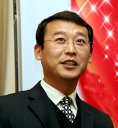
 Jian Yang
· 4 previous affiliations
- Full Professor · Since 2007
- New Jersey Institute of Technology2006–2007
- Postdoc · 2006–2007
- Hong Kong Polytechnic University2004–2006
- Postdoc · 2004–2006
- Postdoc · 2003
11 other authors named Jian Yang: Jian Yang (Beihang University · 131 papers), Jian Yang (The Computing Research and Education Association of Australasia (CORE) · Digital Finance CRC · Beijing Normal-Hong Kong Baptist University · 92 papers), Jian Yang (Technical University of Munich · KartoBit Research Network · 63 papers), Jian Yang (Dalian University of Technology · 21 papers), jian Yang (Nankai University · 20 papers), and 6 more
Research Overview
Jian Yang focuses on computer vision, 3D spatial perception, and robust representation learning. His trajectory spans foundational work in face recognition and image super-resolution to recent advances in large-scale monocular SLAM, point cloud processing, and self-supervised learning. Currently, he investigates generative diffusion models, dynamic neural architectures, and robust perception for autonomous systems.
Research Trajectory
Jian Yang’s early research established foundational techniques for appearance-based image analysis. He developed Two-Dimensional PCA: A New Approach to Appearance-Based Face Representation and Recognition and subsequently expanded this into kernel methods with KPCA Plus LDA: A Complete Kernel Fisher Discriminant Framework for Feature Extraction and Recognition. He later addressed severe noise and occlusion in facial analysis with Robust sparse coding for face recognition, framing the task as a robust regression problem that adaptively down-weights corrupted pixels to maintain high accuracy even under significant image degradation.
Transitioning into deep neural networks, he introduced highly compact yet deep models for single image super-resolution in Image Super-Resolution via Deep Recursive Residual Network, navigating the trade-off between model capacity and inference efficiency. His research in this domain also expanded into the broader area of Guided Depth Super Resolution and Texture Copying. With collaborators, he explored biologically inspired dynamic selection mechanisms for convolutional neural networks in Selective Kernel Networks, advancing the research direction of Dynamic Receptive Fields through Selective Kernel Attention. In the realm of dense object detection, he participated in developing Generalized Focal Loss: Learning Qualified and Distributed Bounding Boxes for Dense Object Detection, which aligns classification confidence with localization quality. This aligns with his broader interest in the area of Feature Representation Conflicts in Joint Detection and Identification.
Moving into 3D spatial perception, he explored point cloud oversegmentation in Superpoint Network for Point Cloud Oversegmentation, contributing to the research direction of Superpixel Based Graph Reduction. He later applied generative diffusion models to 3D point cloud registration, treating it as a progressive denoising process on the SE(3) manifold in SE(3) Diffusion Model-based Point Cloud Registration for Robust 6D Object Pose Estimation. This work complements his contributions to the area of Robust Point Cloud Registration Under Low Spatial Overlap.
His recent trajectory demonstrates a strong focus on scaling perception systems and handling complex, unstructured data. He led the creation of a large-scale benchmark for synthetic aperture radar in SARDet-100K: Towards Open-Source Benchmark and ToolKit for Large-Scale SAR Object Detection, addressing the historical lack of open-source tools in SAR object detection. In video analysis, his group developed a Meta-Prototype Unit for real-time anomaly detection in Learning normal dynamics in videos with meta prototype network. He also advanced human-object interaction detection by incorporating 3D spatial relations and gaze priors in HORP: Human-Object Relation Priors Guided HOI Detection. Pushing the boundaries of spatial mapping, he introduced GigaSLAM: Large-Scale Monocular SLAM with Hierachical Gaussian Splats, successfully scaling 3D Gaussian Splatting to unbounded outdoor environments by combining a hierarchical sparse voxel representation with robust loop-closure mechanisms.
His latest work refines how models learn from augmented and noisy data. In Enhancing Contrastive Learning with Variable Similarity, he proposed dynamically adjusting similarity targets based on augmentation intensity to improve feature robustness. For 3D data, he introduced topologically consistent deformations for point cloud augmentation in Rethinking Point Cloud Data Augmentation: Topologically Consistent Deformation, further supporting the research direction of Global Context for 3D Point Cloud Completion. Addressing extreme environmental conditions, his team developed See through the Dark: Learning Illumination-affined Representations for Nighttime Occupancy Prediction, a framework that selectively enhances low-light images to guide feature sampling for autonomous driving perception. Finally, his 2026 publications explore minimalist supervision, using single labeled images to anchor self-supervised learning in One-Shot Exemplars for Class Grounding in Self-Supervised Learning, and advance generative synthesis with VMDiff: Visual Mixing Diffusion for Limitless Cross-Object Synthesis, which seamlessly fuses distinct objects into coherent hybrid entities.
Current Directions
Based on his most recent publications, Yang’s current research focuses on scaling 3D spatial perception and improving the robustness of representation learning under challenging conditions. A major theme is the adaptation of generative models and novel 3D representations—such as hierarchical Gaussian splatting and diffusion processes—to solve complex spatial tasks like large-scale monocular SLAM and cross-object visual synthesis. Additionally, he is actively investigating self-supervised and contrastive learning paradigms, particularly methods that require minimal annotation (such as one-shot exemplars) or that dynamically adjust to data augmentation and extreme environmental factors like nighttime illumination.
Profile updated
Loading new papers…
Other researchers whose papers cluster into the same research directions — a proxy for overlapping technical interests and shared intellectual neighborhoods.
See something wrong? Report a mistake