

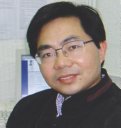
 Shuigeng Zhou
· 5 previous affiliations
- Fudan UniversitySince 2002
- Full Professor · Since 2002
- PhD student · 1997–2000
- Wuhan University2000–2002
- Postdoc · 2000–2002
- Shanghai Academy of Spaceflight Technology1991–1997
- Researcher · 1991–1997
- MS student · 1988–1991
- Undergrad student · 1984–1988
Research Overview
Shuigeng Zhou focuses on large-scale data mining, computational biology, and advanced machine learning frameworks. His trajectory spans early work in spatial database clustering to extensive contributions in network-based biological inference and computer vision. Currently, his research addresses causal discovery, federated learning in heterogeneous environments, and generative modeling for complex data structures.
Research Trajectory
The early phase of his research focused on foundational data mining techniques, particularly the efficiency of clustering algorithms for large datasets. In 2000, he developed sampling-based DBSCAN algorithms to improve the scalability of spatial clustering, as detailed in Combining Sampling Technique with DBSCAN Algorithm for Clustering Large Spatial Databases.
Moving into the 2010s, his focus expanded significantly into computational biology, addressing the challenge of incomplete and noisy biological networks. In 2013, he presented Protein function prediction by collective classification with explicit and implicit edges in protein-protein interaction networks. This work combined protein-protein interaction data with sequence information to boost prediction performance, contributing to the research direction of Closing the Functional Annotation Gap for Protein Sequences and the broader area of Representation Learning on Sparse Biological Networks. Concurrently, he explored computer vision challenges, such as scene text recognition. To address alignment issues in complex or low-quality images, his group developed a Focusing Attention Network in Focusing Attention: Towards Accurate Text Recognition in Natural Images, advancing work in the area of Mitigating Attention Drift in Sequence Recognition.
Returning to biomedical data science in the 2020s, he applied deep learning to drug repositioning. The 2020 paper HNet-DNN: Inferring New Drug-Disease Associations with Deep Neural Network Based on Heterogeneous Network Features utilized heterogeneous network features to predict novel indications for approved drugs. He also contributed to cheminformatics by establishing datasets and benchmarks for the area of Predicting Activity Cliffs in Chemical Property Landscapes with the publication Activity Cliff Prediction: Dataset and Benchmark. In 2024, his research in the direction of Integrative Network Inference for Heterogeneous Biological Data culminated in HPC-Atlas: Computationally Constructing a Comprehensive Atlas of Human Protein Complexes, a computational framework that integrated multiple interaction networks to identify nearly 9,000 human protein complexes.
In 2025, his work in computer vision intersected with generative modeling. He addressed the trade-off between identity consistency and style diversity in synthetic training data with Data Synthesis with Diverse Styles for Face Recognition via 3DMM-Guided Diffusion, contributing to the research direction of Privacy Preserving Biometrics via Synthetic Data Generation.
The most recent phase of his trajectory, visible in a suite of 2026 publications, demonstrates a broad engagement with foundational machine learning challenges, spanning federated learning, causal inference, and specialized predictive models. In the domain of decentralized learning, he addressed open-set semi-supervised federated learning in FedOpenMatch: Towards Semi-Supervised Federated Learning in Open-Set Environments, designing a framework to handle unlabeled data from unseen classes across decentralized clients. He also developed methods for rigorous statistical testing across siloed data in Powerful and Theoretically Guaranteed Independence Testing on Heterogeneous Federated Clients.
In causal estimation, he introduced a framework for real-time data streams in Streaming Covariate Balancing via Discrepancy-Based Feature Coresets, achieving robust average treatment effect estimation under strict memory limits. He further advanced causal discovery with Conditional Independent Component Analysis for Estimating Causal Structure with Latent Variables, successfully recovering causal graphs in the presence of hidden confounders.
His recent work also includes novel architectures for specific data types and applications. He reframed ordinal regression as a sequential token generation task in GoR: A Unified and Extensible Generative Framework for Ordinal Regression. In recommendation systems, he tackled duration bias with Invariant Feature Learning for Counterfactual Watch-time Prediction in Video Recommendation. For time-series forecasting in earth sciences, he contributed to PiFormer: Towards Subseasonal SST Prediction with Spatial-Patched Inverted Transformer. Finally, he applied large language models to system operations, developing a framework for transforming unstructured logs into structured data while mitigating privacy and latency concerns in SemanticLog: Towards Effective and Efficient Large-Scale Semantic Log Parsing.
Current Directions
The most recent work in the evidence points to a strong focus on robust, decentralized machine learning and causal inference. A major current direction involves federated learning, specifically addressing the challenges of open-set environments where decentralized clients encounter unseen classes, as well as developing theoretically guaranteed methods for statistical independence testing across heterogeneous data silos.
Concurrently, research in causal discovery investigates how to estimate causal structures in the presence of latent variables and how to maintain robust covariate balancing in real-time data streams. Finally, recent efforts explore the adaptation of generative modeling paradigms to specialized tasks, such as reframing ordinal regression as sequential token generation and applying invariant feature learning to mitigate systemic biases in recommendation algorithms.
Profile updated
Loading new papers…
Other researchers whose papers cluster into the same research directions — a proxy for overlapping technical interests and shared intellectual neighborhoods.
See something wrong? Report a mistake