

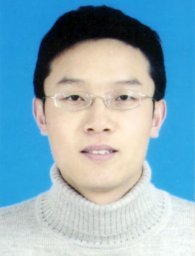
 Shuang Yang
· 6 previous affiliations
- Meta (United States)Since 2021
- Research Scientist · Since 2021
- Alibaba Group (China)2017–2021
- Senior Director of Engineering, Head of Visual Search & Discovery · 2020–2021
- Senior Director of Engineering & Head of Machine Learning, Ant Group · 2017–2020
- Operator2014–2017
- Chief Scientist & Cofounder · 2014–2017
- Twitter (United States)2012–2015
- Founding Head of ML Infra · 2015
- Staff Research Scientist & TLM · 2012–2014
- YiDian 一点资讯2011–2012
- Founding Member (1 of 4) & Lead Scientist · 2011–2012
- Georgia Institute of Technology2009–2012
- PhD student · 2009–2012
2 other authors named Shuang Yang: Shuang Yang (Chinese Academy of Sciences · 25 papers), Shuang Yang (Chinese Academy of Sciences · 1 paper)
Research Overview
Shuang Yang focuses on probabilistic modeling, privacy-preserving machine learning, and multi-agent systems for complex optimization. His trajectory spans early work in topic modeling and viral diffusion to large-scale industrial applications in secure computation and combinatorial scheduling. Most recently, his research investigates strategic reasoning and memory integration in large language model agents.
Research Trajectory
Yang’s early research focused on probabilistic modeling for complex text corpora and network dynamics. He proposed Dirichlet-Bernoulli Alignment: A Generative Model for Multi-Class Multi-Label Multi-Instance Corpora, which cast predefined classes as latent Dirichlet variables to automatically align discovered topics with human-defined categories. Continuing in the broader area of Guiding Latent Topic Discovery with Supervised Signals, he introduced Bridging the Language Gap: Topic Adaptation for Documents with Different Technicality. This work explicitly modeled technicality as a domain factor, allowing systems to align topical structures across expert jargon and layperson terminology. Expanding from static text to temporal dynamics, he developed Mixture of Mutually Exciting Processes for Viral Diffusion, which utilized point processes and mean-field variational inference to simultaneously address diffusion network inference and meme tracking in online social networks.
Moving toward large-scale industrial applications, Yang's work expanded into graph neural networks and combinatorial optimization. With collaborators, he developed A Semi-Supervised Graph Attentive Network for Financial Fraud Detection, integrating multi-faceted user data into a hierarchical attention framework to identify fraudulent behavior. His research also addressed massive resource allocation challenges, introducing a distributed framework in Solving Billion-Scale Knapsack Problems. By leveraging dual decomposition and Synchronous Coordinate Descent, this system delivered constraint-compliant solutions for daily optimization tasks deployed in production at Ant Financial. Further advancing optimization techniques, he explored Variational Optimization for the Submodular Maximum Coverage Problem, utilizing an Expectation-Maximization style algorithm to dynamically update solutions and outperform traditional greedy methods. He also applied reinforcement learning to complex operational challenges in Learning to Schedule DAG Tasks, improving standard heuristics by iteratively pre-ordering problematic tasks in directed acyclic graphs.
Concurrently, Yang addressed the critical need for secure computation, advancing the field of Securing Collaborative Learning Against Malicious Participants. He presented an Industrial Scale Privacy Preserving Deep Neural Network framework that split computation graphs across isolated data silos, utilizing secure multi-party computation for sensitive layers while maintaining high scalability. He further expanded this lossless modeling paradigm by introducing Privacy Preserving PCA for Multiparty Modeling, which employed homomorphic encryption and secret sharing to allow multiple organizations to perform principal component analysis on combined data without exposing plaintext records.
In recent years, Yang has focused heavily on the intersection of large language models (LLMs), strategic reasoning, and multi-agent systems. He contributed to KnowGuard: Robust Reasoning Enabled LLM Guardrail via Knowledge-Enhanced Logical Reasoning, a system that encodes safety knowledge as logical rules within probabilistic graphical models to defend against sophisticated jailbreak attacks. His group has also designed multi-agent frameworks to automate complex engineering tasks. This includes ArchPilot: A Proxy-Guided Multi-Agent Approach for Machine Learning Engineering, which orchestrates specialized agents through adaptive search to explore large model spaces under tight compute budgets. Similarly, he introduced STARK: Strategic Team of Agents for Refining Kernels, a framework that automates GPU kernel optimization. These systems represent significant contributions to research directions such as Strategic Optimization via Monte Carlo Tree Search and Agentic GPU Kernel Optimization.
Alongside these agentic frameworks, Yang participated in developing ExpWeaver: LLM Agents Learn from Experience via Latent RAG, which retrieves and integrates memories directly within a model's hidden states, advancing the areas of Jointly Optimizing Retrieval and Generation and General Purpose Reasoning from Specialized Reinforcement Learning. Most recently, he proposed Tokenize, Diffuse, Decode: A Generative Approach to Neighborhood Discovery on Graphs, introducing an autoregressive diffusion model operating in a discrete semantic space to adaptively sample informative node sequences for graph representation learning.
Current Directions
The most recent papers in the evidence indicate a strong focus on deploying multi-agent large language model frameworks for complex, domain-specific engineering tasks. This work investigates the integration of strategic search algorithms, particularly Monte Carlo Tree Search, to guide specialized agents in optimizing machine learning pipelines and low-level hardware kernels. Additionally, current research explores latent memory mechanisms that allow autonomous systems to learn from experience without expanding context windows, as well as generative approaches to representation learning on graph structures.
Profile updated
Loading new papers…
Other researchers whose papers cluster into the same research directions — a proxy for overlapping technical interests and shared intellectual neighborhoods.
See something wrong? Report a mistake