

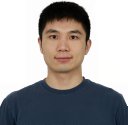
 Shoufa Chen
· 2 previous affiliations
- University of Hong KongSince 2021
- PhD student · Since 2021
- Current
- Undergrad student · 2015–2019
Research Overview
Shoufa Chen focuses on computer vision, deep learning, and large-scale generative models for content creation. His early research addressed dense visual predictions and efficient transformer architectures for visual recognition. Recently, his work has centered on unified image and video generation, exploring autoregressive modeling, flow matching, and pixel-space generative frameworks to scale visual foundation models.
Research Trajectory
Chen’s early work explored efficient architectures for video understanding and dense visual prediction. In 2021, he introduced a unified pipeline in Watch Only Once: An End-to-End Video Action Detection Framework that simultaneously solves actor localization and action classification. This approach simplified traditional multi-stage pipelines, contributing to the broader research area of Asymmetric Spatiotemporal Decoupling for Video Models.
Moving into 2022, his focus shifted toward adapting emerging neural architectures for scalable visual recognition. He developed CycleMLP: A MLP-like Architecture for Dense Prediction, which addressed the limitations of fully spatial connections in multi-layer perceptrons. By using local windows to achieve linear computational complexity, this work advanced the research direction of Resolution-Agnostic Spatial Mixing in MLP Architectures. Concurrently, to mitigate the heavy computation and storage burdens of fine-tuning Vision Transformers, he proposed AdaptFormer: Adapting Vision Transformers for Scalable Visual Recognition. This method introduced lightweight adaptation modules that add minimal parameters while maintaining high transferability across different image and video domains.
In 2023, Chen expanded his research into complex object detection and segmentation paradigms. He investigated multi-granularity alignment between language and images in Going Denser with Open-Vocabulary Part Segmentation, enabling detectors to parse novel objects into fine-grained parts based on dense semantic correspondence. That same year, he helped pioneer the area of Object Detection as a Generative Denoising Process with the publication of DiffusionDet: Diffusion Model for Object Detection. This framework uniquely formulated object detection as a generative task, evolving random bounding boxes into precise object boundaries through a diffusion process and allowing for flexible inference without retraining.
By 2024, Chen’s trajectory increasingly centered on large-scale generative models for visual content creation. He collaborated on Autoregressive Model Beats Diffusion: Llama for Scalable Image Generation, which demonstrated that standard next-token prediction engines could achieve highly competitive image generation performance by scaling the Llama architecture and optimizing image tokenization.
In 2025, his generative modeling research expanded significantly into video synthesis and flow-based frameworks. He participated in the development of HiStream: Efficient High-Resolution Video Generation via Redundancy-Eliminated Streaming, an autoregressive framework that utilizes dual-resolution caching and an anchor-guided sliding window to make 1080p video generation practical. This work touches upon several research directions, including Hierarchical Coarse to Fine Video Synthesis and The Shifting Bottleneck of Latent Generative Models.
Building on these scalable architectures, Chen led the development of the Goku model family, detailed across Goku: Flow Based Video Generative Foundation Models and its accompanying system overview, Goku: Generative Flow Kit for Unified Image-Video Creation. These works utilize rectified flow Transformers to enable high-quality, joint image-and-video generation, advancing the area of Scaling Video Transformers via Spatiotemporal Sparsity. Further pushing the boundaries of generative paradigms, he introduced PixelFlow: Pixel-Space Generative Models with Flow, a framework that bypasses traditional latent-space bottlenecks by operating directly on raw pixels using a cascaded flow matching strategy.
Alongside his core focus on generative models, Chen has also explored the evaluation of autonomous systems. He oversaw the creation of MobileAgentBench: An Efficient and User-Friendly Benchmark for Mobile LLM Agents, providing a standardized environment to assess how large language models interact with mobile phone graphical user interfaces to manage daily tasks.
Current Directions
The most recent papers in the evidence indicate a strong focus on scaling visual foundation models for high-fidelity content creation. A primary current direction involves unifying image and video generation through advanced architectures like rectified flow Transformers and autoregressive models. This includes exploring alternatives to standard latent diffusion, such as operating directly in pixel space to avoid compression artifacts, and developing streaming frameworks that eliminate spatiotemporal redundancy for efficient high-resolution video synthesis. Additionally, recent work investigates the practical deployment and evaluation of large language models as autonomous agents interacting with mobile interfaces.
Profile updated
Loading new papers…
Other researchers whose papers cluster into the same research directions — a proxy for overlapping technical interests and shared intellectual neighborhoods.
See something wrong? Report a mistake