

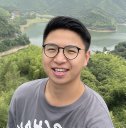
 Runjian Chen
· 2 previous affiliations
- University of Hong KongSince 2021
- PhD student · Since 2021
- Zhejiang University2016–2020
- Undergrad student · 2016–2020
Research Overview
Runjian Chen focuses on 3D computer vision, robotic localization, and self-supervised representation learning. His work primarily addresses the challenges of processing sparse spatial data, such as LiDAR point clouds and radar scans, and developing methods that generalize from synthetic environments to complex real-world scenarios. Recently, his research has expanded to include multimodal evaluation benchmarks and the detection of Contextual Reasoning for Implicit Toxicity Detection.
Research Trajectory
The early phase of Chen’s research, beginning around 2019, was centered on the geometric interpretation of 3D point clouds and their application in robotic navigation. This work addressed the fundamental "semantic-poor" nature of raw spatial data. In From Virtuality To Reality: A Learning-based Point Cloud Labeling Method With Synthesis Scene, Chen investigated the use of synthetic datasets to train models for labeling sparse scans as basic geometric elements. This established a recurring theme in his work: the mitigation of data scarcity through simulation and scale-invariant feature extraction.
By 2020 and 2021, this focus shifted toward the "kidnapped robot" problem and global localization. Chen developed methods to improve the efficiency of Monte Carlo Localization (MCL) by replacing uniform sampling with more informed distribution proposals. This period also saw an exploration of multi-modal sensing, specifically bridging the gap between noisy radar data and high-fidelity LiDAR maps to enable robust localization in adverse weather conditions.
Between 2022 and 2023, Chen’s work transitioned toward more complex representation learning frameworks and self-supervised pre-training. He participated in the development of Transformer-based architectures for visual control and face restoration, applying attention mechanisms to model contextual information. A significant contribution during this time was the development of voxel-based self-supervised strategies for 3D object detection. These methods, such as MV-JAR: Masked Voxel Jigsaw and Reconstruction for LiDAR-Based Self-Supervised Pre-Training, utilized hierarchical scene-voxel-point structures to learn spatial geometry without extensive manual labeling.
In his most recent work (2024–2026), Chen has focused on Cross-Modal Alignment for 3D Representation Learning and extreme data efficiency. This includes the development of frameworks that allow 3D detectors to maintain high performance with minimal real-world labels by effectively bridging the sim-to-real gap. His research has also moved into the domain of unsupervised depth completion, where he has explored using occluded regions as a supervisory signal to improve a model's 3D "intuition." Additionally, he has contributed to large-scale multimodal benchmarks and safety research concerning implicit prompts in text-to-image models.
Current Directions
Chen’s current research is increasingly concerned with Distilling 2D Semantic Knowledge into 3D Point Cloud Models. Because LiDAR data lacks the rich textural information of 2D images, his work seeks to leverage the semantic density of vision-language models to enhance 3D spatial understanding. This alignment is critical for tasks requiring fine-grained perception in autonomous driving and robotics.
Another active area of investigation involves Disentangling Independent Motion from Camera Ego-motion. For mobile agents, distinguishing between the movement of the observer and the movement of objects in the environment is a core challenge. Chen’s work in unsupervised depth completion and future state prediction contributes to solving this ambiguity by forcing models to learn the underlying physical rules of a scene.
Finally, Chen is exploring Joint Geometry and Attribute Coding for 3D Point Clouds and Future State Prediction for Self Supervised Representation Learning. As 3D data becomes more prevalent in digital twins and real-time autonomous systems, the need for efficient data representation and the ability to anticipate environmental changes becomes paramount. His recent frameworks suggest a move toward models that do not just categorize the present state of a 3D scene but also predict its temporal evolution.
Representative Work
From Virtuality To Reality: A Learning-based Point Cloud Labeling Method With Synthesis Scene As the first author, Chen proposed a method for labeling point clouds by training machine learning models on synthetic data. The approach utilized Principal Component Analysis (PCA) to extract local geometric features, demonstrating that models trained in virtual environments could effectively generalize to real-world laser scans. This work addressed the high cost of manual 3D data labeling and established the effectiveness of scale-invariant geometric features.
Deep Samplable Observation Model for Global Localization and Kidnapping In this first-author paper, Chen introduced the Deep Samplable Observation Model (DSOM) to solve the global localization and "kidnapped robot" problems. By taking a map and a 2D laser scan as inputs, DSOM generates a multimodal probability distribution that allows Monte Carlo Localization filters to sample more effectively. This method significantly improved the speed and accuracy of robot re-localization compared to traditional uniform sampling methods.
JiSAM: Alleviate Labeling Burden and Corner Case Problems in Autonomous Driving via Minimal Real-World Data As the lead author, Chen developed JiSAM, a framework designed to reduce the reliance on labeled real-world data for autonomous driving. By bridging the sim-to-real gap, the system allows 3D object detectors to achieve high performance using only 2.5% of available real-world labels. The framework is particularly effective at identifying "corner case" objects that are rarely encountered in standard training sets but are critical for safety.
ORCaS: Unsupervised Depth Completion via Occluded Region Completion as Supervision Serving as the second author, Chen contributed to the development of ORCaS, a novel approach to unsupervised depth completion. Unlike standard models that focus only on visible pixels, ORCaS requires the network to predict the features of occluded regions. This training strategy creates a strong inductive bias for 3D structure, leading to improved dense depth estimation and better zero-shot generalization across different sensor configurations.
MV-JAR: Masked Voxel Jigsaw and Reconstruction for LiDAR-Based Self-Supervised Pre-Training In this work, Chen participated in the design of a self-supervised pre-training framework for LiDAR-based 3D object detection. The method uses a "jigsaw" task to teach the model the spatial relationship between voxels and a reconstruction task to capture local point distributions. This hierarchical approach significantly improves detection accuracy in data-scarce scenarios, demonstrating the power of self-supervision for 3D spatial understanding.
Towards Implicit Prompt For Text-To-Image Models Chen contributed to this research identifying safety vulnerabilities in text-to-image (T2I) models. The study demonstrated that while models may block explicit requests for restricted content, they can be bypassed using implicit prompts—descriptions that hint at a target without naming it. By developing the ImplicitBench benchmark, the team highlighted the need for safety filters that understand context and social nuance rather than just keyword matching.
Profile updated
Loading new papers…
Other researchers whose papers cluster into the same research directions — a proxy for overlapping technical interests and shared intellectual neighborhoods.
See something wrong? Report a mistake