

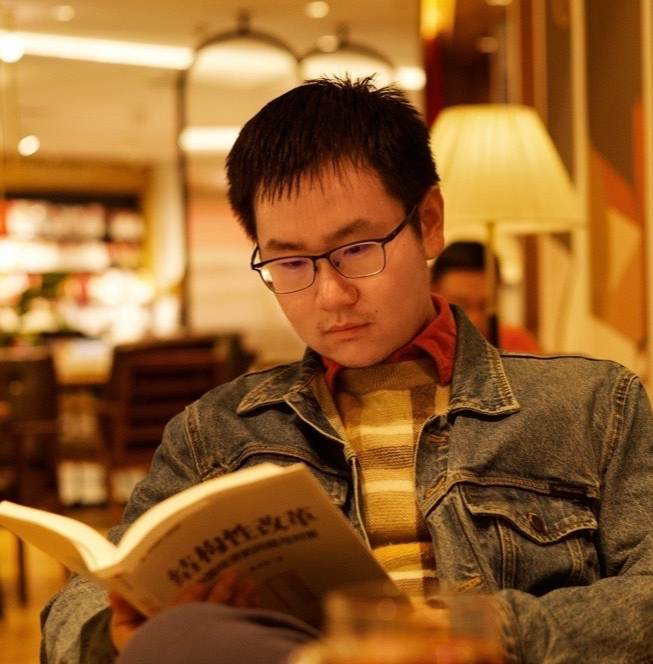
 Shikai Fang
· 8 previous affiliations
- Zhejiang UniversitySince 2025
- Assistant Professor · Since 2025
- 浙江大学Since 2025
- Tenure-Track Assistant Professor · Since 2025
- 微软2024–2025
- Senior researcher · 2024–2025
- Microsoft (United States)2024–2025
- Researcher · 2024–2025
- University of Utah2019–2024
- PhD student · 2019–2024
- 阿里巴巴集团2023
- Research Intern · 2023
- Summer Associate · 2022
- Bachelor's degree, Computer science & Statistics · 2014–2018
Research Overview
Shikai Fang focuses on Bayesian machine learning, tensor factorization, and continuous-time modeling for complex spatiotemporal data. His research trajectory spans the development of streaming algorithms for deep tensor decomposition to the application of state-space Gaussian processes for scalable time-series inference. Recently, his work emphasizes functional representations and generative diffusion models for reconstructing physical dynamics from sparse observations.
Research Trajectory
Fang’s early research concentrated on overcoming the limitations of static, multilinear tensor factorization by introducing Bayesian neural networks and streaming capabilities. In 2020, he developed Online Bayesian Sparse Learning with Spike and Slab Priors, an algorithm designed to provide confidence levels and avoid the uniform shrinkage issues of standard L1 regularization in fast-evolving environments. This foundational interest in sparsity informed his contributions to the research direction of Sparse Neural Networks via Bayesian Spike and Slab Priors. He subsequently applied these principles to tensor factorization, introducing Streaming Probabilistic Deep Tensor Factorization. This method utilized Bayesian neural networks with spike-and-slab priors to capture complex, non-linear interactions in streaming data.
Continuing this trajectory, Fang expanded on streaming decomposition techniques. He introduced Bayesian streaming sparse Tucker decomposition, which leveraged the flexibility of the Tucker model for high-dimensional feature selection. He further refined these approaches in Streaming Bayesian Deep Tensor Factorization, a framework that replaced unstable stochastic optimization with deterministic moment matching. This work advanced the area of Deep Learning in a Single Pass and contributed to the broader area of Linearized Bayesian Neural Networks, enabling higher accuracy and smoother performance on real-time data streams.
Around 2022, Fang’s focus shifted toward modeling continuous temporal dynamics, moving away from discrete time steps. He introduced Bayesian Continuous-Time Tucker Decomposition, which treated the core of a tensor decomposition as a continuous, time-varying function. By utilizing a state-space representation of Gaussian Processes, this framework achieved linear scalability while capturing complex temporal dynamics, contributing significantly to work in the area of State Space Gaussian Processes for Linear Time Inference and intersecting with the research direction of Neural and Nonparametric Temporal Point Processes.
He continued to explore temporal tensor decomposition in Streaming Factor Trajectory Learning for Temporal Tensor Decomposition, focusing on scalable trajectory learning. Concurrently, he collaborated on Dynamic Tensor Decomposition via Neural Diffusion-Reaction Processes, a framework that modeled the continuous evolution of entity properties in a tensor. By combining graph-based diffusion to capture shared trends with neural reaction processes for individual variations, this work improved future value prediction in sparse, time-stamped multiway data.
In 2024, Fang extended his continuous-time models to fully functional representations capable of handling data indexed by continuous variables like spatial coordinates and time. He developed BayOTIDE: Bayesian Online Multivariate Time Series Imputation with Functional Decomposition, a framework for real-time imputation that decomposed complex data into interpretable functional factors using state-space Gaussian Processes. Addressing the limitations of grid-shaped discrete indices, he also introduced Functional Bayesian Tucker Decomposition for Continuous-indexed Tensor Data, enabling tensor methods to operate natively on continuous domains.
During this period, Fang also applied his expertise in Gaussian Processes to physical modeling. He developed Solving High Frequency and Multi-Scale PDEs with Gaussian Processes, introducing a solver designed to overcome the spectral bias that limits Physics-Informed Neural Networks (PINNs). By modeling the power spectrum of the solution and utilizing Kronecker product algebra, this approach achieved massive scalability and significantly higher accuracy on high-frequency and multi-scale partial differential equations.
Most recently, Fang has overseen research integrating functional tensor decomposition with generative modeling and automated complexity adaptation. Leading a research team, he introduced Generating Full-field Evolution of Physical Dynamics from Irregular Sparse Observations, a generative framework that combined functional tensor decomposition with a message-passing diffusion process to reconstruct continuous physical dynamics from sparse data. He also directed the development of Functional Complexity-adaptive Temporal Tensor Decomposition, which utilized Neural ODEs and Fourier features to handle fully continuous tensor data while automatically learning the optimal tensor rank. This work advanced the area of Automatic Discovery of Intrinsic Latent Dimensionality, resulting in highly scalable and noise-robust models for complex spatiotemporal datasets.
Current Directions
Recent work investigates the intersection of functional data analysis, generative modeling, and physical dynamics. The most recent papers in the evidence address the challenge of reconstructing continuous, full-field physical systems from sparse and irregularly sampled observations. This involves developing sequential diffusion models in functional spaces and designing complexity-adaptive tensor decompositions that can automatically determine optimal latent dimensionality. A major ongoing theme is the use of continuous-domain representations—such as Neural ODEs and functional Gaussian Processes—to build scalable, noise-robust models that transcend the limitations of discrete, grid-based data structures in spatiotemporal analysis.
Profile updated
Loading new papers…
Other researchers whose papers cluster into the same research directions — a proxy for overlapping technical interests and shared intellectual neighborhoods.
See something wrong? Report a mistake